MINNEAPOLIS — When Liu Jingyao introduced herself, in the lobby of her apartment building, I didn't recognize her. It was a puzzling feeling. For an entire year, photos of her had blanketed the Chinese internet. Like tens of millions of other Chinese, I had watched and rewatched surveillance video of her in this very building. She was one of the most talked about and mysterious women in China, and I thought I knew what she looked like.
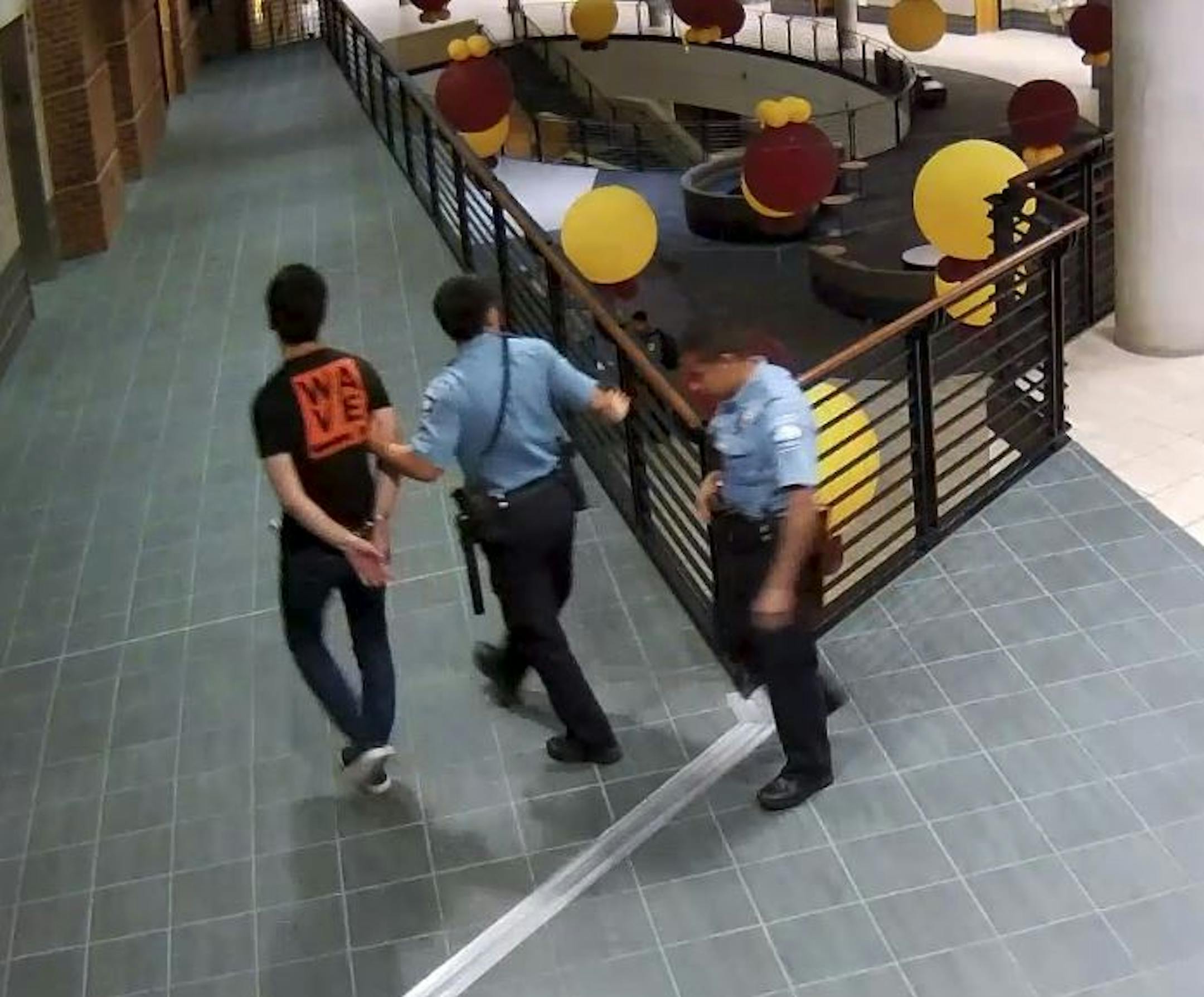
In the video, she wanders the halls of a mazelike building, with a man trailing along. They get in and out of several elevators. She seems unsure about how to get to her apartment. She wears striking waist-length hair and a long, dark knit dress. She doesn't look glamorous, exactly, but for a 21-year-old college junior, she is dressed smartly.
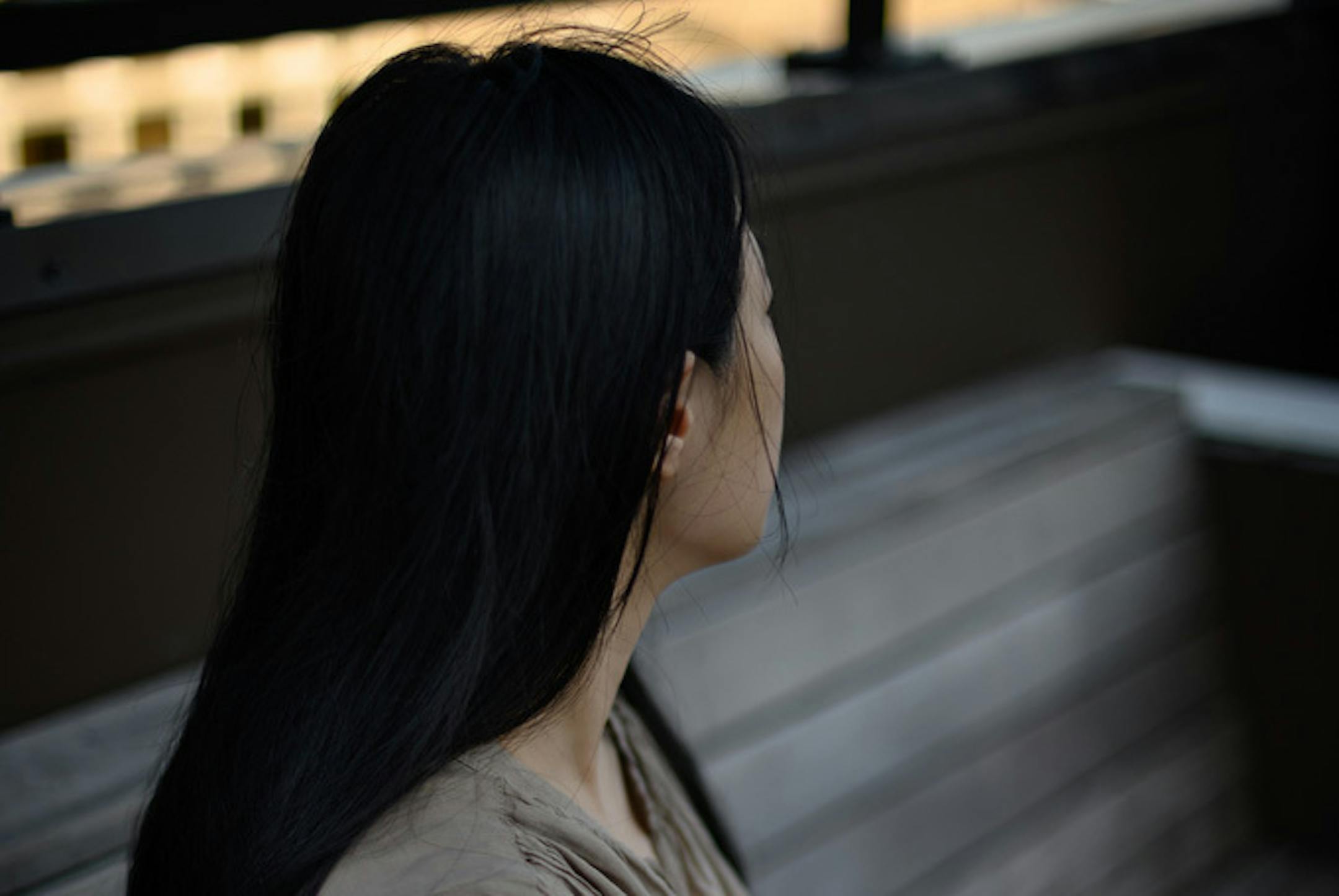
But on a morning in early August, she greeted me in a loosefitting checkered dress. Now 22, she looked pale and nervous. Her lips were chapped. She invited me upstairs, and began an intense conversation that continued for 18 straight hours.
In the summer of 2018, Ms. Liu, a student at the University of Minnesota, alleged that the billionaire founder of one of China's largest companies, JD.com, followed her back to her apartment and raped her. The executive, known as Liu Qiangdong in China and Richard Liu in the English-speaking world, was arrested by Minneapolis police and released within 24 hours. (He and Ms. Liu are not related.) He insisted that the sex was consensual, and prosecutors declined to charge him. In April, Ms. Liu accused Mr. Liu of rape in a Minnesota civil court, seeking more than $50,000 in damages.
But hers is not a typical #MeToo story. After her name became common knowledge on the Chinese internet, Ms. Liu was widely called a slut, a whore, a liar, a gold digger and many other things. It may be difficult for Westerners to grasp the scale and intensity of her online shaming. But the Monica Lewinsky frenzy is a good comparison, had it taken place in the era of Twitter and YouTube in a country with 800 million internet users and no independent news media. When Ms. Liu and I met, it was the first time she had ever spoken to an English-language publication about what she has endured.
'A feeling that someone is watching me'
In her apartment, a 500-square-foot studio, Ms. Liu showed me photos of trips she had taken to Morocco, Greece and Spain, before all that had happened. She looked different then. Her eyes were brighter, and her smile looked unreserved.
She said she had thrown away half of her cosmetics and no longer wore makeup. Like many young Chinese, she used to like designer clothes and handbags; now she mostly wears Muji, the inexpensive Japanese brand whose style reputation in China might be described as dowdy and demure.
When Ms. Liu transferred to the university a year ago, she chose the high-floor apartment for its view of a nearby park and a water tower known to locals as the Witch's Hat. Now, she said, she keeps the blinds down day and night. "I always have a feeling that someone is watching me from outside," she said. "I want to be as inconspicuous as possible."
It's an understandable concern, given the social-media attention directed at Ms. Liu, which has been vast and often vicious. On Weibo, China's equivalent of Twitter, her case has been one of the most popular topics of the last two years.
"The woman is a slut," one commenter said. "The woman looks disgusting," commented another. "It was obvious that they disagreed on the price," added a third. "Looks like the woman set up the whole thing." And one suggested that Mr. Liu was the actual victim, writing, "Look at the woman's build, I absolutely believe that Liu Qiangdong was raped."
These are just a few of the 8,500 comments on a single Weibo post, which was retweeted 14,000 times and liked by 95,000 users. Now imagine this, and worse, at scale, for months and months.
Many of the most active hashtags related to the case, including #RichardLiulawsuit and #RichardLiusexualassault, have been disabled on Weibo. But even less popular hashtags regarding the case get an astonishing amount of attention. One, which has to do with a denial that Mr. Liu was getting divorced, has 170 million views. Another, which concerns a defamation lawsuit Mr. Liu filed against a Chinese blogger, has 130 million views. A hashtag about a pretrial hearing in September has logged 110 million views.
Followers of the case quickly translate legal documents into Chinese and add subtitles to police audio and video. In some ways, Ms. Liu has become a figure as polarizing as President Trump. In July, the morning after the Minneapolis police released a report on the case, I got into a debate with a friend, and I suggested that she might want to read the document first before jumping to conclusions. My friend, an accomplished career woman and busy mother, replied that she had indeed read it — all 149 pages, in English, overnight, purely out of curiosity.
Ms. Liu's case is attracting so much attention because she is accusing one of the country's most powerful men of behavior that has long been ignored. Sexual harassment and assault are widespread in China, and elites face little scrutiny. The workings of government and the private lives of national leaders are off-limits to the news media. Self-made tech tycoons are widely admired celebrities.
Among this class of billionaires, Mr. Liu is one of the most high-profile. Born in a village in the eastern province of Jiangsu, he likes to recount how his family was able to afford meat only once or twice a year, and how he went to college with $70 raised by his fellow villagers. He founded JD.com in the early days of Chinese e-commerce, and turned the company into a logistics colossus. Mr. Liu became an entrepreneurial icon, known for putting on a helmet and JD.com's red uniform to personally make deliveries on a three-wheeled electric bike one day a year.
Mr. Liu only got more famous in 2015, when he married a 21-year-old student and internet celebrity named Zhang Zetian. By the summer of 2018, when he traveled to Minnesota, he was worth an estimated $7.5 billion.
27 toasts of wine
Ms. Liu grew up in Beijing, introverted and intense, the only child of an affluent family. Her father was a businessman, and her mother, Ms. Liu said, was strict and quick to scold or punish her physically. She only allowed Ms. Liu to wear her hair short. Today, Ms. Liu's waist-length cut is an act of rebellion.
In 2016, she went to a liberal arts college in Minnesota to study literature, while also practicing piano two and half hours a day. She dreamed of becoming a diplomat or a professor of linguistics, but she was also interested in business. She transferred to the University of Minnesota's Carlson School of Management in August 2018, where a professor recruited her to volunteer with a program for visiting international executives. One of them was Mr. Liu.
Every morning, Ms. Liu got up early and took the executive visitors jogging. On the fifth day, she was invited to a group dinner at a Japanese restaurant. When Ms. Liu arrived, she found that she was the only volunteer — and the only woman — at a table of about a dozen middle-aged Chinese men. Surveillance video shows that one of the men directed her to sit next to Mr. Liu, the most accomplished and wealthiest member of the group. At Chinese business dinners, it is common for pretty young women to be placed next to powerful men to laugh at their lewd jokes.
In the next two hours, according to the police, members of the party raised their glasses of red wine in at least 27 toasts. Ms. Liu drank 19 times. The man sitting across from her passed out on the table and had to be carried away.
After dinner, Ms. Liu left in a limousine with Mr. Liu and two of his female assistants. They drove to a house rented by one of the executives, but Ms. Liu didn't want to go in. The chauffeur, whose name is redacted in police reports, later told officers that he saw Ms. Liu and Mr. Liu talking in front of his car. "Then he grabbed her arm, kind of overpower her and bring her to my car in the back," the chauffeur said, according to a transcript. "I look in my mirror and this guy was all over this girl." Then, he said, one of Mr. Liu's assistants pushed the mirror up to obscure the chauffeur's view. The chauffeur told the police that he didn't hear anyone saying "stop" or "no," or cry for help.
Mr. Liu went with Ms. Liu to her apartment. A few hours later, a friend of hers reported to the police that Ms. Liu had told him, via a messaging app, that she had been raped.
A spokesman for Mr. Liu denied that account, saying, "The evidence released by the Minneapolis Police Department, including the written police report and surveillance video, does not support the accusations that have been made."
When I met with Ms. Liu, she said that she seldom left her apartment anymore and that she spends most of her time cooking, drawing, playing piano, watching Japanese soap operas and struggling with whether to check Chinese social-media platforms. Each night, she double-checked her door lock before going to bed. On her nightstand were a canister of pepper spray and a stun gun that she purchased after that evening.
Ms. Liu said she had a recurring nightmare: a man forcing her down and sitting on top of her. Her psychiatrist told her that it was a common symptom of post-traumatic stress disorder.