

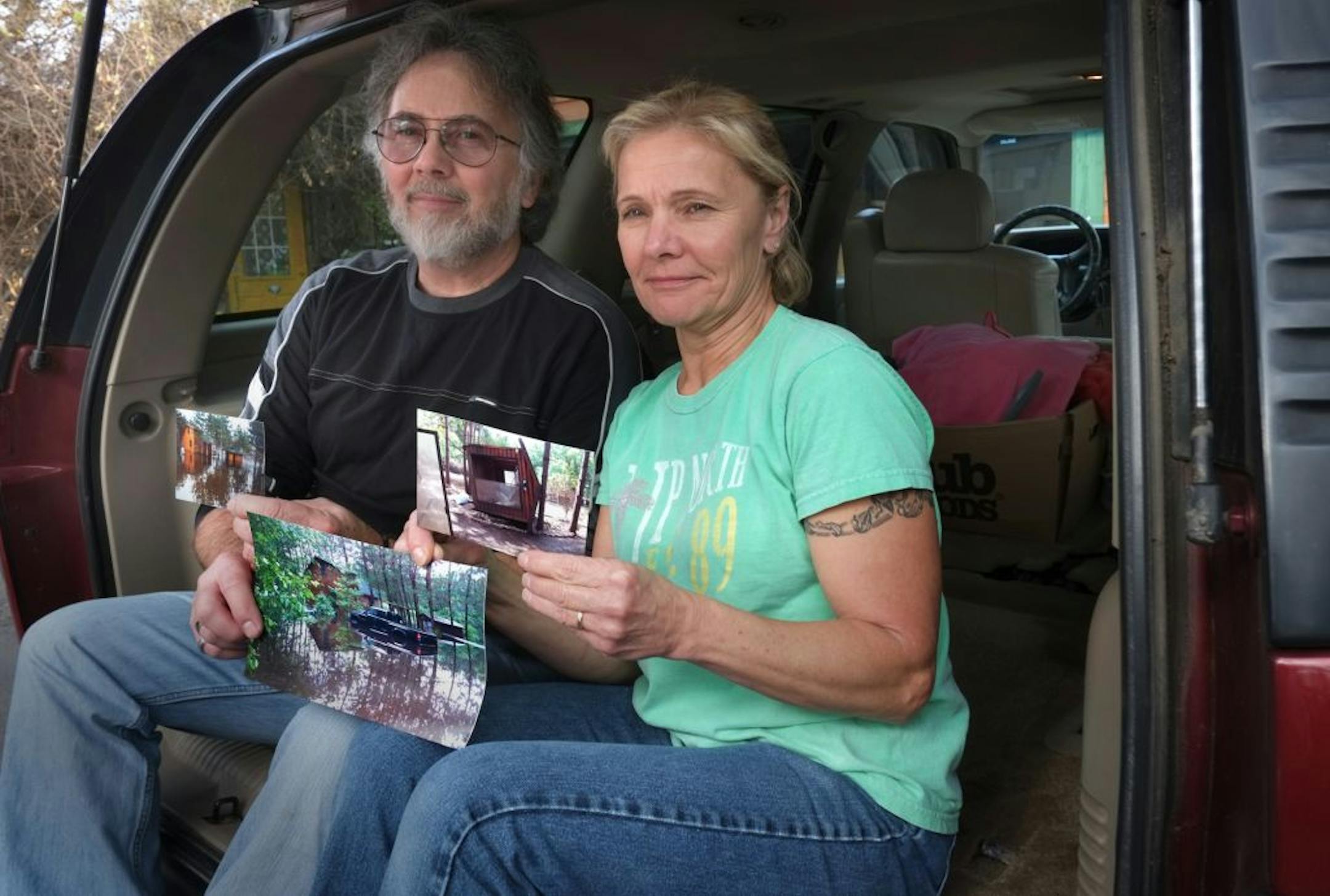
Back in June, Rick Grey was at work in Lakeville when he answered a panicked phone call from his brother Ken in Sturgeon Lake, south of Duluth.
After days of rain, the river was rising and both their cabins were in peril. When Grey got there, he had to paddle up the road in a canoe and saw the tip of his cabin roof jutting above the floodwaters.
When the water receded six days later, Grey and his wife found their shed toppled and their belongings saturated.
"I was sick. My wife, she was bawling because we knew it was shot and what are you going to do?" Grey said. "But we figured, OK, well, we've got flood insurance, so that will help."
In fact, they had paid the flood insurance premiums for $210,000 worth of coverage ever since they bought the cabin three years ago. When they put in a claim for flood damage, Auto-Owners Insurance paid them a $15,000 advance.
Then the Greys got a shock. In September, Auto-Owners Insurance denied their claim because of a problem that the couple had no reason to know about: Sturgeon Lake was not participating in the National Flood Insurance Program, which is overseen by FEMA.
Properties in communities that aren't part of the NFIP are ineligible for federal flood insurance. But Auto-Owners mistakenly issued the policy to the Greys anyway, according to FEMA and the state Department of Natural Resources.
John Lindauer, a spokesman for Denver-based Auto-Owners Insurance, declined to talk about the Greys' case, citing privacy concerns. But the company has said it would refund the premiums that the Greys paid over the years.


