

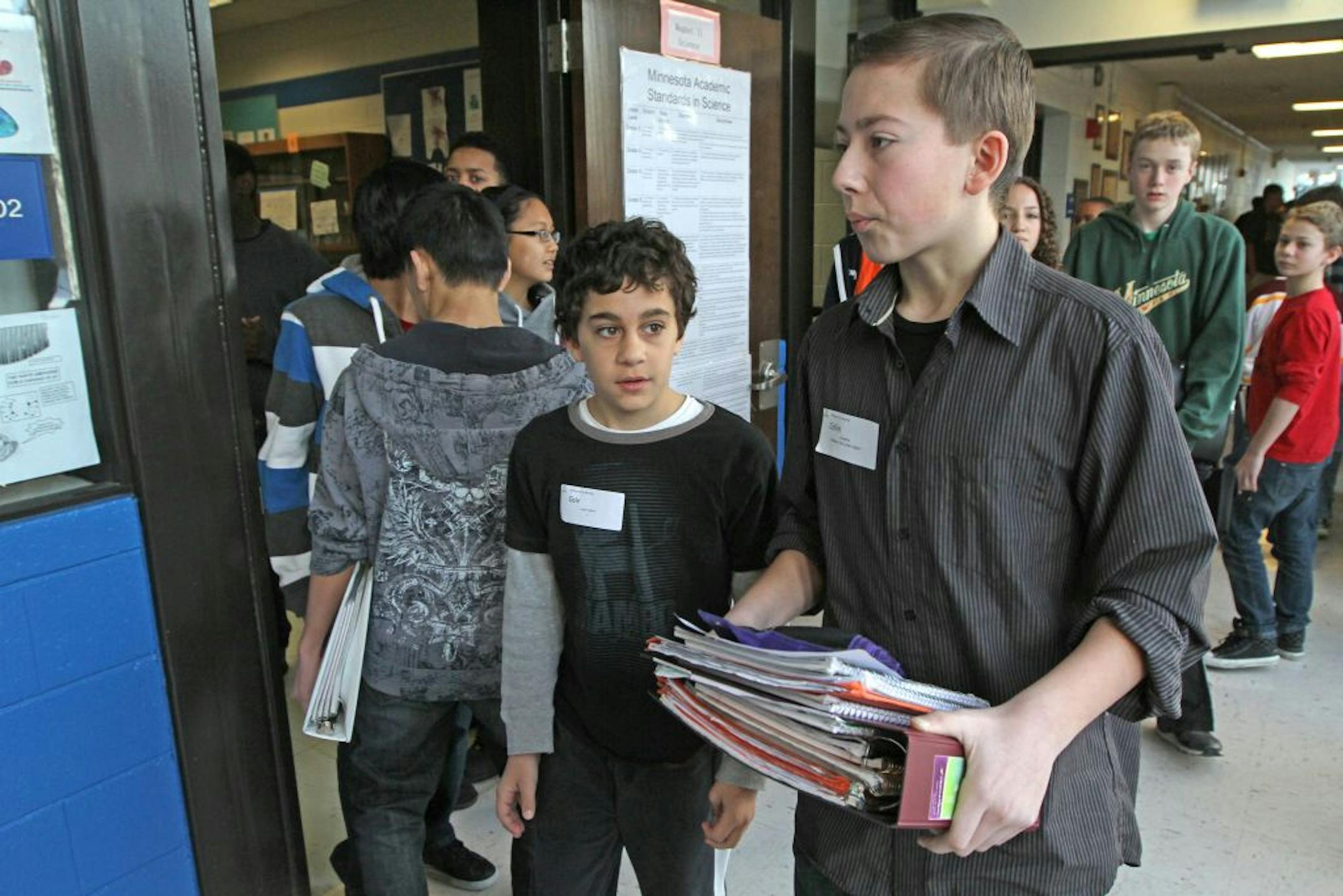
Big changes are coming to St. Paul schools, and few will feel them more than fifth-graders, like those at Chelsea Heights Elementary School.
On a recent Thursday, they went en masse to Murray Junior High to get a glimpse of life on the big, fast-moving campus, and when Principal Tim Williams offered up his greetings, they hung on every word.
"Anyone nervous?" he asked. "A little bit?"
Next fall, a sweeping district reorganization culminates in a full embrace of neighborhood schools as a key to boosting student achievement. The "Strong Schools, Strong Communities" plan will see more children attending elementary schools closer to home and then on to designated middle schools and high schools.
Middle schools, in turn, replace junior highs as the bridge between the elementary and high school years, with sixth grade now a part of the new grades 6-8 configuration. That means no elementary-school "king of the hill" status next year for this year's fifth-graders.
District leaders say having students spend three years in middle school, instead of two years in junior high, should strengthen bonds between schools and parents, and teachers and students. The district cites national research pointing to the needs of young adolescents for trusting relationships and social and economic connections, and of New York's success in using middle schools to close the achievement gap, especially in high-poverty districts.
The middle school is "not just a name change," said Steven Unowsky, assistant superintendent of middle schools, but a change in practice, with teachers working in teams and getting trained to better understand relationships and adolescent development.
Chelsea Heights' fifth-graders will be among about 2,250 across the district who will be trading in the security of life with a primary teacher for a new school day that finds them rotating through a core group of math, science, English and social studies instructors, and a few others teaching electives.


