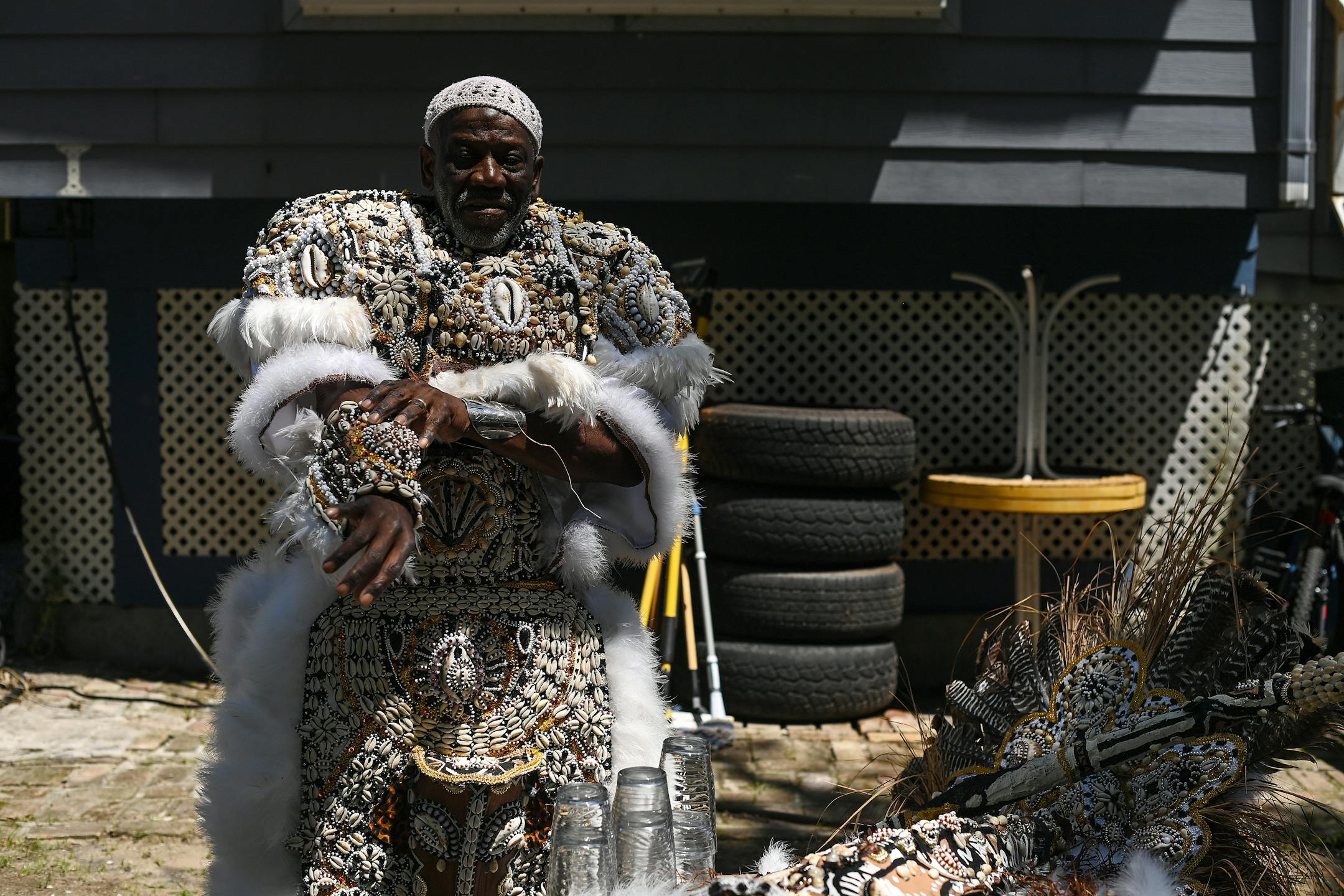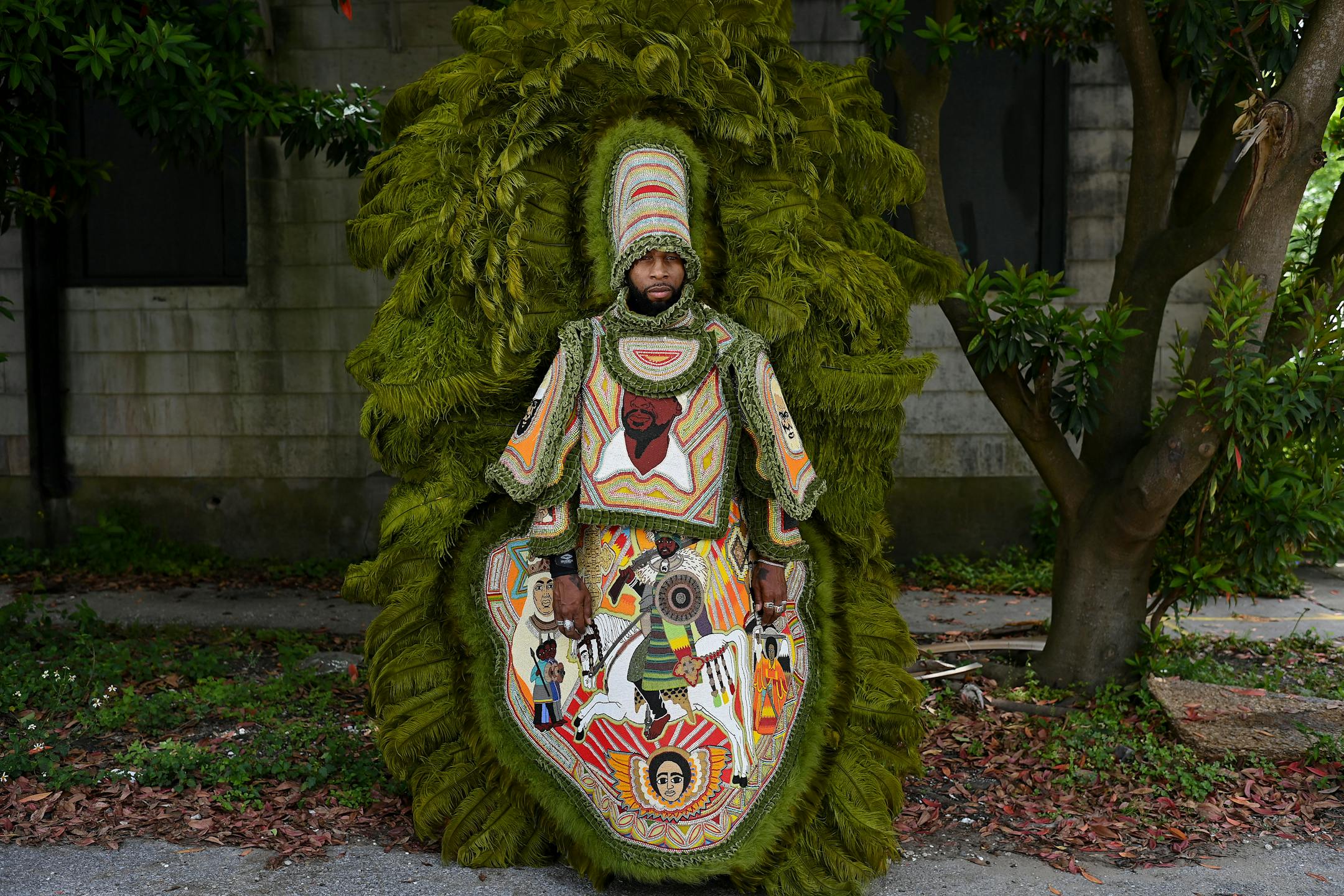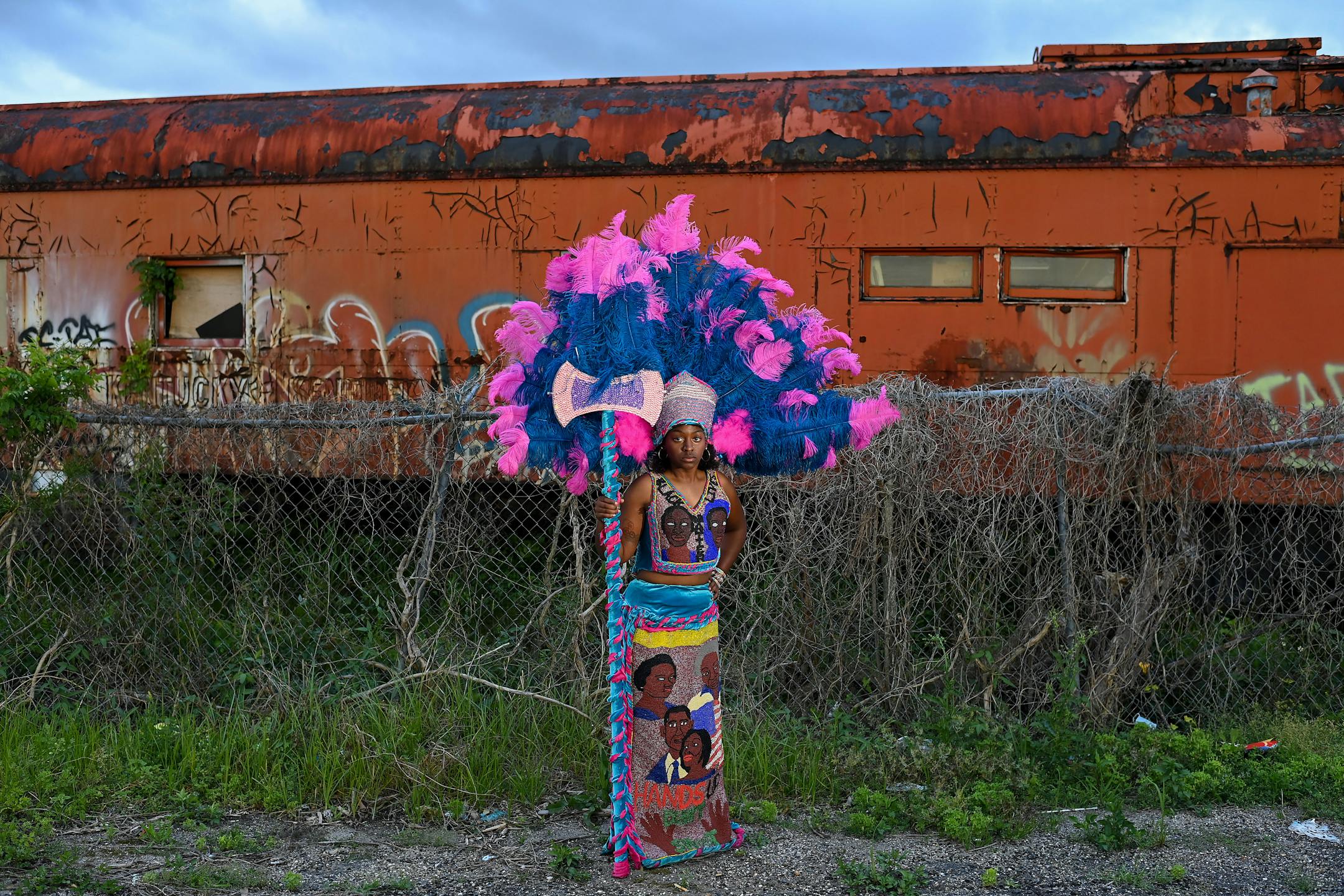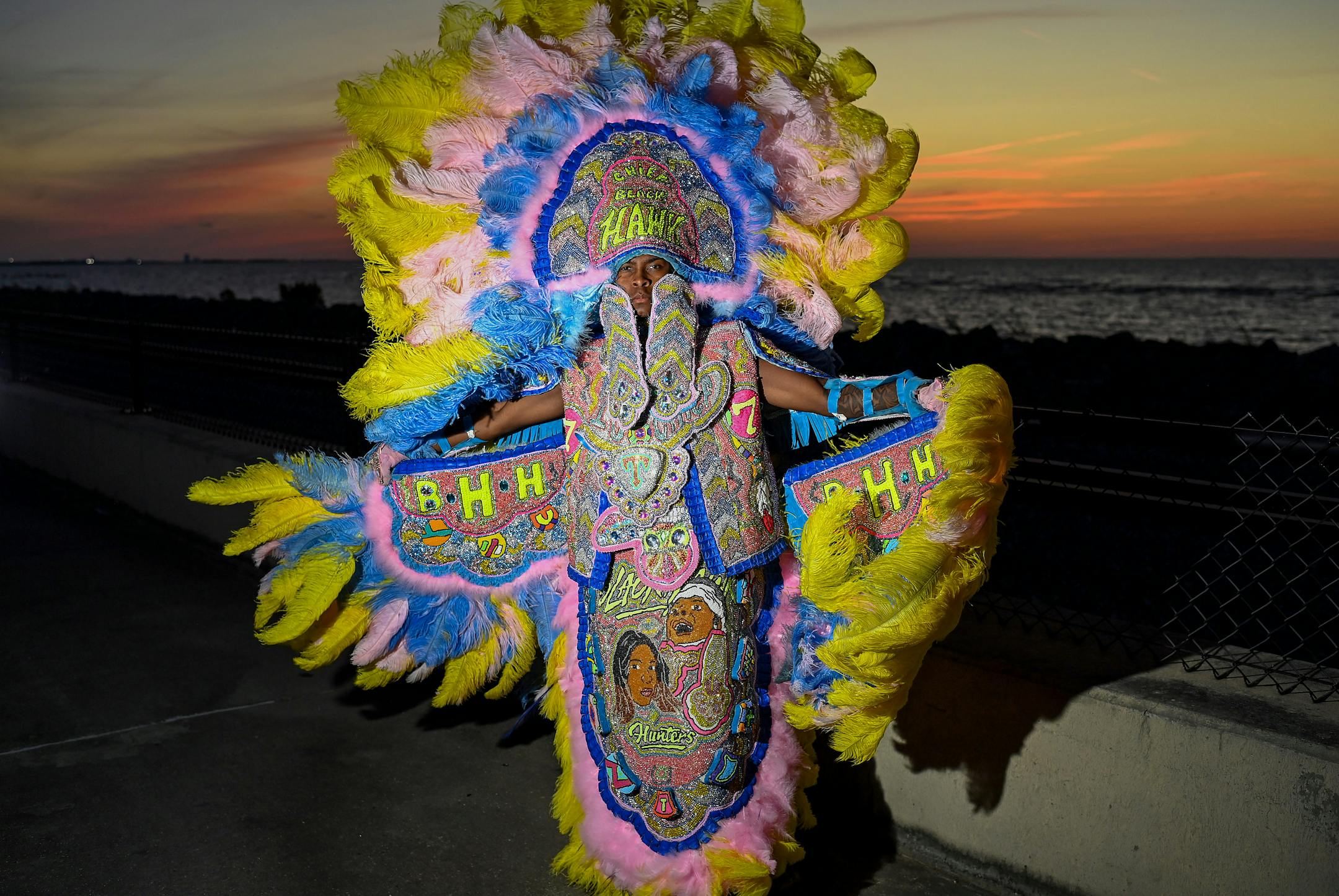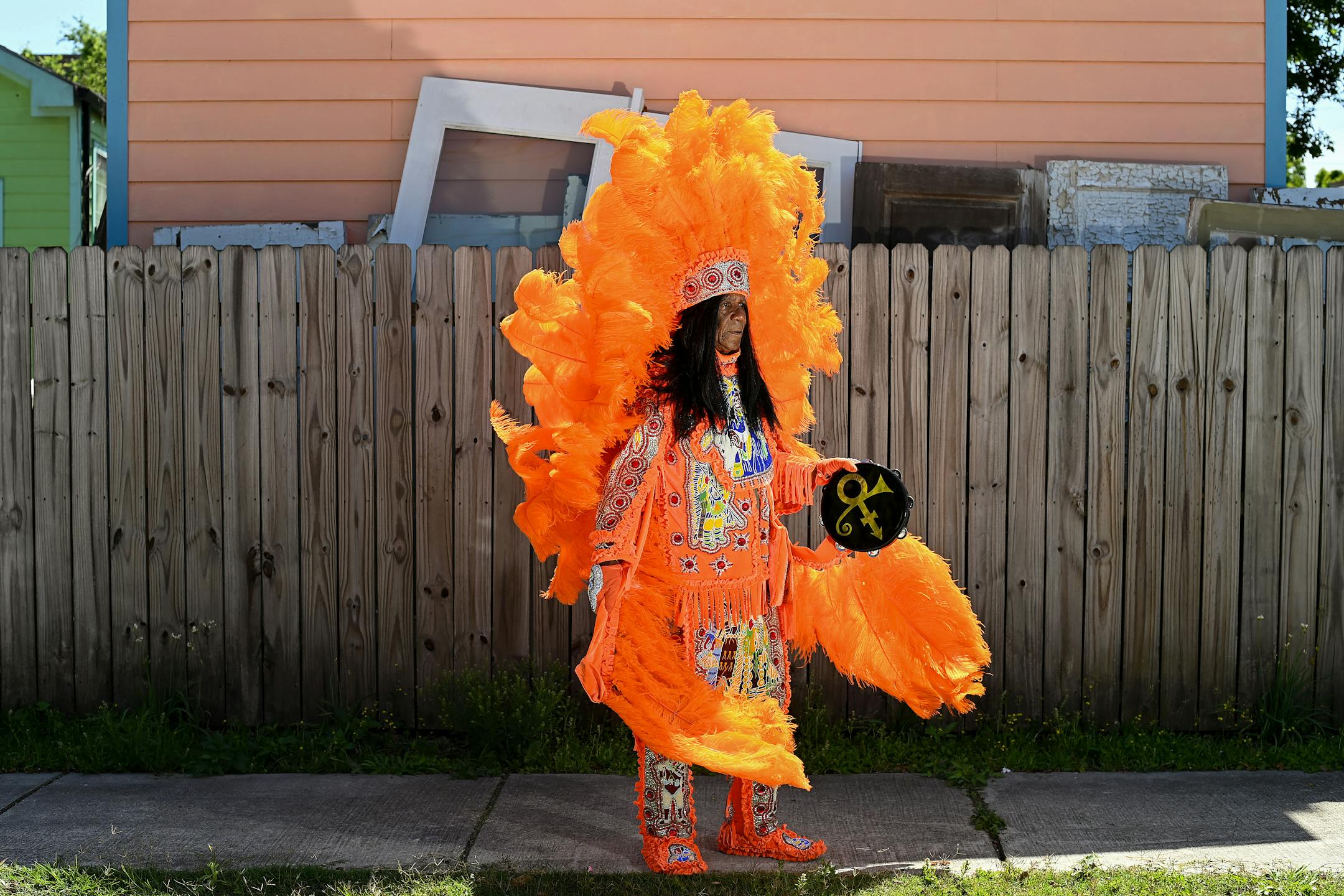
NEW ORLEANS - Since he was a teenager, Monk Boudreaux has been donning a Technicolor suit of beads and feathers and taking to the streets as a Mardi Gras Indian, shaking a tambourine and singing songs that have made him famous well beyond the streets of his Uptown neighborhood.
Boudreaux, 80, is big chief of the Golden Eagles, one of an estimated three dozen "tribes" of Black men and women across New Orleans who emerge every spring to show off their elaborate creations in a series of parades. It's a tradition that dates back more than a century to when segregation barred Black residents from participating in the city's parades.
"Nothing has stopped us, not even Katrina," said Boudreaux, an elder of the tribes who is credited as one of the first Mardi Gras Indians to record music. His decade-spanning career has taken him around the world and earned him a Grammy nomination this year.
Members of the groups — also known as Black-masking Indians — design and sew their own elaborately beaded suits, which alternately pay homage to Native Americans who helped protect runaway slaves and celebrate African culture. The suits include patch-like elements sewn with thousands of tiny beads depicting historical figures and scenes, as well as intricate headdresses sewn with colorful plumes of feathers.
Even with round-the-clock sewing, many suits take upward of a year to create, a costly labor of devotion that has kept going despite all the challenges faced by New Orleans' citizens.
But in 2020, the world came to a halt. Just weeks after Boudreaux and the other tribes debuted their latest suits at the city's Mardi Gras celebrations, New Orleans became an early epicenter of the coronavirus pandemic that would disproportionately sicken working-class Black residents across the city — including members of the tribes and their families. The city canceled the 2021 celebrations amid fears of a new surge in illness.
Forced inside, Boudreaux said he and the maskers did the only thing they could do. "Sew, sew, sew," Boudreaux said, nodding to the lyrics of a longtime chant that has been a mainstay of Mardi Gras Indian culture.
In recent weeks, the tribes have returned to the streets, debuting their latest suits on Mardi Gras and parading through this month's New Orleans Jazz & Heritage Festival, where Boudreaux has been a featured performer every year since the event began in 1970.