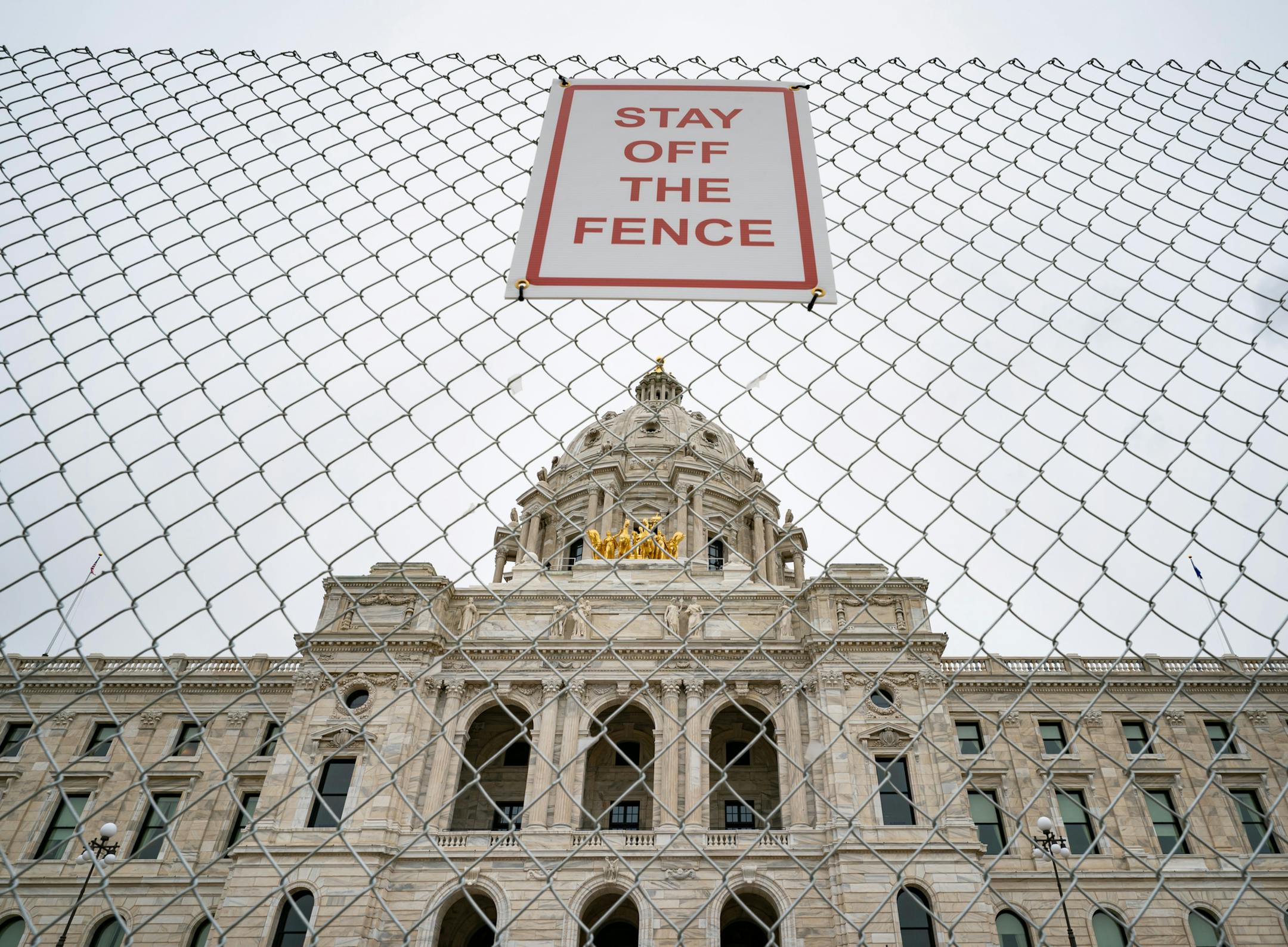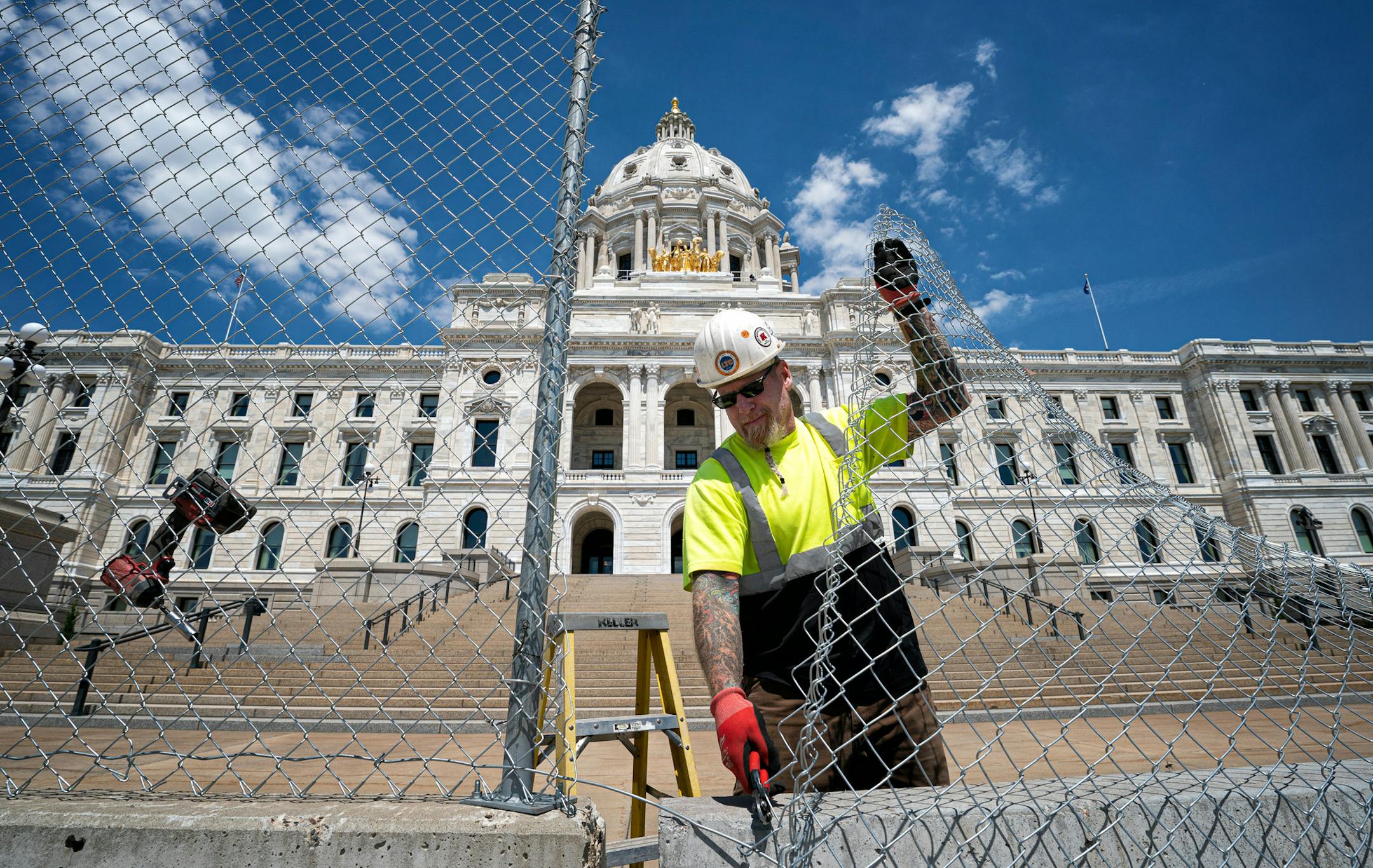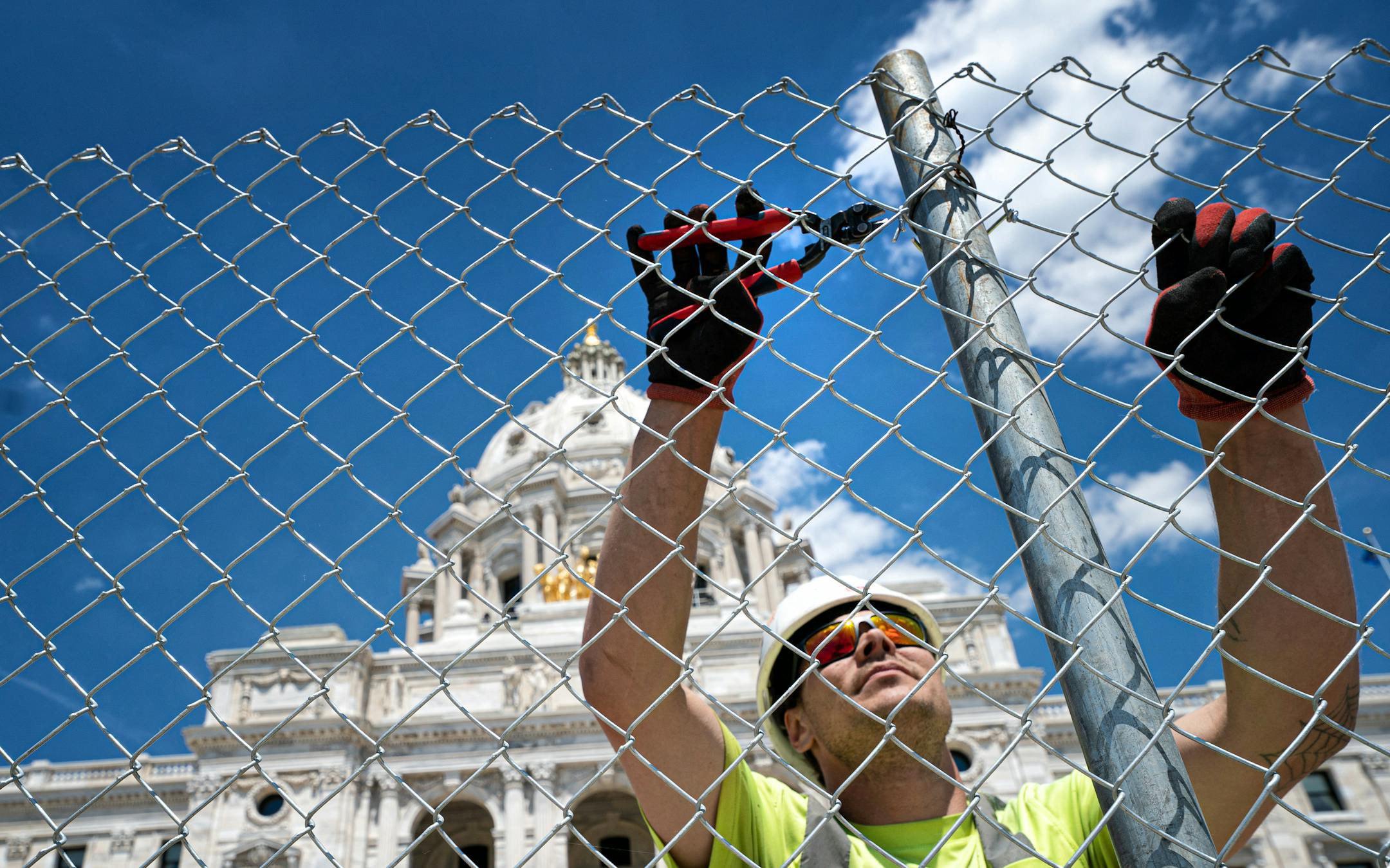
The 8-foot-tall chain-link fence that encircled the Minnesota Capitol since the unrest after George Floyd's killing a year ago is starting to come down, as state leaders prepare to reopen the "People's House" to the people.
State officials blocked public access to the building in March 2020, as COVID-19 spread across the state. A couple of months later, they quickly added the temporary fencing amid fears the building would be damaged during protests. Since then, policymakers and state officials have been weighing security demands with concerns about the lack of Capitol access and transparency.
They decided last month that the fence would come down June 1. "I am eager to open the doors to the Capitol so that Minnesotans can safely return to the People's House and advocate for our shared future. Their voices and stories and presence are a necessary piece in the process of democracy," Lt. Gov. Peggy Flanagan said in a statement.
"While virtual channels have helped us reimagine what access might look like, there's nothing quite like meeting directly with your legislators or a rally in the rotunda," she said.
Flanagan, who leads the Advisory Committee on Capitol Area Security, thanked state workers Tuesday for keeping the building safe during a challenging time.
The fencing, set atop concrete barriers, has been used to secure the area around the State Capitol after the Jan. 6 insurrection in Washington, D.C. And it remained in place through the trial of former Minneapolis police officer Derek Chauvin, convicted of murdering Floyd.
Keller Fence, the company the state contracted with, was loading up sections of the fence Tuesday.
It could take up to 10 days to tear down the structure and remove everything from the Capitol grounds, said Department of Administration Assistant Commissioner Curtis Yoakum.