

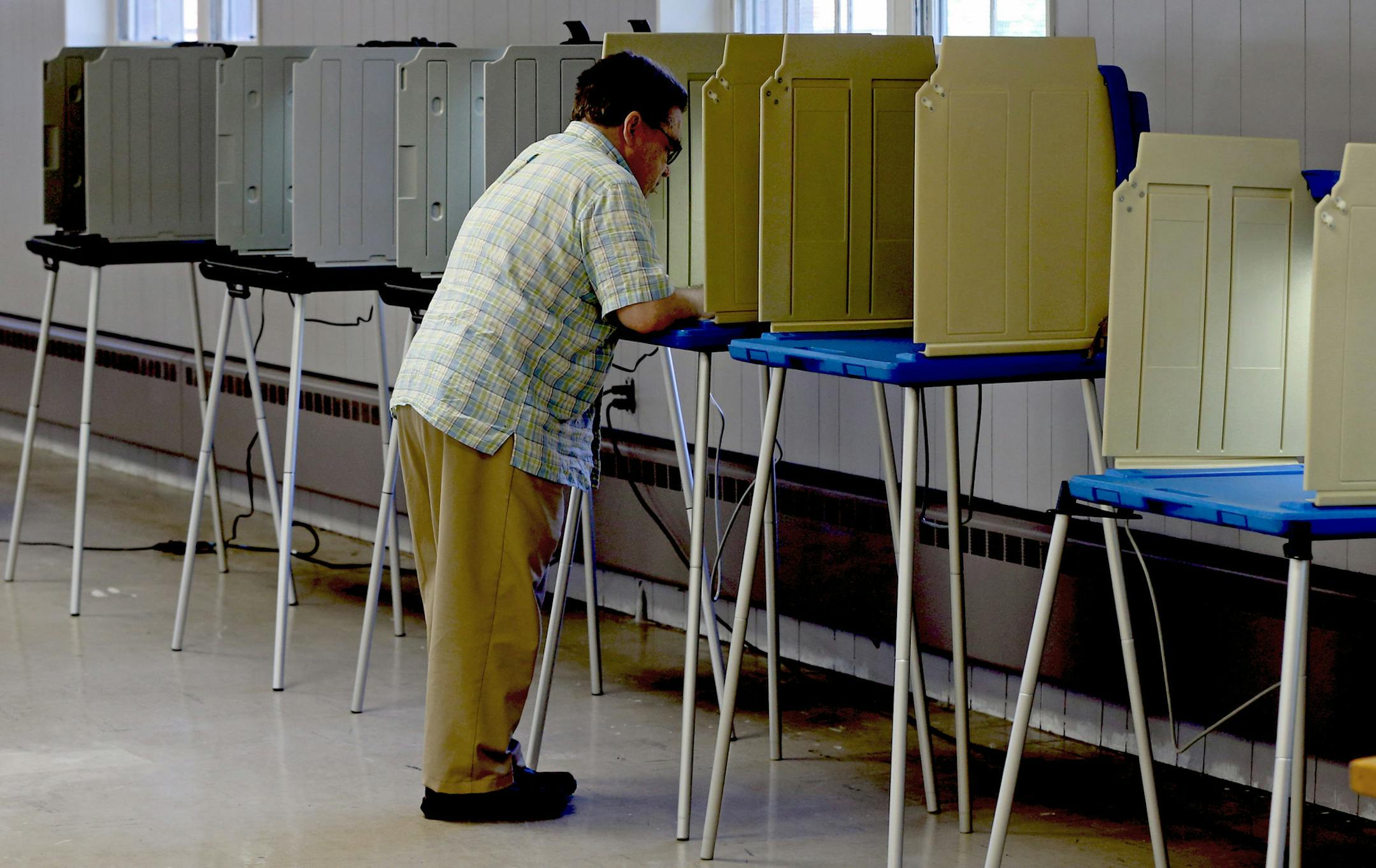
Republican Party state chair Keith Downey is good at generating positive partisan spin. But he overreached Wednesday when he boasted that voter turnout in Tuesday's GOP primary election bested the previous high for Republicans in an August primary by 40 percent.
That's accurate — but Minnesota has had only two previous August primaries, 2010 and 2012, and neither of them included serious Republican nomination contests for major statewide offices, as Tuesday's election did. Even with a 40 percent gain over those years, Tuesday's GOP showing was meager. By Wednesday's count, only 183,086 of the state's 3.88 million eligible voters cast ballots in the GOP column.
The numbers from the DFL column were no better. The day-after DFL voter count was 191,162. DFL state chair Ken Martin did some spinning of his own, calling the DFL's tiny turnout edge a "big red flag" for Republicans. "Their own party faithful are not excited enough to show up and vote in a primary," he said.
But Martin also offered reporters a more candid take on Tuesday's pathetic turnout: "It's really too bad. … I think it's a real travesty for democracy."
It is indeed. Low turnout undermines an election's legitimacy. It enhances the clout of well-organized special interests while underrepresenting average citizens. In primaries, it tends to rubber-stamp party endorsements, rather than serving as the check on party insiders' judgments that Minnesota's candidate selection system was designed to provide.
In the long run, low-turnout elections erode respect for government. Minnesotans should be embarrassed that Tuesday's intraparty election appears to have attracted just under 10 percent of eligible voters, or 12.2 percent of previously registered voters. (Final tallies will be certified by the State Canvassing Board, which is set to meet Tuesday.)
Martin added his wish for a calendar change that might boost participation in future primaries — a shift to a date in June. GOP chair Downey also likes that idea. So do DFL Gov. Mark Dayton and a goodly number of candidates for statewide office. This newspaper has backed a June primary date for many years.
But an earlier primary faces potent opposition among legislators and county election administrators, particularly from Greater Minnesota. Legislative sessions last until mid-May and sometimes go into overtime. Legislators fear that if they face a challenge in a June primary, they'll be marooned in St. Paul, unable to defend themselves personally in their districts.


