They were lonely. They longed for home. For more than a century, they waited patiently for their return to native soil.
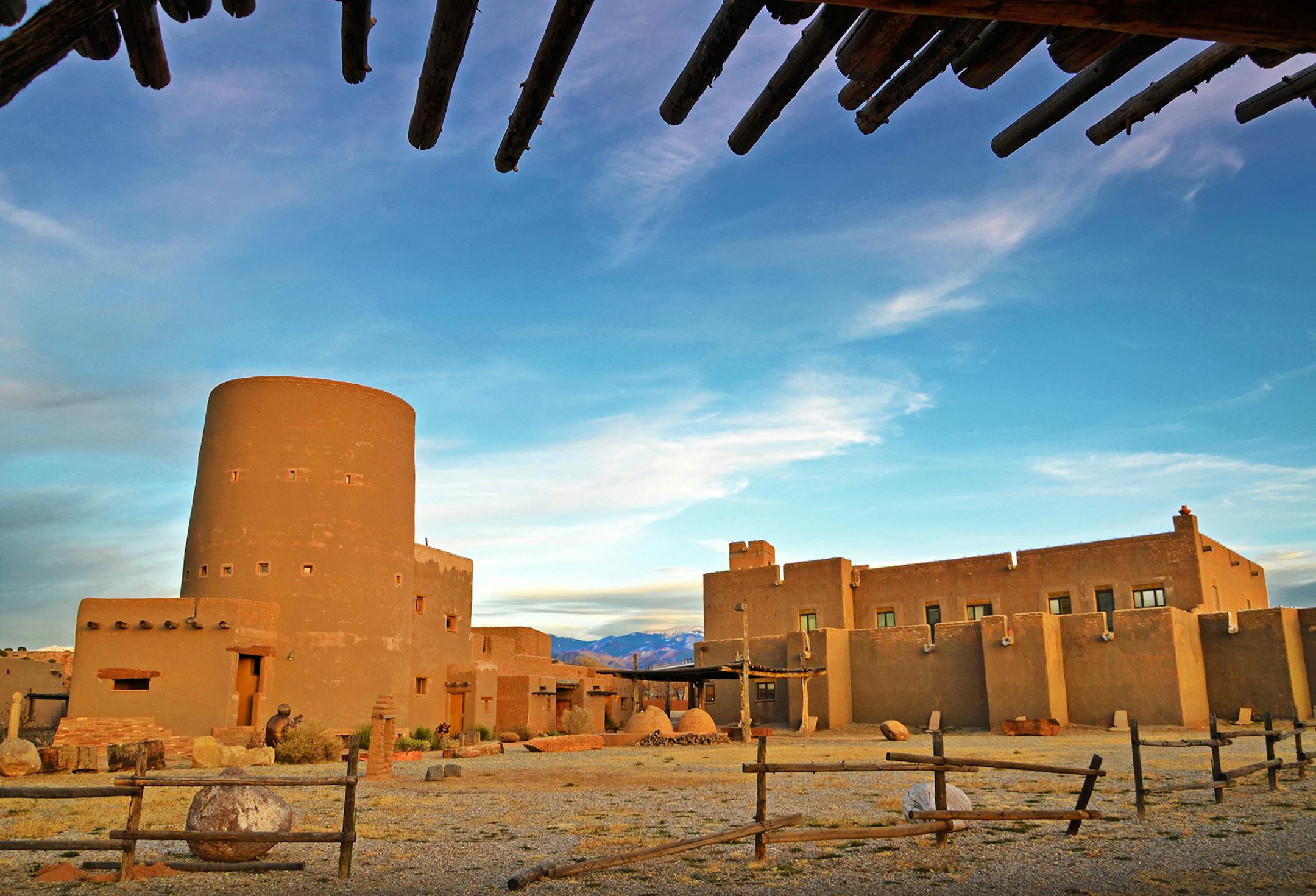
Now, the 100 pottery pieces representing six northern New Mexico pueblos are home at last, cherished and protected, at the Poeh Cultural Center in Pojoaque, N.M.
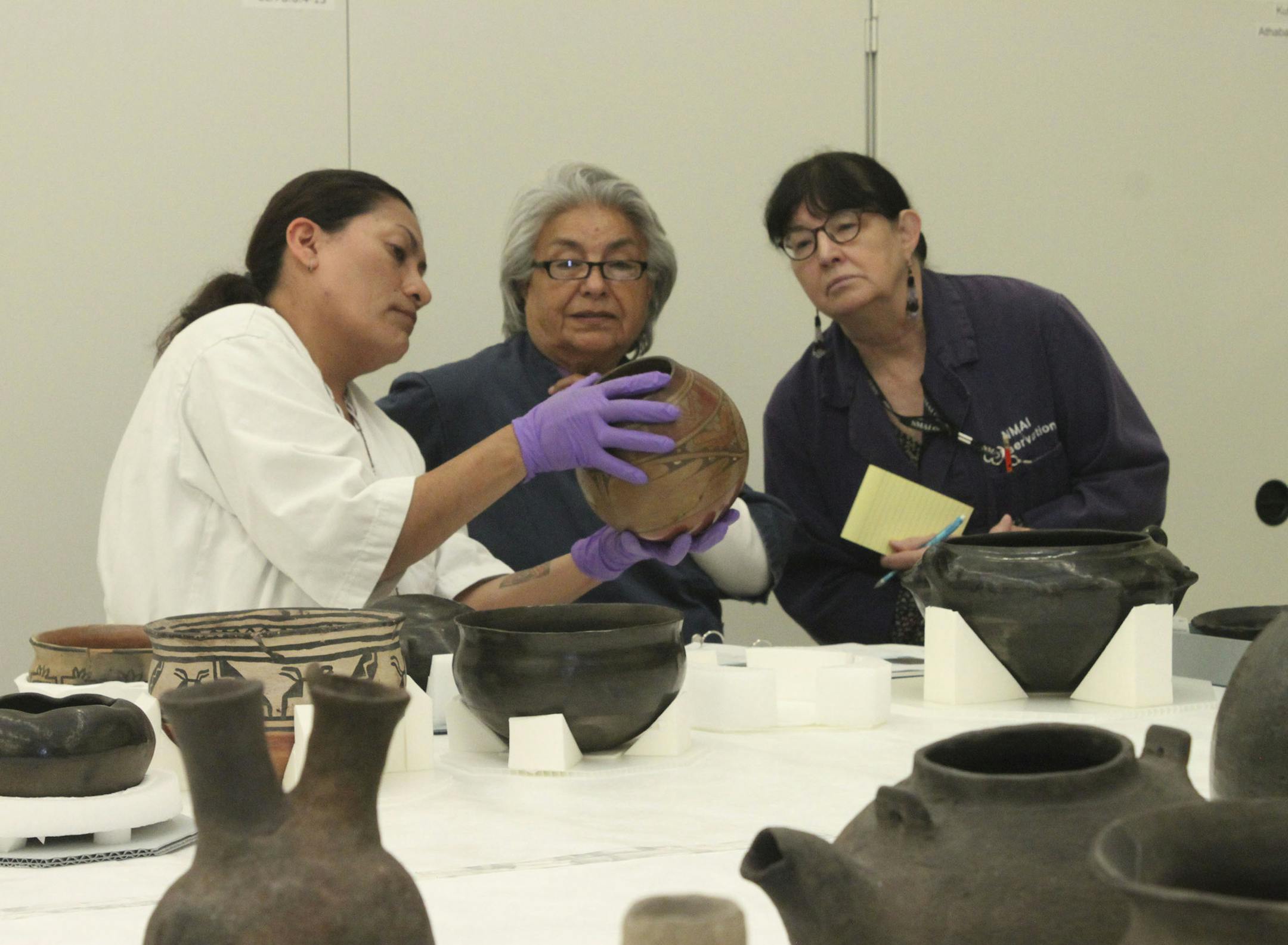
Their return is due to a historic two-year collaboration between leaders at the Poeh and representatives of the Smithsonian Institution, which has housed the pieces in its National Museum of the American Indian (NMAI) in New York since the early 20th century.
During a recent trip to my hometown of Albuquerque, I took the easy drive 20 minutes north of Santa Fe through a red-rock landscape to Pojoaque to see the exhibit, Di Wae Powa — Tewa for "They came back."
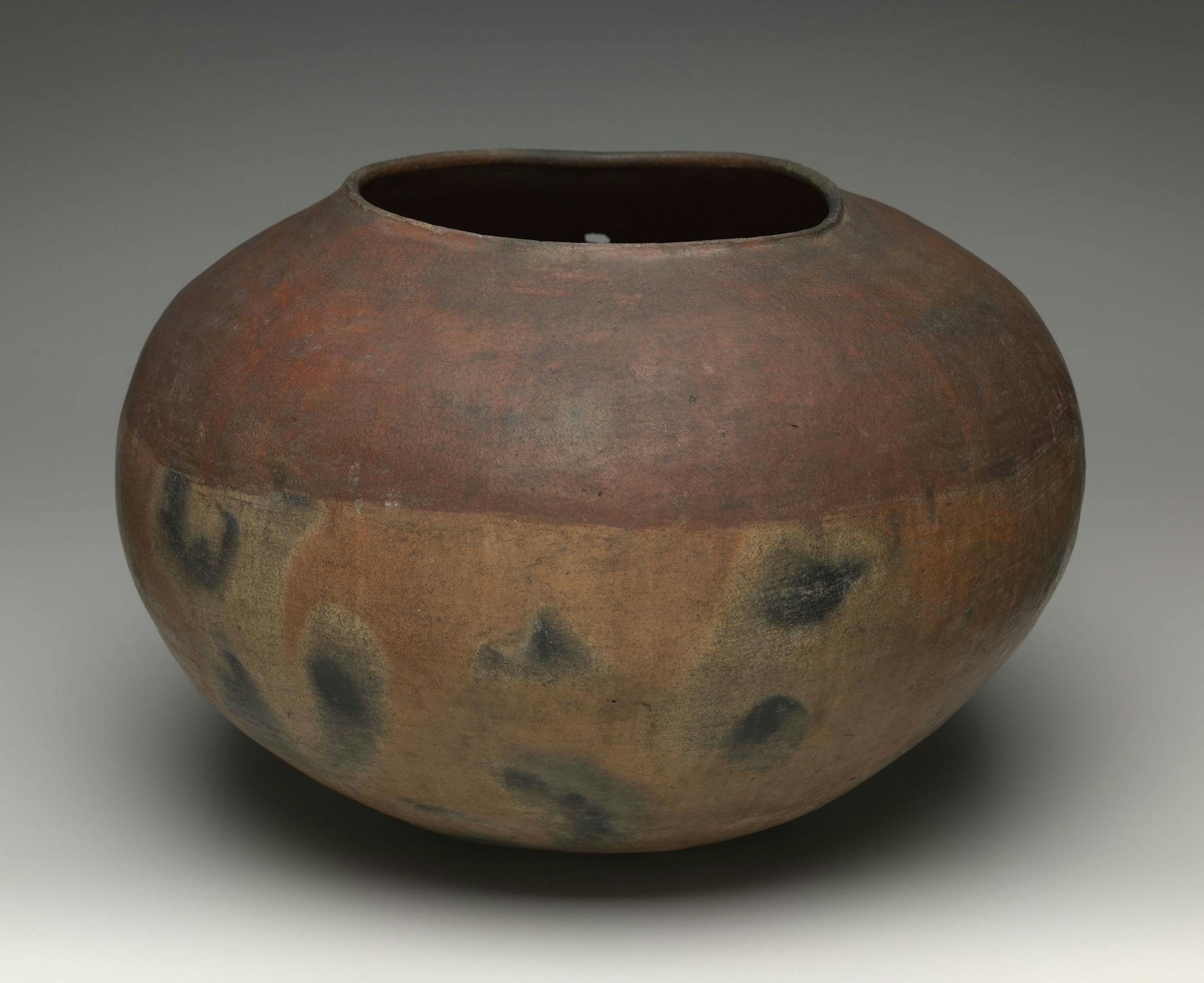
The pots — jars, pitchers, bowls, wedding vases, even a teapot — showcase designs from 1850 to 1930 from the pueblos of Pojoaque, San Ildefonso, Ohkay Owingeh, Santa Clara, Tesuque and Nambe. With their ancient designs and muted colors, formed from nearby water and earth, seeing them gave me a deeper longing for the region where I was raised.
To enter this exhibit is to enter a sacred space. All 100 pieces are housed in a single room, displayed in five glass cases, some stacked six levels high. The day we arrived was a sunny Monday with a boundless blue sky, a light breeze and few other visitors. I wished for a chair so I could sit, feeling figuratively weighed down by the collective history housed in this intimate setting.
Karl Duncan, the elegant adobe center's executive director, kindly validated my emotional reaction.
"From the beginning, a lot of our advisers didn't want to call it an exhibit," he said. "It's the pots' room. It's their sitting place."