

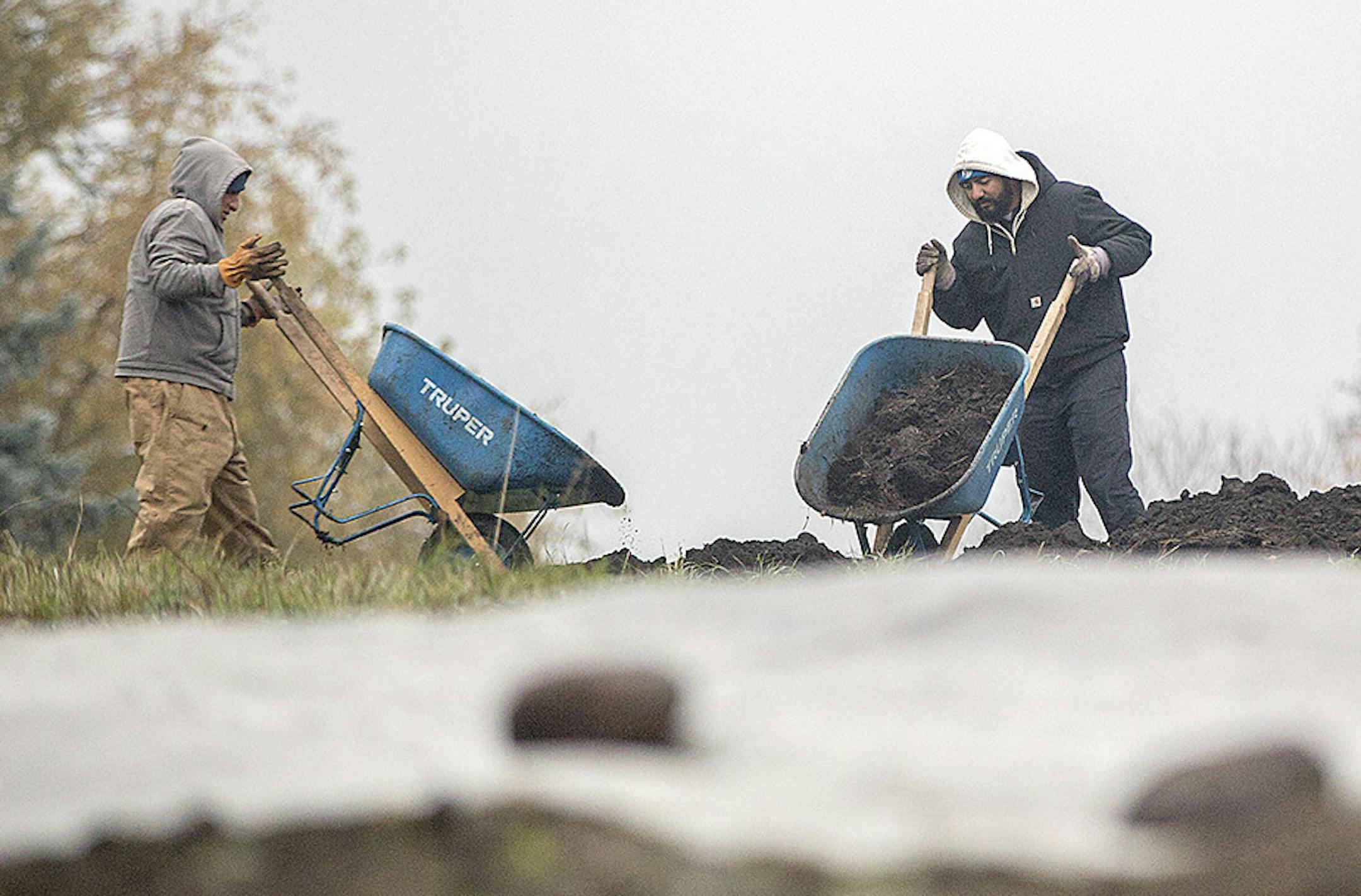
A county road project on the edge of Lake Minnetonka exposed not only Indian burial mounds dating back hundreds of years, but miscommunication between the responsible state and county agencies.
Now, three years after the mounds were inadvertently destroyed during construction, their restoration is nearly complete. Mario Uribe, a member of the Upper Sioux Community near Granite Falls, Minn., has been waiting since then for the work to be done.
"I want to see it through to the end," Uribe, 39, said on a recent biting afternoon at the mounds site, located in Minnetonka on the city border with Woodland. "And here we are."
The restoration team — which included Hamline University graduates, state-contracted workers and members of Dakota communities — finished most of the restoration this month. Leaders with the Minnesota Indian Affairs Council said they expect to close the site within a week and plan to reseed and fence the ground when it warms in the spring.
For Uribe, rebuilding the mounds — first mapped in 1883 — from a giant pile of excavated dirt was patient, sensitive labor that could have been avoided when Hennepin County first embarked on the project years ago.
"It's been a long, hard road to get to this point," he said. "If they did know about [the mounds], it could've been avoided."
That point has been echoed for years by members of the Indian Affairs Council, including cultural resources director Jim Jones, who said no one consulted the state council when the project was first proposed.
Gov. Mark Dayton recently met with Dakota elders who oversaw the restoration to learn how to avoid the disruption of Indian cemeteries in the future. One suggestion was for the Indian Affairs Council to employ a "Dakota archaeologist liaison" who would consult the state during construction projects, according to Matt Swenson, Dayton's assistant chief of staff.


