

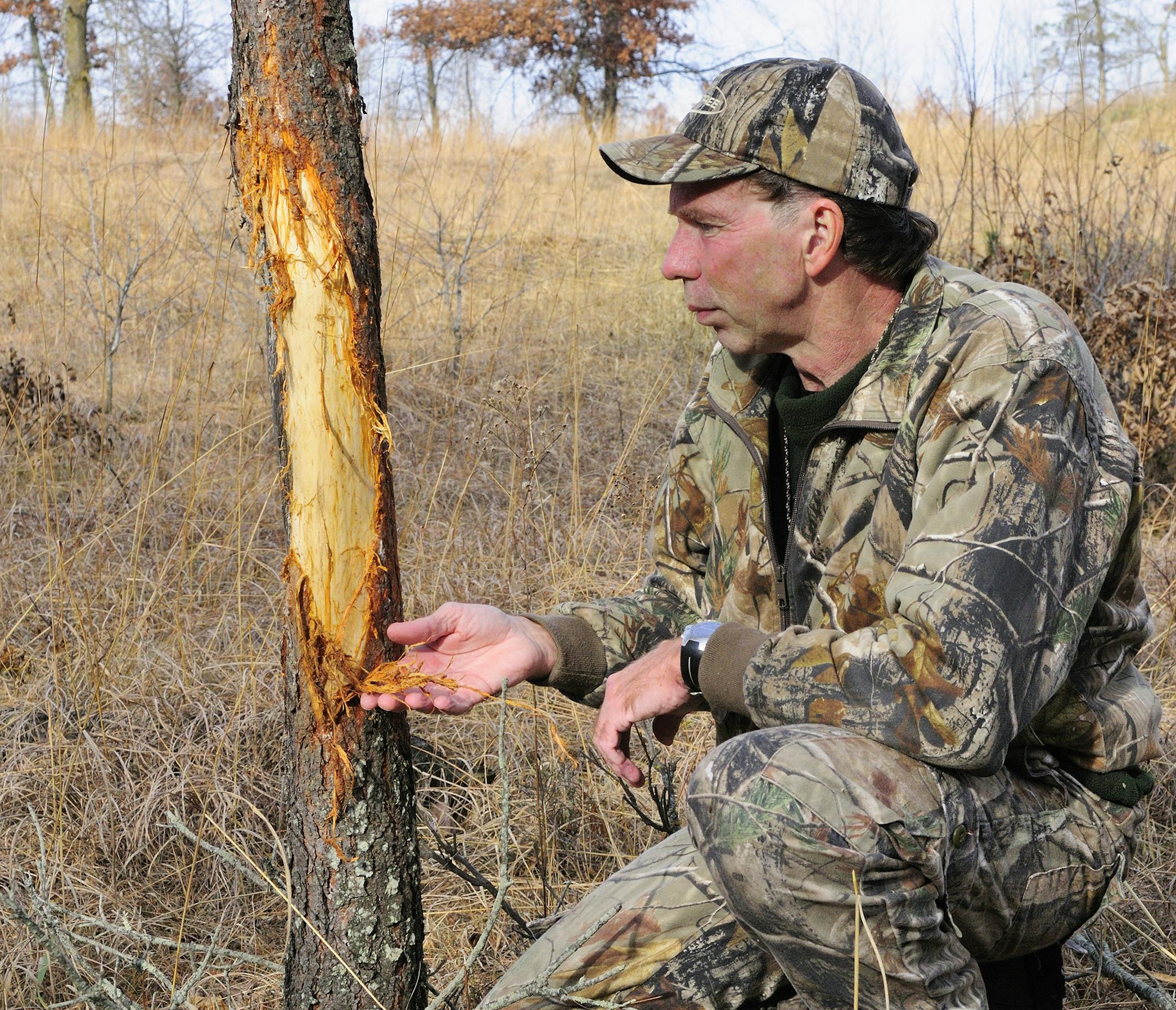
Every deer hunter knows that Minnesota's 2015 firearms season will open at a half-hour before sunrise Nov. 7.
Despite the availability of deer and deer-hunting material (books, magazines, television, videos), the secretive lives of whitetails remain largely unobserved by most humans. Ask 10 hunters a specific question about whitetail biology and you're likely to get as many different answers.
Thinking about that, it's not too difficult to understand why.
Numerous deer-hunting "facts" are, in actuality, "tales." Those facts are simply someone's misinterpretation of what they observed, and they espouse that information as truth. Those deer tales are then passed down through generations of hunters, and understood to be gospel.
Let's take a look at a few of those whitetail miscues. Knowing the truth may help you put venison on your table.
Whitetail Tale No. 1.
Buck rubs on saplings are made when male whitetails attempt to remove velvet from their antlers.
Truth: Although a few rubs found in early September may be a buck removing velvet, most rubs are made between mid-October and early November long after the velvet shed. Removing bark from a sapling and leaving scent from his forehead gland, a buck allows a visual and an olfactory signpost for other deer. What information other bucks and does learn from rubs is not fully understood, but the breeding status of the rub-maker is probably conveyed. That big rubs are usually made by big bucks is foremost in hunters' minds. Few whitetail clues stir a hunter's blood like a fresh rub on a large sapling.
Whitetail Tale No. 2
The deer track was made by a buck whenever a hunter sees one showing splayed toes and dew claws.


