

BRAINERD, MINN. - If you were fortunate enough to draw a turkey hunting permit for the first of eight 2009 Minnesota turkey hunting seasons that began last Wednesday -- or if you hunted in another state -- perhaps you have already lured a romantic tom turkey to within gun or bow range.
If so, and your marksmanship was true, congratulations. But now what?
Maybe your financial adviser is wiser than mine and you've lost only one-third of your precious life savings compared to my one-half, in which case perhaps your deceased turkey took a postmortem trip to the taxidermist via a hearse shaped like a GMC pickup. Keep in mind you'll need roughly 1 cubic yard of space to display that beautiful full-sized turkey mount.
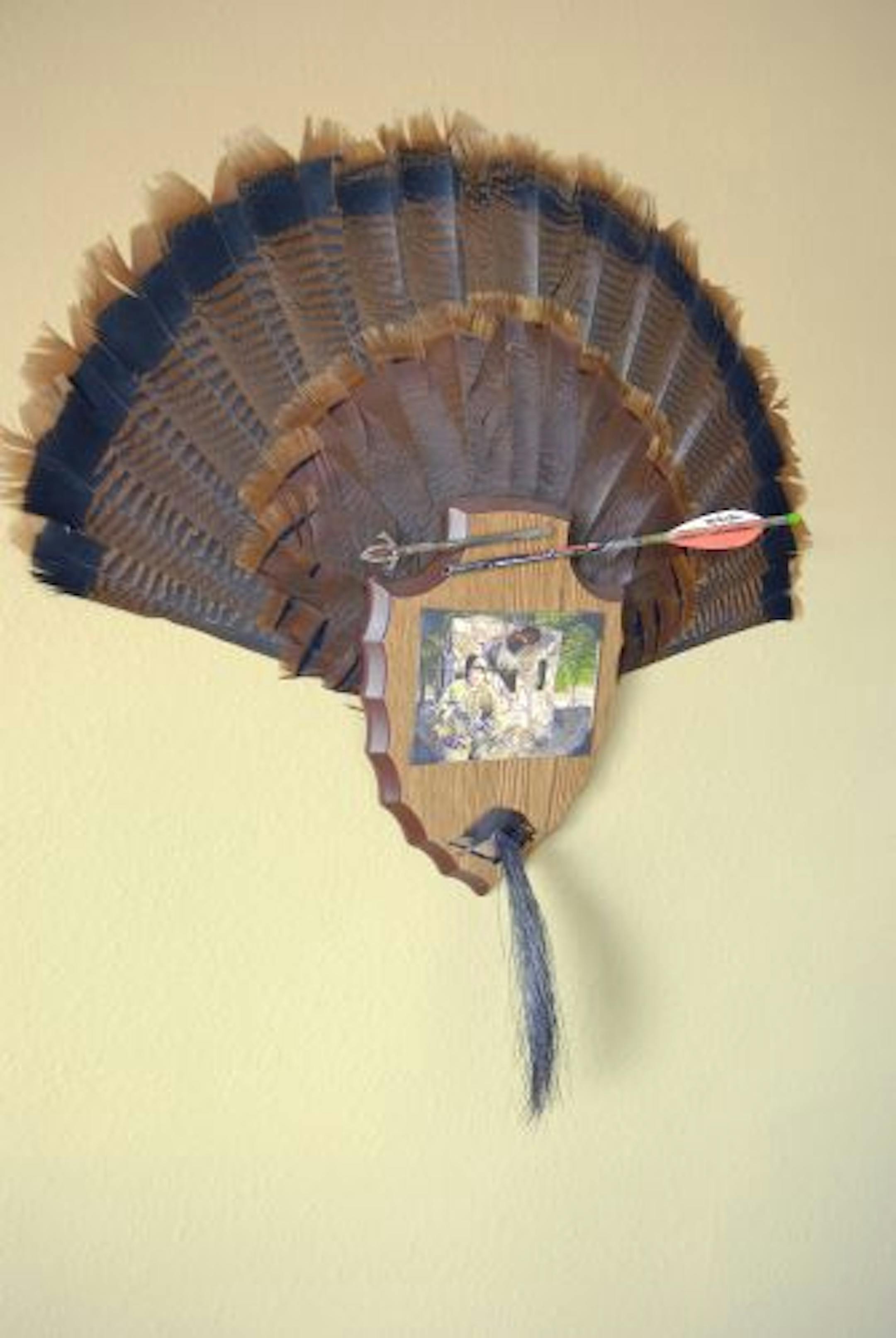
Instead, perhaps your freezer holds the bird's carcass awaiting its chance to occupy the Weber. Hopefully in a separate container lie other turkey parts, such as a tail, beard and legs, items you can use to construct a cheap and simple -- but attractive -- display that not only honors your bird but also takes up little room in your home.
Last spring, I built just such a display using the tail and beard from a tom turkey I bagged with my bow. You can do the same.
First, carefully remove the tail from your turkey. Grasp the triangle-shaped knob at the base of the tail and, using a knife, remove it by cutting it as close to the body as possible. Then scrape the meat and fat from the base of the tail. Remove as much as possible, but be careful not to cut the connective tissue between the tail feathers.
Next, rub both sides of the tail base with a 50-50 mixture of 20 Mule Team Borax and salt. Now spread the tail on a large piece of cardboard and, using pins, create a nice even fan. Once the tail is pinned into place, rub more salt and borax into the base. Allow the tail to dry for a few days, then scrape away the loose salt and borax and add more. Once again, allow the tail to dry for a few more days.
This time, do a more thorough job of scraping the tail free of salt and borax. Cover the base of the tail using glue. Epoxy works best, but you can also use boot repair glue, such as Shoe Goo. Once the glue has set, your turkey tail fan should be firm and insect-free for many years.


