


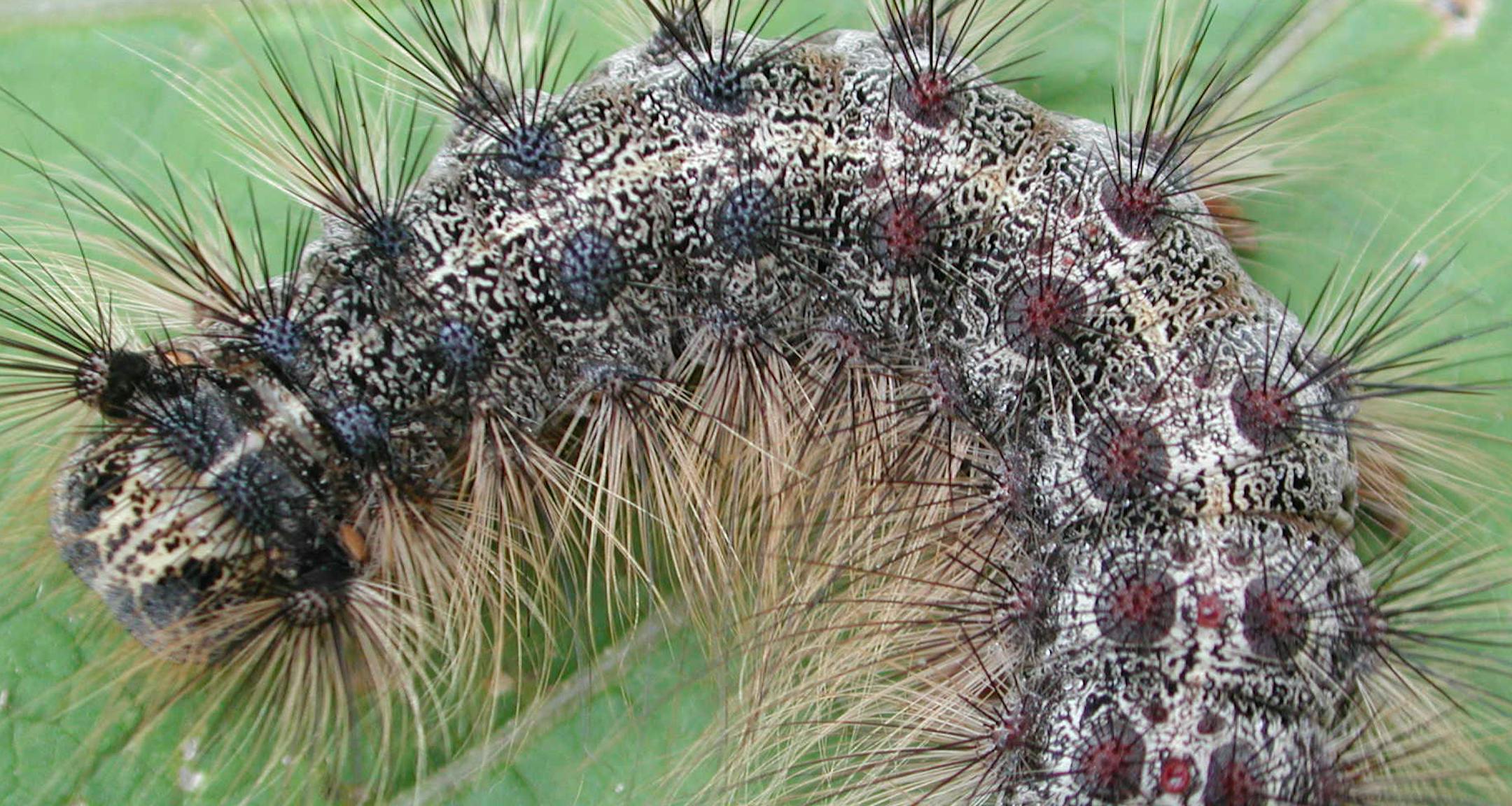
At first, Jane Tilka and Bill Dolan noticed an unusual number of blue- and red-dotted caterpillars and their black droppings in their Lowry Hill backyard.
"It was like raining poop," Tilka said. "It was everywhere. There was a layer every day."
Then the caterpillars turned into gypsy moths. The invasive species latched onto their five large white oak trees and laid thousands of buff-colored nests, each with thousands of eggs inside.
Their home and others in Lowry Hill have been quarantined since last summer, preventing residents from taking trees and shrubs out of the area.
But an attack plan could kill off the gypsy moths, help slow their statewide advance and save the area's prized trees.
Later this month, the Minnesota Department of Agriculture plans to eradicate the aggressive leaf-devouring population by misting the area with a biochemical insecticide. The specific date has yet to be determined, but the MDA says it will be between May 15 and 31.
"There are more egg masses in this area than we have ever seen," said Kimberly Thielen Cremers, MDA gypsy moth program supervisor.
The agency will use a small airplane to fly over the area and surrounding neighborhoods just after sunrise. The first two applications will spray 310 acres with an insecticide called Btk, which will kill the caterpillars. The third will cover the smaller quarantined area.
![There is no question of the infestation on this part of the oak tree. Once the moths emerge they leave an empty shell.]Gypsy moth eggs have invaded the yards of Minneapolis' Lowry Hill residents. The buff-colored egg masses have caused a headache for resident Bob Bolen. His neighborhood has been quarantined for months, prohibiting him and his neighbors from moving trees and wood items from the area.]Richard Tsong-Taatariiïrtsong-taatarii@startribune.com](https://arc.stimg.co/startribunemedia/DV4GGRMZPYFFSG5GH77K6LYYAQ.jpg?&w=1080)


