

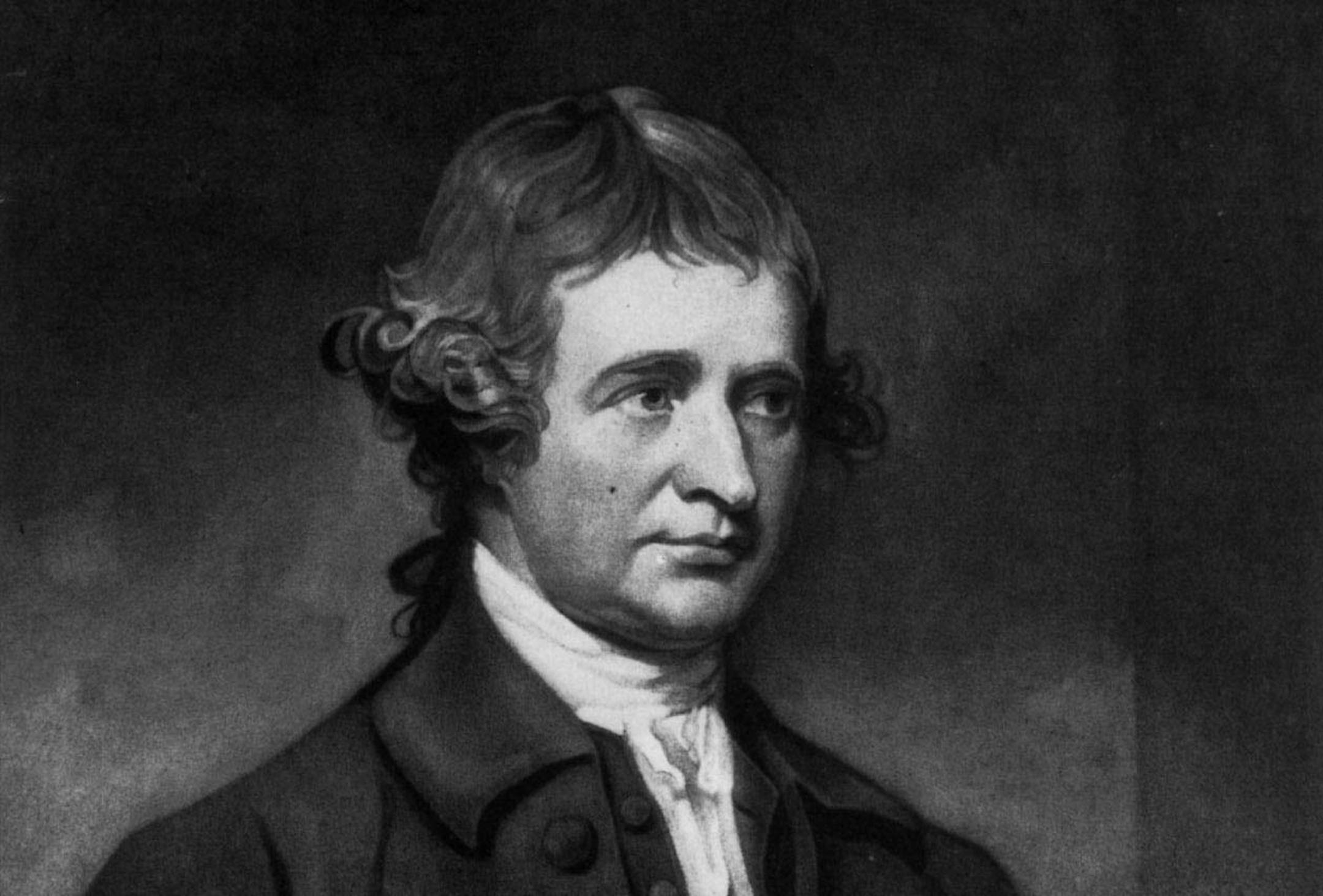
The works of Edmund Burke, an 18th-century British politician and political writer, are no longer as widely read as they should be. Here's hoping a fine new biography by Jesse Norman, an academic philosopher and a Conservative member of the British Parliament, will help put that right.
As Norman explains in "Edmund Burke: The First Conservative," his subject was not just an engaging man and an unusually deep thinker for his time. He has good answers to questions that politics still poses two and a half centuries later.
You couldn't call Burke's political career a success. He spent decades in Parliament, but held executive office only briefly. He's remembered for a series of essays, letters and pamphlets on the great issues of his day. He argued in support of the American colonists on the eve of the Revolutionary War. Most famously, he warned that the French Revolution carried the seeds of social and moral ruin. Events proved him right on both counts, and on many others as well.
In his own time and down the years, Burke has often been accused of inconsistency. Take his support for revolutionary thinking in America but not in France — what sense does that make? Burke argued that they were different kinds of revolution. The American colonists were resisting "a wrongful and arbitrary assertion of power by the British government," as Norman puts it. Their grievance was specific, and their demands measured. Above all they were acting to defend, not overthrow, American society and institutions.
The French revolutionaries, in contrast, devoted themselves to total revolution. They wanted to smash French society and institutions and build them anew. The French Revolution, Burke argued, was an assertion of absolute power in the name of abstract principles. He opposed both, especially in combination.
His suspicion of absolute power gives modern readers no pause: That value is embedded in Western political thinking, even if different systems have different ways of expressing it. But Burke's suspicion of abstract principles is more troublesome today. In contemporary politics, above all in the United States, people of every ideological stripe claim constantly to be upholding abstract principles — the principle of individual liberty, of the sanctity of life, of fairness in distribution, of property rights, of equality before the law, of free speech, of national security. Each of these principles, according to circumstances, is elevated to precedence over all the rest, and failure to acknowledge its pre-eminence puts dissenters beyond the pale.
Burke was the prototypical political moderate — and his moderation followed from his view that these and other abstract principles are inevitably in tension. That this insight should be controversial seems odd, yet it was and still is. Politics, in Burke's view, ought not to be about one principle simply prevailing over others, even if it commands majority support. It should be about balancing countervailing principles. No abstract rule can determine how this balance should be struck.
People disagree partly because their values differ, and that kind of disagreement may be irreducible. The solution is not a simple matter of "let the majority rule" (which is a form of absolute power). It's deliberation, compromise and accommodation based on intellectual modesty.


