
Advice for Legislature: Keep it simple this year

Minnesotans care about jobs and their children's futures. Focus there.

January 30, 2012 at 12:13AM
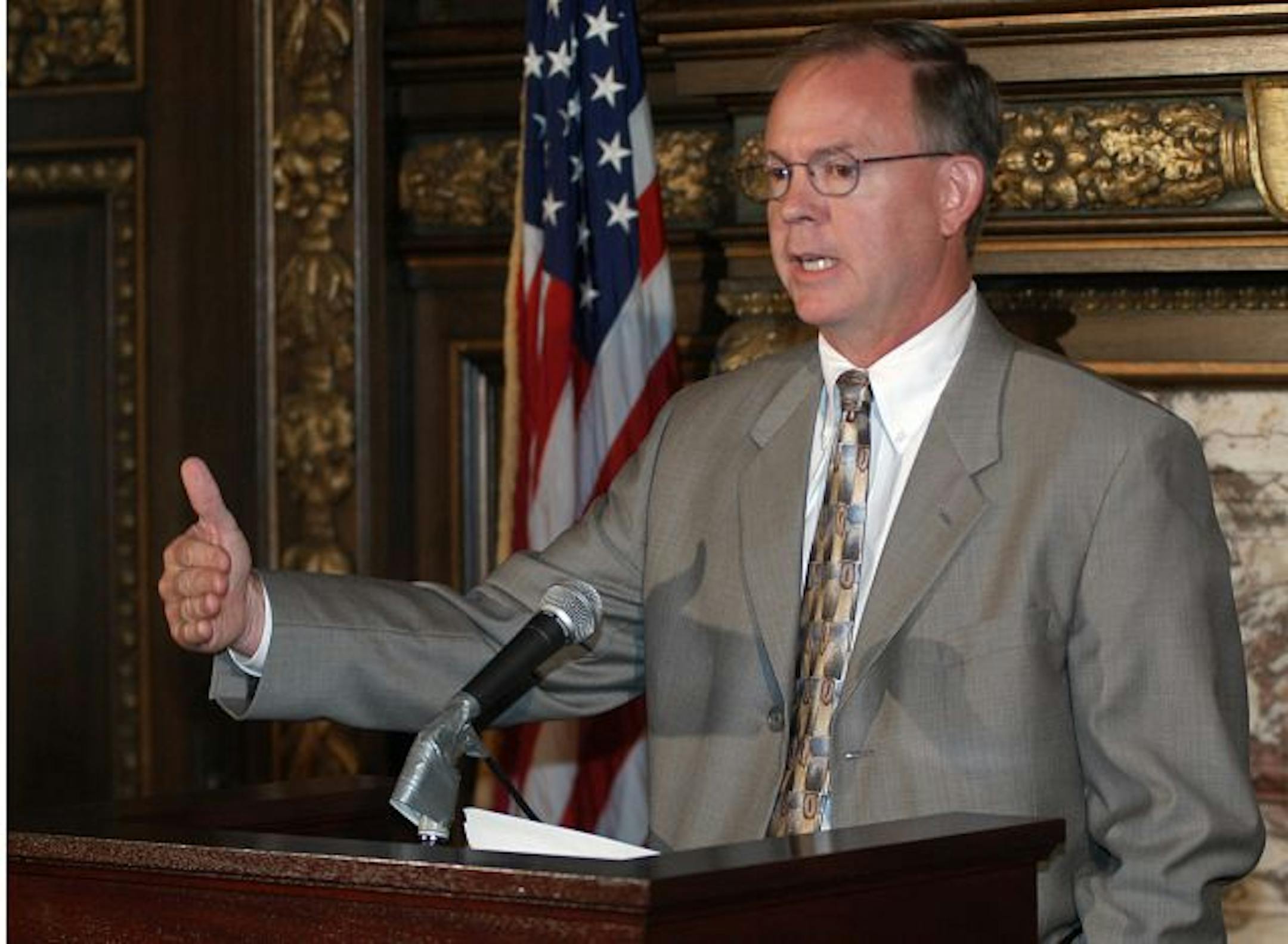
Charlie Weaver, former chief of staff to Gov. Pawlenty
Charlie Weaver, former chief of staff to Gov. Pawlenty (Star Tribune file/The Minnesota Star Tribune)

As far-fetched as it may seem, the 2012 legislative session could be one of the most productive and peaceful in years.

How can that be? Minnesotans fundamentally care about two things: their jobs and their children (OK, sports teams, too, but this isn't a stadium pitch).

They want to know that Minnesota will continue to be the place where the jobs of the future are created, and that their children will graduate from an education system that prepares them to compete for those jobs.

If legislators and the governor accomplish just three things this session, they can take credit for progress on both these important issues and leave St. Paul with a sense of bipartisan accomplishment.

Not a bad platform from which to launch reelection campaigns. Here's what they need to do:

1. Protect the 'surplus'

The $876 million budget surplus that was announced in November -- while certainly good news -- shouldn't be seen as a green light for new spending, particularly if you dig a little deeper into the numbers.

If you did, you'd find that slower economic growth expected through 2013 means it may be some time until we see real budget surpluses driven by increased economic activity.

Additionally, all that "surplus" tax revenue is already committed to the budget reserve, rainy-day fund and paying back the K-12 shift. After years of deficits and contentious budget fights, the state is finally beginning to get its fiscal house in order. Now is not the time to spend money we don't have.

2. Make it easier to grow jobs

In the 21st century, people can go anywhere in the world to produce their latest innovative product. Our state should encourage that kind of entrepreneurial activity, not chase it away with high taxes and unnecessary regulations.

Our slow, inefficient and burdensome regulatory environment is causing us to lose thousands of jobs. Several large companies have had projects delayed or have expanded operations in other states due to our punishing regulatory climate.

While we can all agree that regulations that protect our health, safety and the environment are important and should be enforced, other states have figured out how to accomplish these goals with far less hassle and red tape than Minnesota imposes.

The Legislature should eliminate regulations that are duplicative, require state agencies to review permits in a timely manner and coordinate the review process between agencies. Providing tax relief to job providers would also be a welcome indication to innovators that Minnesota is a great place to start and grow a company.

The Legislature should also continue their work with Gov. Mark Dayton to make state government operate smarter and more efficiently. Several large companies have volunteered to assist Dayton and state agencies in reaching this goal.

For Minnesota to compete with other states for new businesses, our agencies must operate at the "speed of commerce."

3. Pass education reform

We conducted, along with the Itasca Project and McKinsey, a study of the best education systems in the world. We found that more money is not the answer to improving the performance of Minnesota students.

What matters is great teachers, well-trained principals and access to data to drive improvement.

To help ensure that we have our most effective teachers in every classroom, the Legislature should end the practice of "last in, first out," or LIFO.

LIFO is an antiquated rule that forces school districts to fire teachers based solely on years of service, without regard to performance. Why would we subject our children to a system that rewards longevity, not competence?

LIFO, which exists in only 11 states, results in perverse situations, such as a future Minnesota Teacher of the Year who was laid off early in her career simply because she was "last in." It must be repealed.

Minnesota's education system, while still a national leader in many respects, is losing ground to other states and international competitors. Our students can't wait any longer for reforms that will help them compete with the rest of the world.

• • •

As a former legislator, I understand the tendency for elected officials to want to "do a lot of stuff" when they go back into session. I was as guilty of that as anyone.

What I failed to realize is that success at the Capitol doesn't mean passing a bunch of new laws. Sometimes, success just means passing just a few things that will really make a difference -- and then going home.

Maybe this will be the session where legislators give that a try

____

Charlie Weaver is the executive director of the Minnesota Business Partnership, which represents more than 100 CEOs from Minnesota's largest employers.

about the writer

about the writer

CHARLIE WEAVER

More from Commentaries

See More
card image
Renée Jones Schneider/The Minnesota Star Tribune

New enforceable limits bring classrooms closer to research-backed optimal sizes. Now the district must deliver.

card image
card image