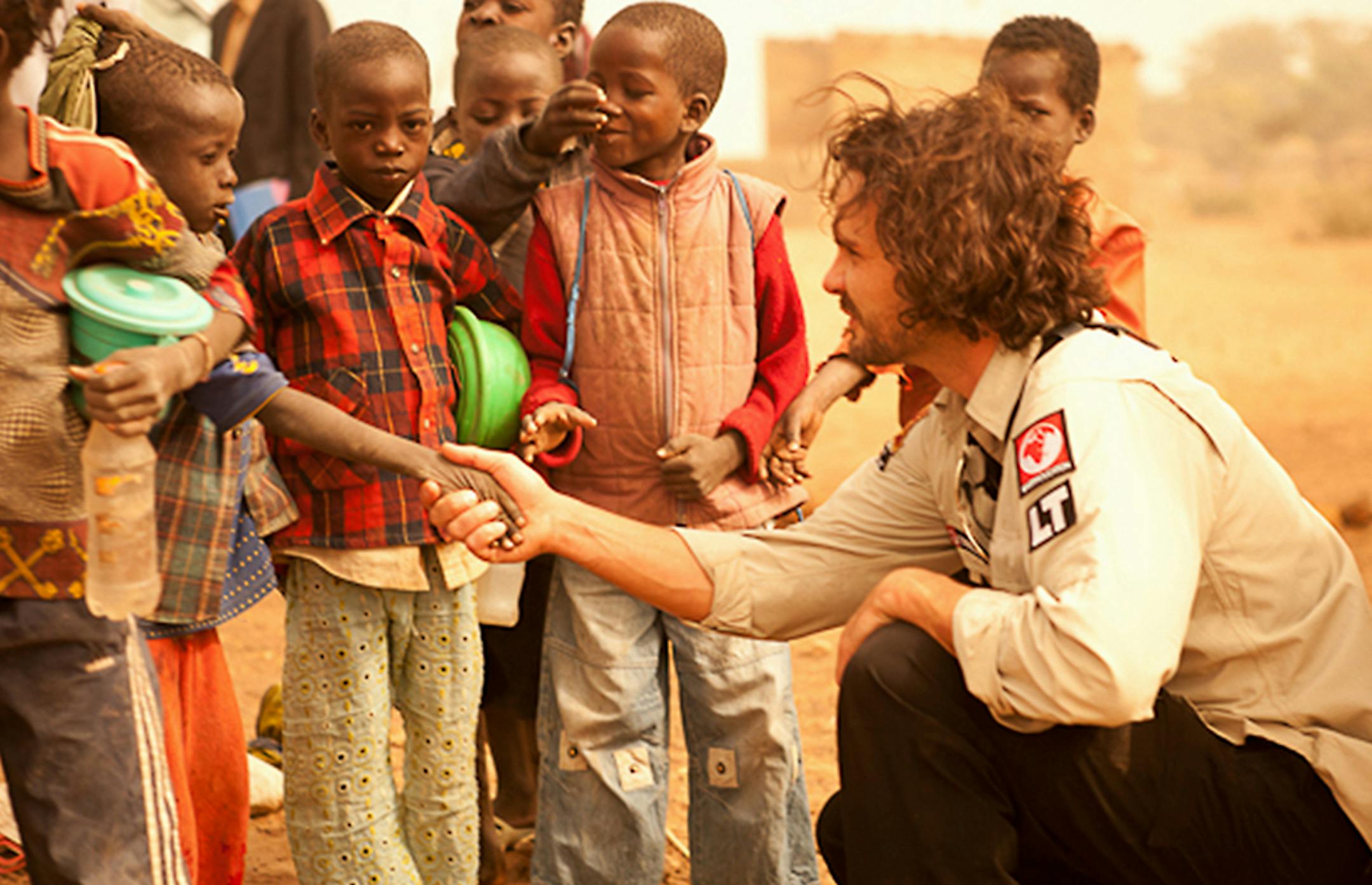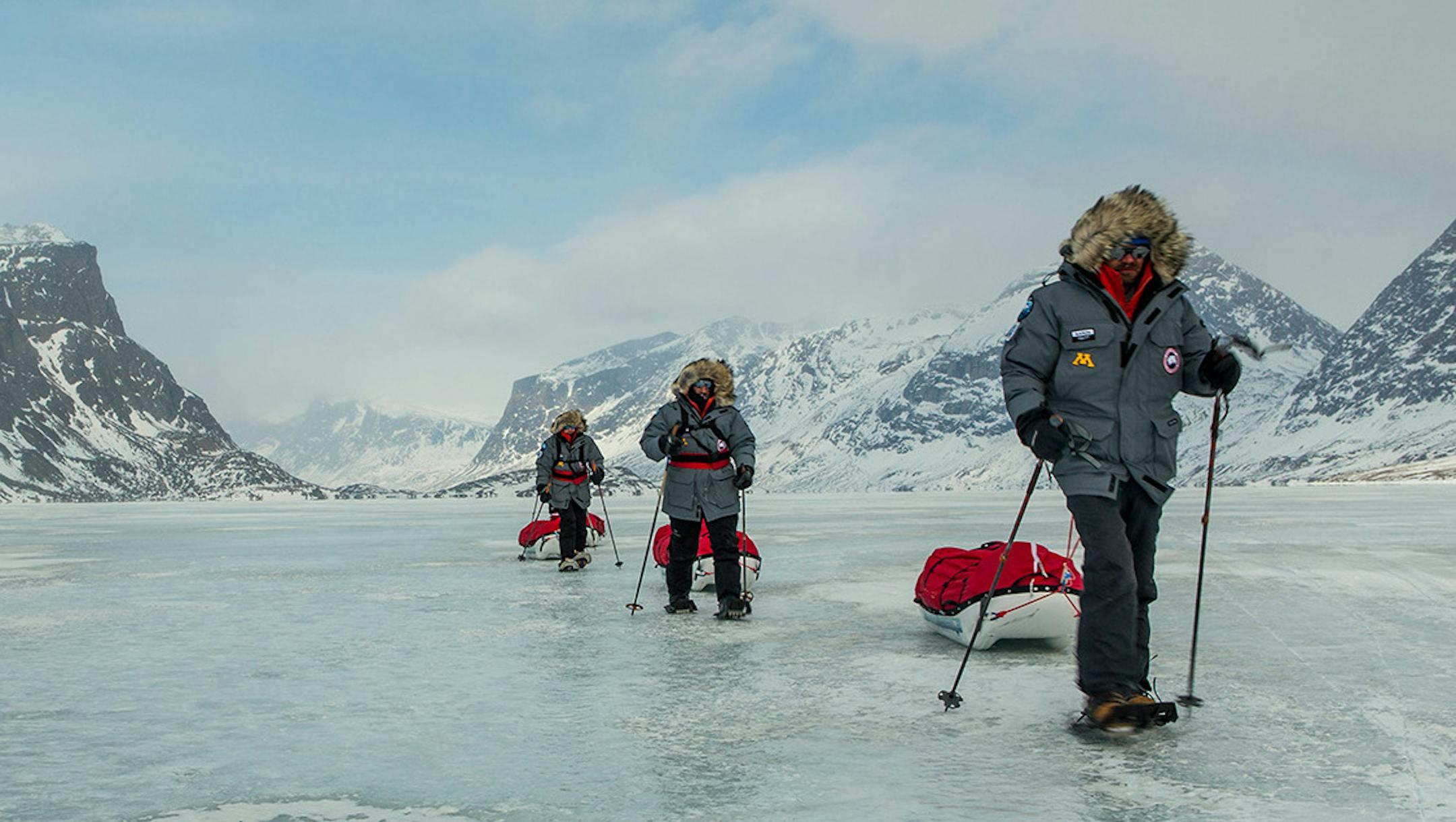
Getting battered by winds and 40-below temperatures in a tent on Baffin Island, Nunavut, Aaron Doering broadcast lessons that he and his expeditionary team learned along a 170-mile trek across the frozen Canadian Arctic. Now, in retrospect, he can't help but be in awe of how far he has come. From a farm boy who grew up baling hay on his family homestead outside of Good Thunder, Minn., to one of the leading adventure learning experts in the country, his work has literally taken him around the world and back.
The University of Minnesota professor has made nine trips to the region, the Canadian territory of Nunavut. The most recent was the aforementioned trek by ski and snowshoe in April. Over the last 15 years, projects have led him far, from Siberia, Nepal and Burkina Faso to the northern reaches of Norway and Australia.
As such, he has found himself at the forefront of adventure learning, through which he works to connect K-12 and adult learners to these far-flung locales. Also the director of the Learning Technologies Media Lab at the University of Minnesota, Doering uses technology to give students a firsthand glimpse into issues of sustainability, culture and the environment.
In a recent conversation, Doering, 45, discussed his humble beginnings, his motivations as an educator, and his mission to teach students of every age about the cultures and landscapes at the far reaches of the earth. Here are edited excerpts:
On how he got started
As a farm kid, I was always out exploring down by the river and outside doing chores on the farm. I became really interested in the issues surrounding the environment after I got my undergraduate in social studies and went for my master's at Minnesota State (University), Mankato in geography. Then I worked off and on for National Geographic for about eight years and became even more fascinated with this idea of really exploring regions that many people don't know much about. Before I got my Ph.D. from the University of Minnesota, I also taught K-12 for about four years in Rochester, and I always wondered why we couldn't get students more motivated to learn about what's happening in the world.
On his first adventure learning trip in 2004
It was a crash course — a six-month dogsledding trip across the Canadian Arctic. It started with getting funding and putting a six-person team together. As you can imagine, living in a tent for six months, you learn a lot about taking care of yourself, from the safety piece, to the melting of snow for water, to the gear, to taking care of the dog sledding team. We ended up having over 3 million learners worldwide, and this was before social media was big. It had grown like wildfire, so we knew we were on to something.
On how his adventure learning expeditions play out
It involves a lot of traveling and thousands of terabytes of data. As we travel, we deliver the online adventure learning project where we design a learning environment in the form of a website (see thechangingearth.com). What we then do is write an entire curriculum that is focused on whatever we are focusing on while we're traveling — the people, environmental issues and social issues. Then we do updates all along the way, literally from the tent. We set up the satellite system. All the video we shoot during the day, we edit in the tent at night and send it out.
On what draws him to the Arctic
I've been there nine times now and it keeps calling me back. It's truly the people, I love to spend time with them and hear their stories. It's also the landscapes and the challenge to your soul and mind as you're out there trying to survive in these crazy conditions of minus-40 degrees and blowing snow and polar bears.