

Despite the best intentions of educators to produce college-ready graduates, barely one in four high school seniors walking across stages in the next few weeks will wear a cap and gown at a four-year college, according to U.S. Census statistics.
Children from homes without a college graduate are even less likely to even go to college, let alone graduate.
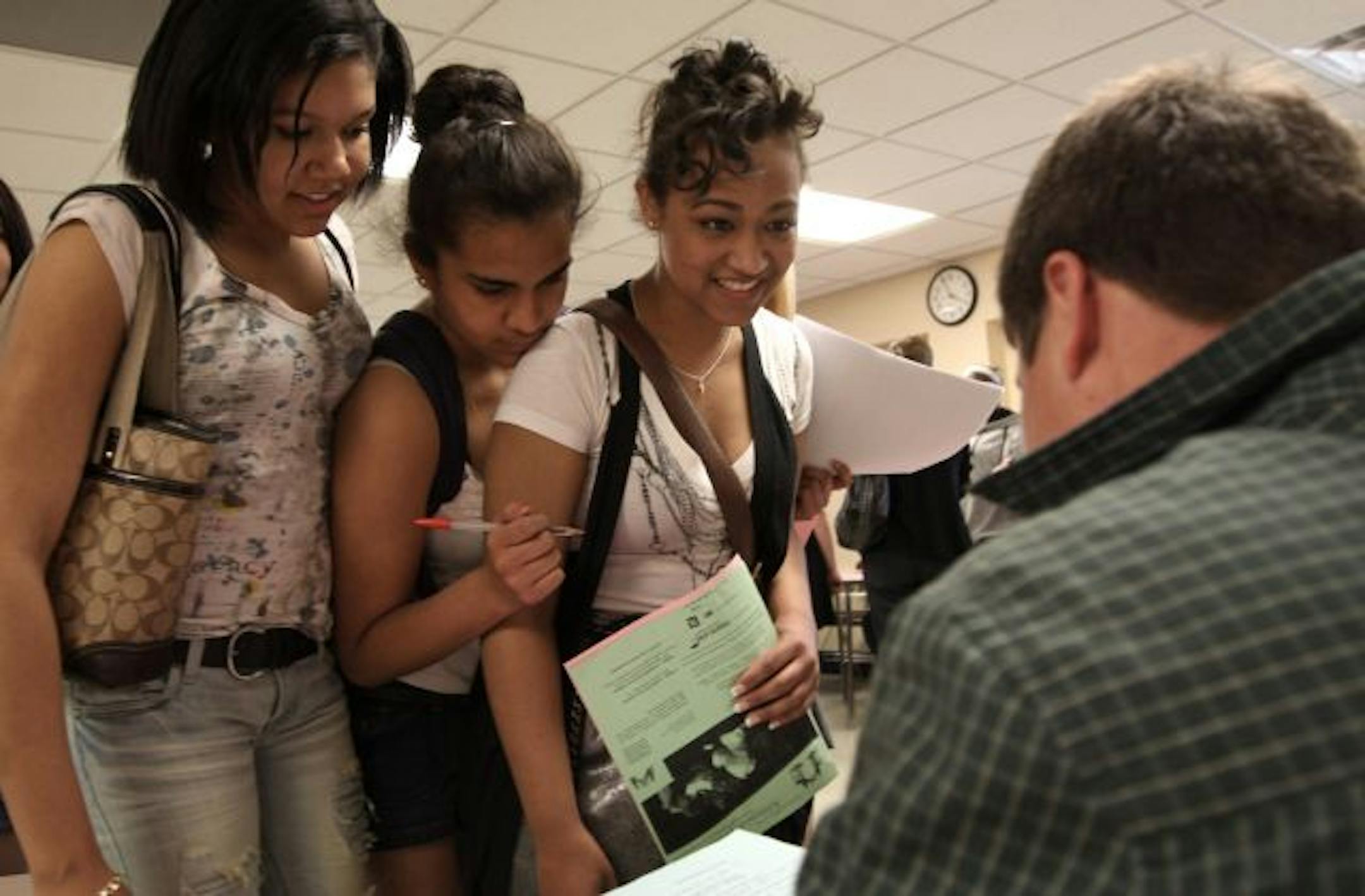
That's where the Admission Possible program, which focuses on getting low-income youths into college, comes in. Today, 667 seniors from 19 metro-area high schools -- its largest graduating class ever -- will celebrate their achievement and the nonprofit's 10th anniversary at Northrup Auditorium on the University of Minnesota campus. About 98 percent of the students have been admitted to colleges.
Ibrahim Irshat, Rachel Carroll and Carrie Carroll (no relation) are three good examples of people working together to make Admission Possible successful.
Ibrahim immigrated from Kenya five years ago and will be graduating from St. Louis Park High School in June. Rachel Carroll is an AmeriCorps volunteer who has coached Ibrahim and 30 other seniors for the past two years through their ACT exams, college applications and later the college financial aid morass.
Carrie Carroll is assistant vice president for admissions at Augsburg College in Minneapolis, where Ibrahim plans to enroll in the fall. The small Lutheran liberal arts school has struck a relationship with Admission Possible, which has helped raise the proportion of students of color at the school to 42 percent of its freshman class last fall, compared with 11 percent five years ago.
Admission Possible, based in St. Paul, started with 35 students from two high schools in 2000 and has grown to serve 6,000. It is a two-year program for juniors and seniors that focuses on raising ACT or SAT scores in the 11th grade and applying for colleges and financial aid the next year.
Cheering ACT scores


