

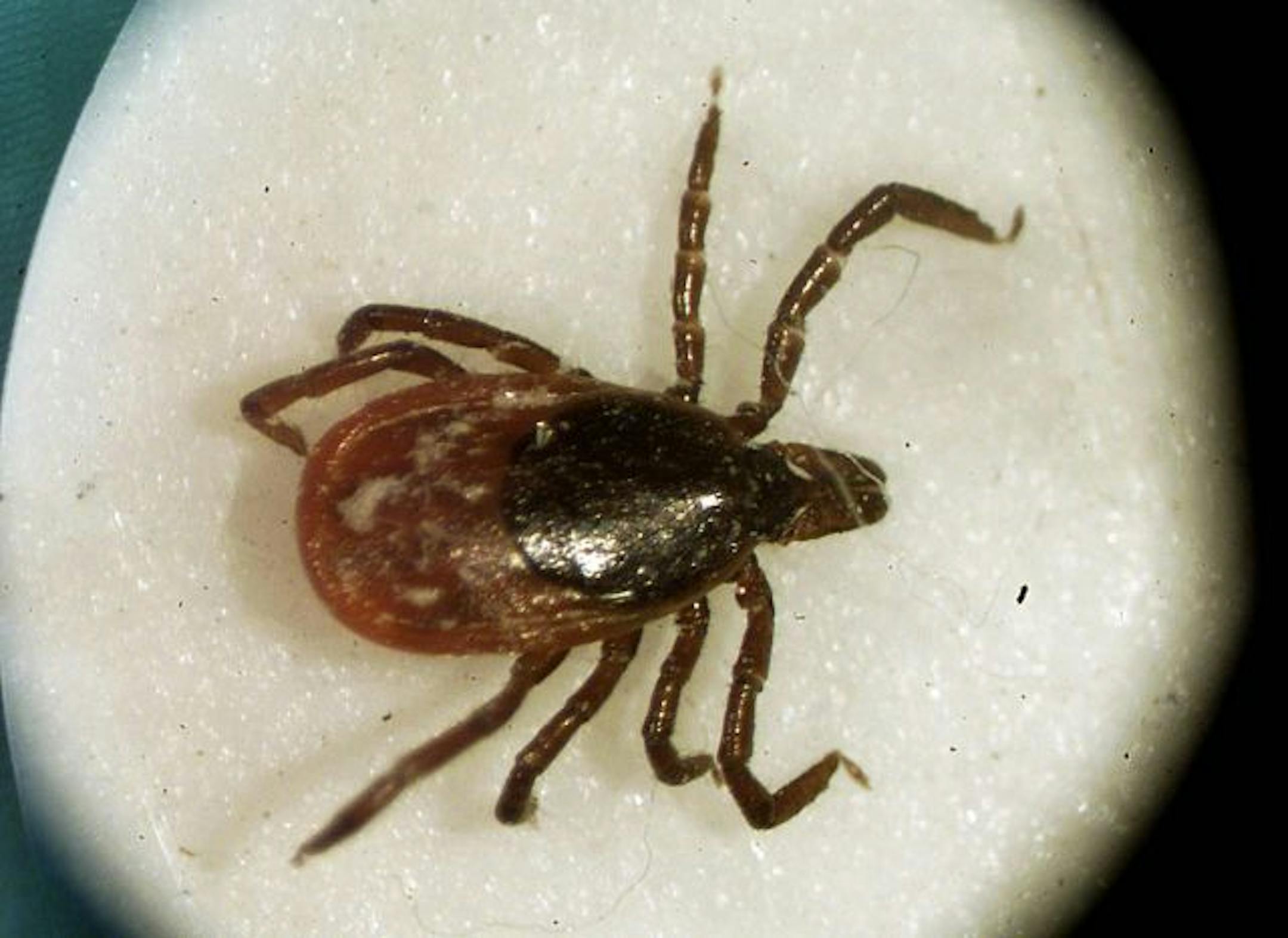
Four years ago, after being bitten by a deer tick, Michelle Backes got treated immediately for Lyme disease. She thought she was safe until three months later, when her body started going numb. Then the onetime teacher from Lindstrom, Minn., turned to a highly controversial therapy: more than a year's worth of antibiotics.
It is, say medical experts, a reckless, unproven and potentially dangerous approach.
But today, Backes, 39, is fit enough to run marathons and is helping lead a grass-roots effort to change the way doctors treat patients like her. "We have to be little renegades," she said in an interview.
Lyme disease activists -- who call themselves "Lymies" -- are speaking out in courtrooms, state legislatures and even a new documentary, "Under Our Skin," to argue that the experts are wrong. They may have a growing audience: Some 1,000 Lyme disease cases were reported in Minnesota in 2008, a fourfold increase since 1998.
Last month, they scored a victory in Minnesota. With the help of some sympathetic legislators, activists from the Minnesota Lyme Action Support Group pressured the state Board of Medicine to forgo, for now, the ability to discipline doctors for using the unproven treatment.
It was extraordinary, in part because the board has never disciplined -- or even received a complaint about -- a doctor for using such treatments, said Rob Leach, the board's executive director. Yet the board agreed to adopt a five-year moratorium to prevent legislation that might have tied its hands further. "It was the lesser of two evils, as far as we were concerned," said Leach. Advocates say that a few doctors have been disciplined in other states for using the unproven treatment, and that some physicians in Minnesota have said they won't offer it because they're afraid of facing the same fate.
Dr. Johan S. Bakken, an infectious-disease expert at St. Luke's Hospital in Duluth, calls it "a sad statement when politicians begin to practice medicine without a license."
The problem, he and others say, is that many patients blame a wide constellation of painful and disabling symptoms -- from panic attacks to impotence to memory loss -- on what they call "chronic Lyme disease," without any evidence they were ever infected.


