

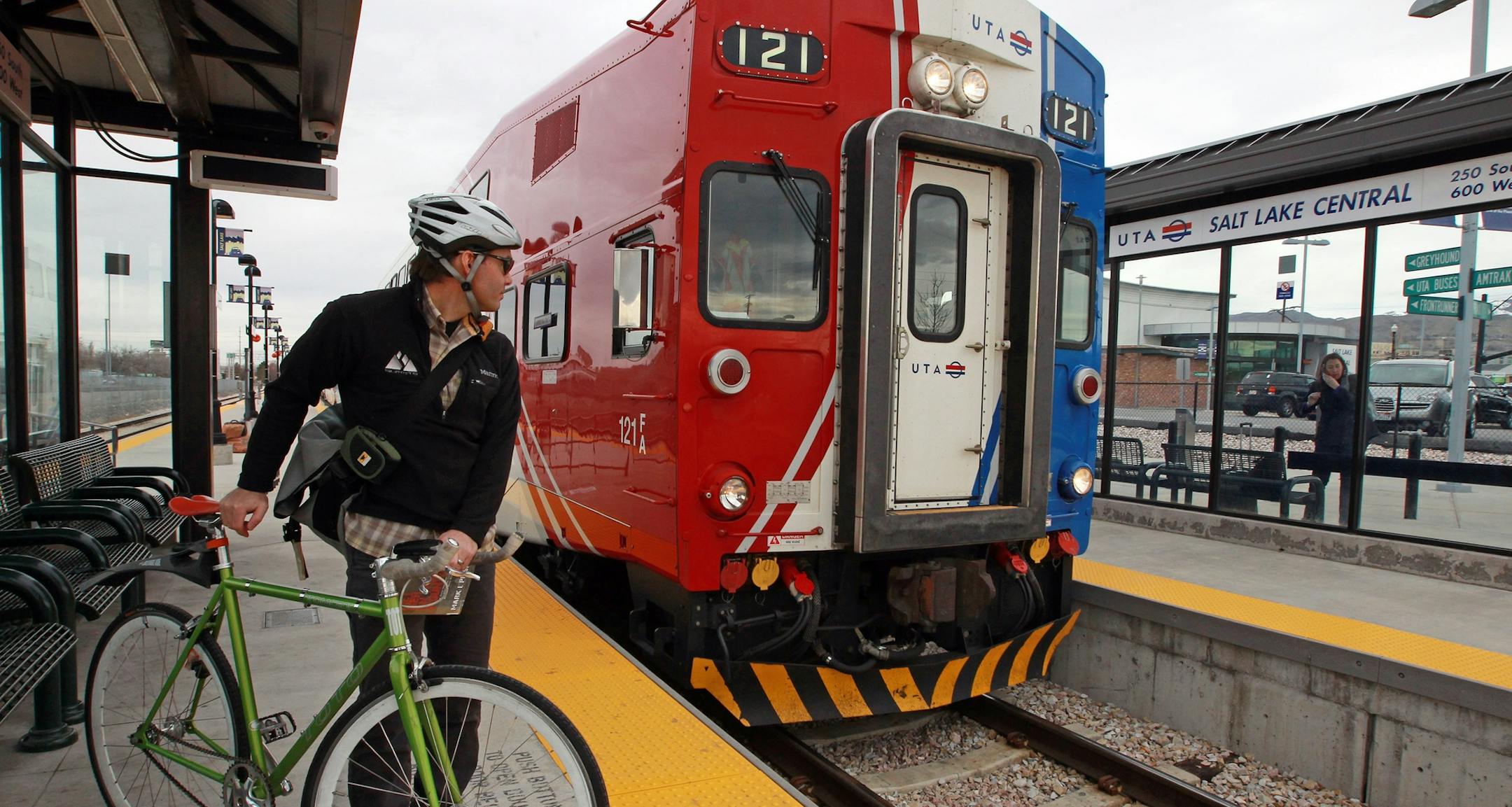
Public transit ridership in the United States last year hit its highest level since 1956, in what transit officials say is a sign of how much Americans' everyday travel habits have changed.
Americans took 10.6 billion trips on transit in 2013, according to data released Monday by the American Public Transportation Association (APTA). That is a 1 percent increase from the previous year, with especially strong growth on rail systems.
It is the highest level since 1956, the year President Dwight Eisenhower signed the law that created the interstate highway system, fueling a car culture that sapped transit ridership.
The growth last year was the result of an improving economy and expanded services offered by many transit systems, said APTA President Michael Melaniphy. "The start of the economic downturn and rising fuel prices drove a lot of people to try transit. When they tried it, they found it was really good, and they're staying," he said.
'It's unprecedented'
Public transit ridership over the last two decades has increased by 37 percent, Melaniphy said, while the population has grown 20 percent. The increase in transit use also comes at a time when the number of miles driven by Americans has leveled off, he noted.
Rail systems did particularly well last year. Subways and heavy rail saw a 2.8 percent increase in ridership. Light rail increased 1.6 percent, while commuter rail added 2.1 percent. Bus ridership, which accounts for more than half of all transit trips, decreased by 0.1 percent.
The surge was led by the New York City subway system, by far the nation's biggest. The 4 percent uptick in subway ridership translated into an increase of 106 million rides. The city's bus system also saw an increase of nearly 2 percent.
But transit systems in less obvious places, such as Los Angeles, Salt Lake City and Fort Myers, Fla., also saw large ridership gains.


