

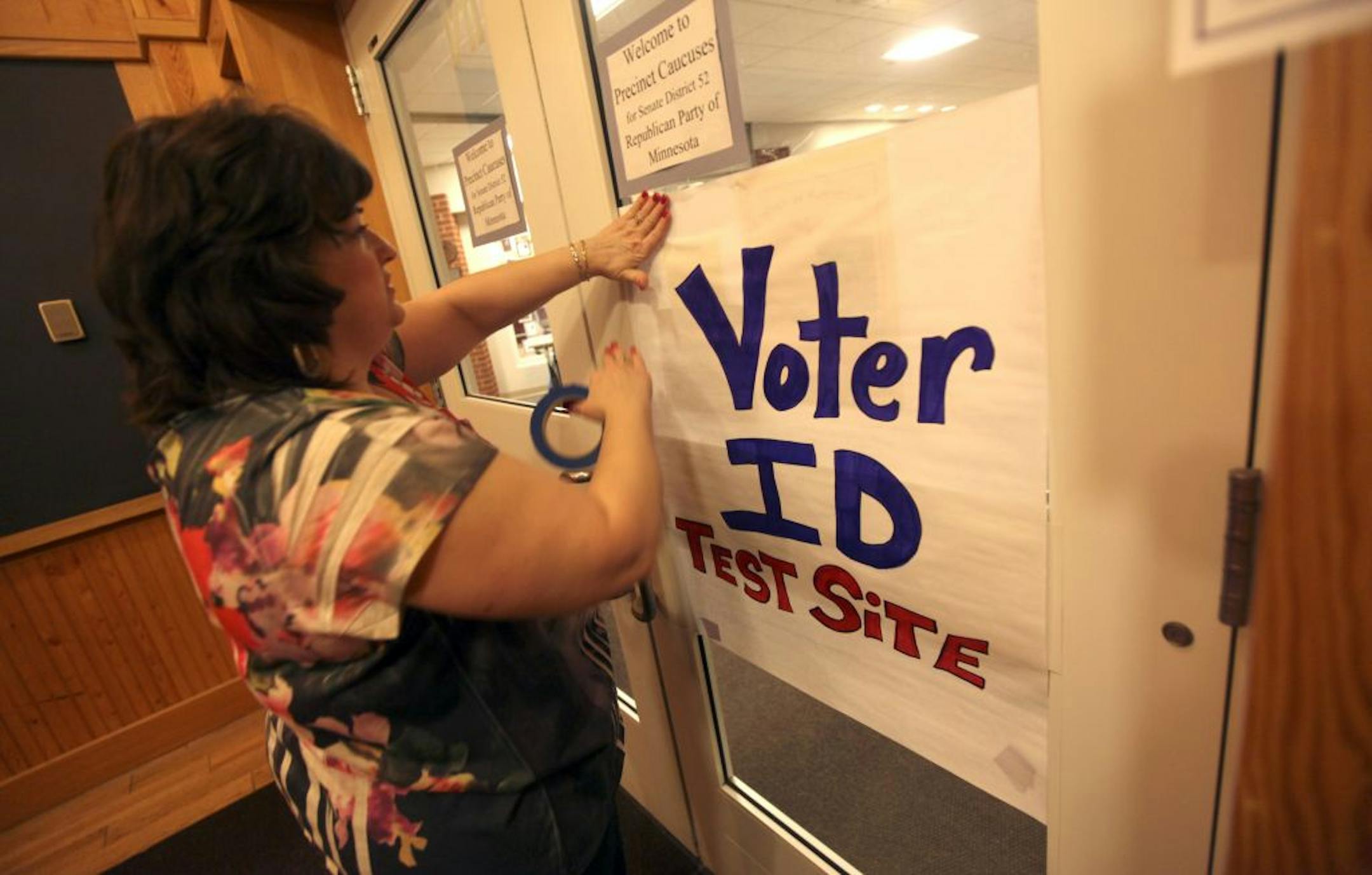
The contest between warring groups in Minnesota's photo ID debate has ended with both sides claiming a share of victory.
The American Civil Liberties Union of Minnesota said its offer to pay a $1,000 bounty to anyone who could show evidence of voter fraud that would have been stopped by a photo ID requirement yielded no such evidence. The ACLU says it shows the ID requirement is not needed, and says it will use the $1,000 to fight the proposed constitutional amendment.
Minnesota Majority, a pro-ID group that submitted a case of a woman charged with fraud over an absentee ballot filed in Anoka County, said the case would have been prevented by an ID requirement with tougher eligibility language. The group said fraud exists and the system will benefit from the ID amendment.
"We received several claims," said Charles Samuelson, executive director of the ACLU-Minnesota. The Minnesota Majority claim, he said, "involved a woman who filled out an absentee ballot for her daughter, submitted it, and then her daughter ended up voting in person as well." He said the case, which the judge eventually dismissed, "would not have been impeded in any way by the proposed amendment" because it was an absentee ballot.
"Furthermore, the daughter used a photo ID to vote," Samuelson said. Had polls been using an electronic poll book favored by DFL opponents to photo ID, he said, the double-vote would have been prevented.
Two other cases, submitted by the same person, involved felon voting and a charge that occurred two months before the election, most likely involving registration. Neither would have been prevented by the ID requirements, Samuelson said.
"Therefore, we have shown that there is no need for this amendment, and the $1,000 will be used to oppose the amendment as it is proposed to the voters," Samuelson said.
Dan McGrath of the Minnesota Majority said the stiffened eligibility requirements in the photo ID amendment would have caught these problems -- felon voting and absentee voting problems. "I have to disagree with the ACLU's assessment, " McGrath said. "They can keep their money."


