3:26
3:26About 75 prospective jurors convened Monday in the murder trial of former Minneapolis police officer Mohamed Noor and answered questionnaires that will be used to vet them when they return to the selection process Wednesday.
After the pool filtered in through security, Hennepin District Judge Kathryn Quaintance welcomed the group of 50 men and 25 women — 15 of them people of color — and summarized the charges against Noor for the shooting death of Justine Ruszczyk Damond. Quaintance estimated the trial would last three to four weeks.
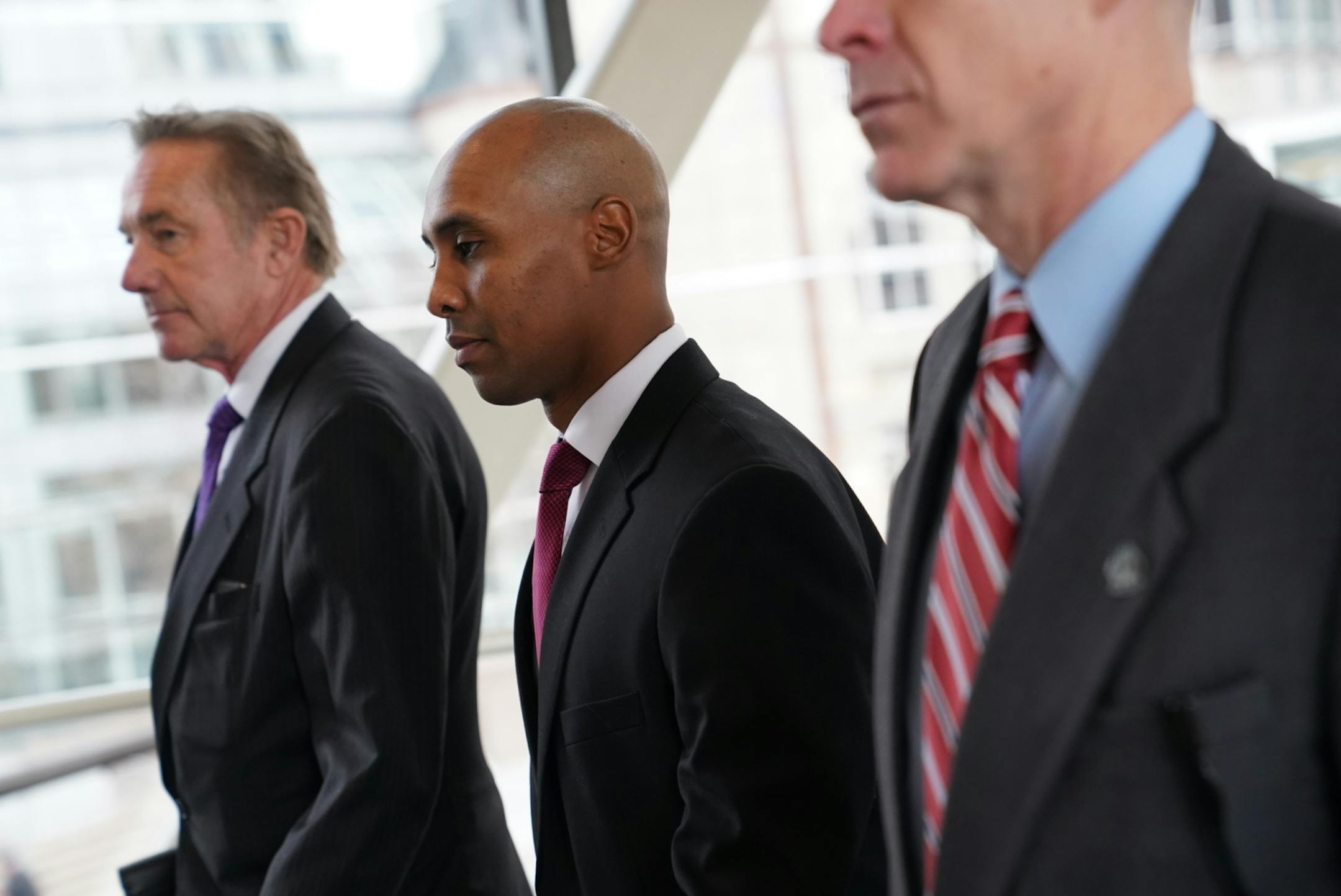
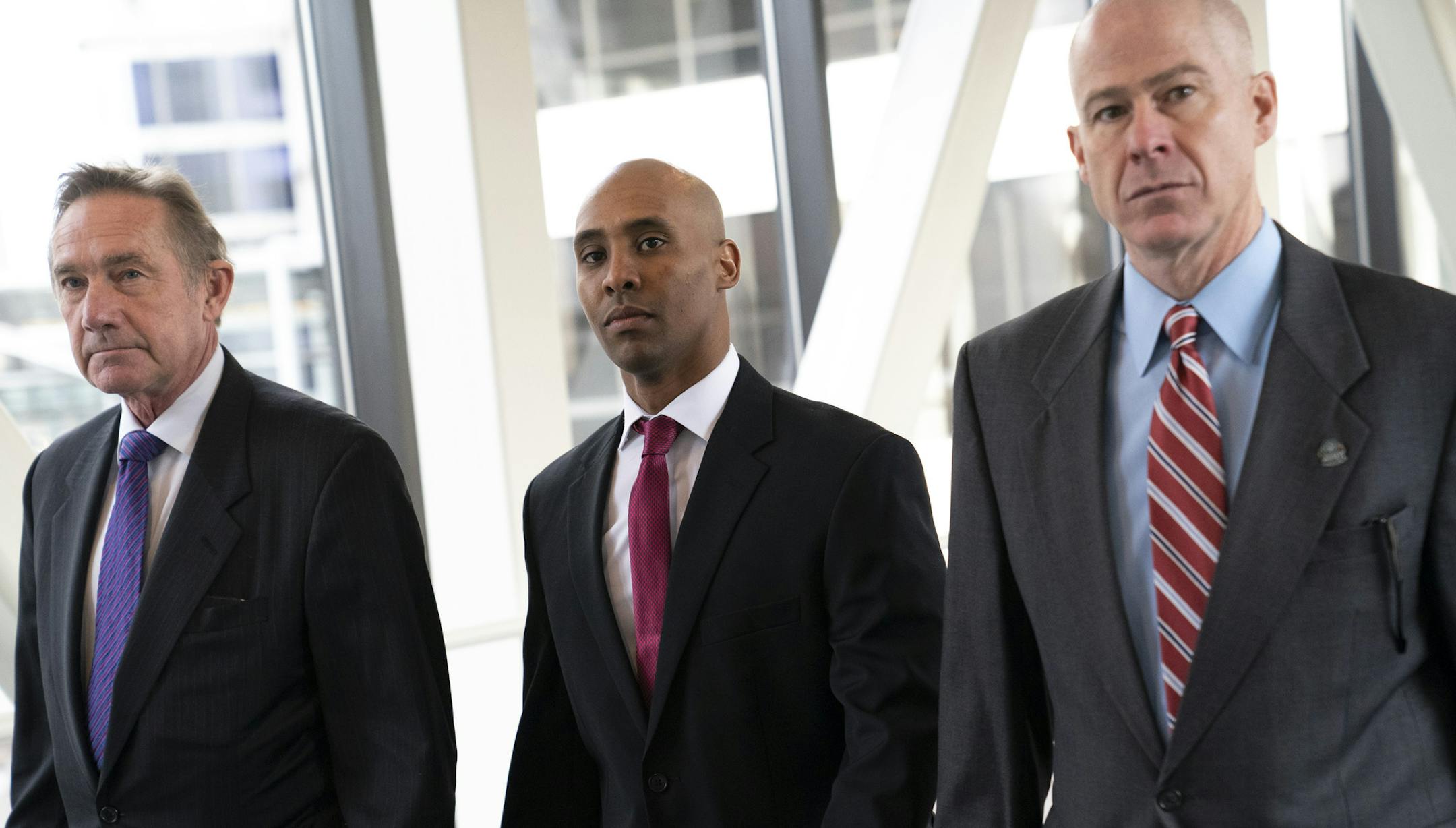
Defense attorney Thomas Plunkett introduced Noor, who stood and faced the group but did not speak. Prosecutors and defense attorneys were expected to spend the next day and a half reviewing the questionnaires and researching potential jurors, who will be called back to court Wednesday morning.
The hearing concluded quietly after two hours, but afterward several advocates against police violence rallied for greater transparency in the trial and more equitable prosecution of officers who kill civilians. Noor, 33, is on trial in Hennepin County District Court for second-degree murder with intent, third-degree murder and second-degree manslaughter in the 2017 shooting.
"Our hearts are with Justine's family today, on this grim day that marks the beginning of her killer's trial," Todd Schuman of the group, Justice for Justine, said at noon news conference. "We must first express our outrage at the intentional and calculated decisions by Judge Kathryn Quaintance and Judge Ivy Bernhardson to limit the public's ability to follow this trial."
Schuman called for Quaintance, who is presiding over the trial, and Bernhardson, the bench's chief judge, to move the trial to a larger courtroom to accommodate more members of the public. He also urged them to reverse Quaintance's unusual decision to shield the public from viewing body camera footage of the crime scene and medical examiner's photos during trial.
Schuman's sentiment, which was echoed by other speakers at a news conference in the Hennepin County Government Center atrium, came the same day Quaintance divulged that she has received phone threats for her decisions.
"The Court's chambers has received threatening phone calls concerning the Court's evidentiary rulings in the case," Quaintance wrote in an order filed Monday granting prospective jurors anonymity during the selection process.