
Abortion laws in North Dakota, Arkansas head for court battles

North Dakota and Arkansas are ground zero for Roe vs. Wade test.

The Associated Press
April 1, 2013 at 2:15AM
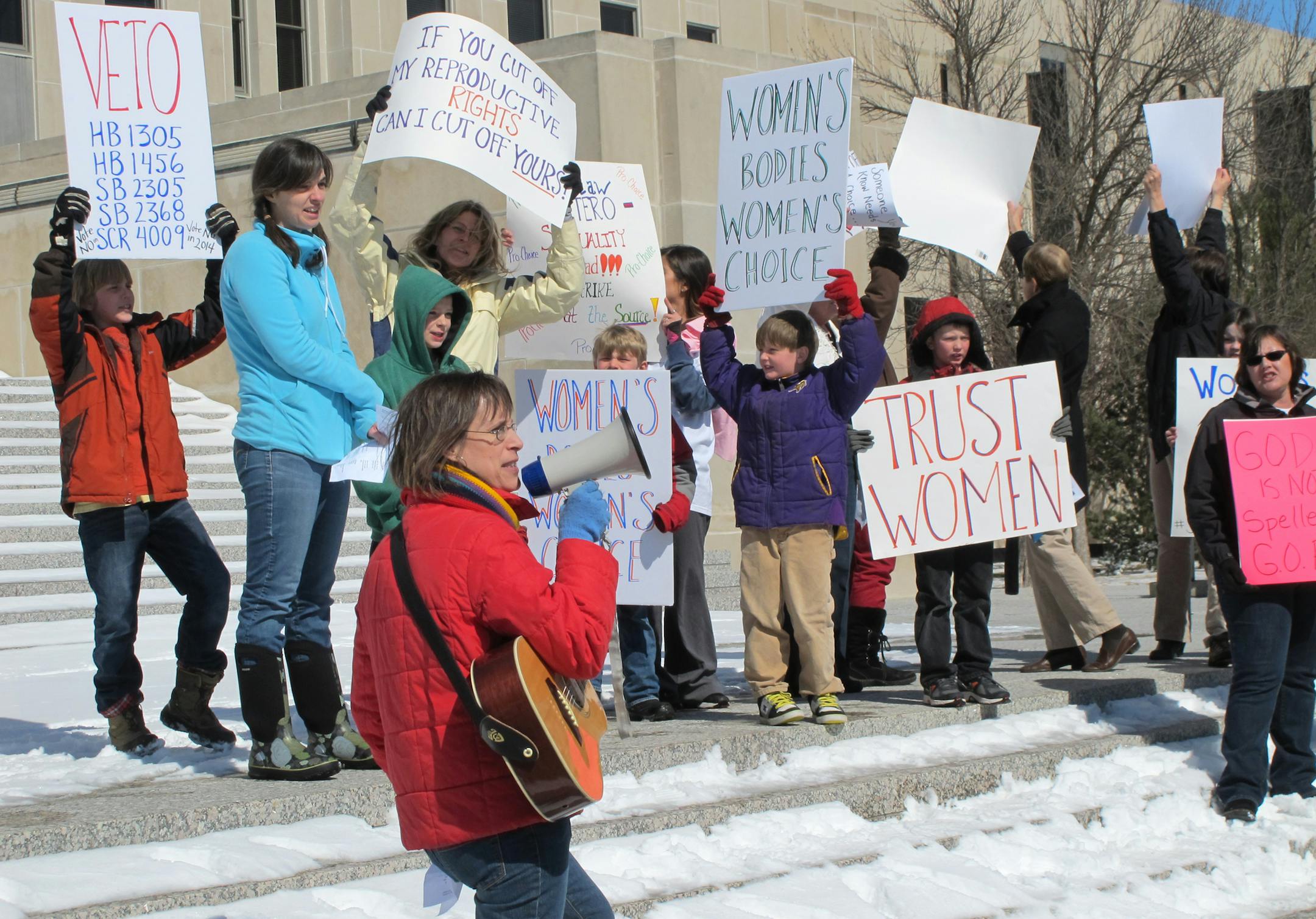
FILE - In this March 25, 2013 file photo, Kris Kitko leads chants of protest at an abortion-rights rally at the state Capitol in Bismarck, N.D. Rival legal teams, each well-financed and highly motivated, are girding for high-stakes court battles over the coming months on laws enacted in Arkansas and North Dakota that would impose the nation's toughest bans on abortion. The Arkansas law, approved March 6 when legislators overrode a veto by Democratic Gov. Mike Beebe, would ban most abortions from
Kris Kitko led chants at an abortion-rights rally last week at the state capitol in Bismarck, N.D., before Republican Gov. Jack Dalrymple signed a measure that would ban abortions as early as six weeks. (The Minnesota Star Tribune)

Rival legal teams, well-financed and highly motivated, are girding for court battles over the coming months on laws enacted in Arkansas and North Dakota that would impose the nation's most stringent restrictions on abortion.

For all their differences, attorneys for the two states and the abortion-rights supporters opposing them agree on this: The laws represent an unprecedented frontal assault on the Supreme Court's 1973 Roe v. Wade decision that established a nationwide right to abortion.

The Arkansas law, approved March 6 when legislators overrode a veto by Democratic Gov. Mike Beebe, would ban most abortions after the 12th week of pregnancy. On March 26, North Dakota went further, with Republican Gov. Jack Dalrymple signing a measure that would outlaw abortions as early as six weeks into a pregnancy, when a fetal heartbeat can first be detected and before some women even know they're pregnant.

Abortion-rights advocates plan to challenge both measures, contending they are unconstitutional violations of the Roe ruling that legalized abortion until a fetus could viably survive outside the womb. A fetus is generally considered viable at 22 to 24 weeks.

"I think they're going to be blocked immediately by the courts — they are so far outside the clear bounds of what the Supreme Court has said for 40 years," said Nancy Northup, president of the Center for Reproductive Rights.

The center will be leading the North Dakota legal challenge and working in Arkansas alongside the American Civil Liberties Union's state and national offices. Both Northup and ACLU lawyers say they have ample resources to wage the battles, and they expect victories that would require their attorneys' fees to be paid by two states.

Dalrymple, in signing the ban, acknowledged that its chances of surviving a court challenge were questionable, but said it was worth the eventual price tag — at this point unknown — in order to test the boundaries of Roe.

North Dakota Attorney General Wayne Stenehjem initially said lawyers from his office would defend any lawsuits but he is now considering hiring outside help. His office is working on a cost estimate for the litigation that could be presented to legislators soon.

"We're looking at a sufficient amount to adequately defend these enactments," Stenehjem said.

A lead sponsor of the Arkansas ban, Republican state Sen. Jason Rapert, said threats of lawsuits "should not prevent someone from doing what is right."

In both Arkansas and North Dakota, the states' lawyers will be getting pro bono assistance from lawyers with Liberty Counsel, a conservative Christian legal group.

The North Dakota ban is to take effect Aug. 1, along with two other measures that have angered abortion-rights backers. One would require abortion providers to have admitting privileges at a local hospital; the other would make North Dakota the first state to forbid abortions based on genetic defects such as Down syndrome.

The Center for Reproductive Rights is reviewing its options regarding the latter two bills, but it definitely plans to challenge the six-week ban before Aug. 1. Northup said her team is pondering whether to file suit in state court or U.S. District Court.

In Arkansas, where the 12-week ban would take effect 90 days after the end of the legislative session, abortion-rights lawyers plan to file their challenge in federal court within the next few weeks.

Bettina Brownstein, who will be representing the ACLU of Arkansas in the case, said past rulings by the U.S. District Court with jurisdiction over Little Rock give her confidence of a victory this time.

"Eventually, it could go to U.S. Supreme Court on appeal, but that would take a while, and they may not want to hear it," she said. "It's a question of how much money the state wants to spend."

Attorneys' fees for the upcoming cases are impossible to estimate at this stage, but Northup said her organization received $1.3 million in fees from Alaska after that state lost a recent case regarding an abortion-related law.

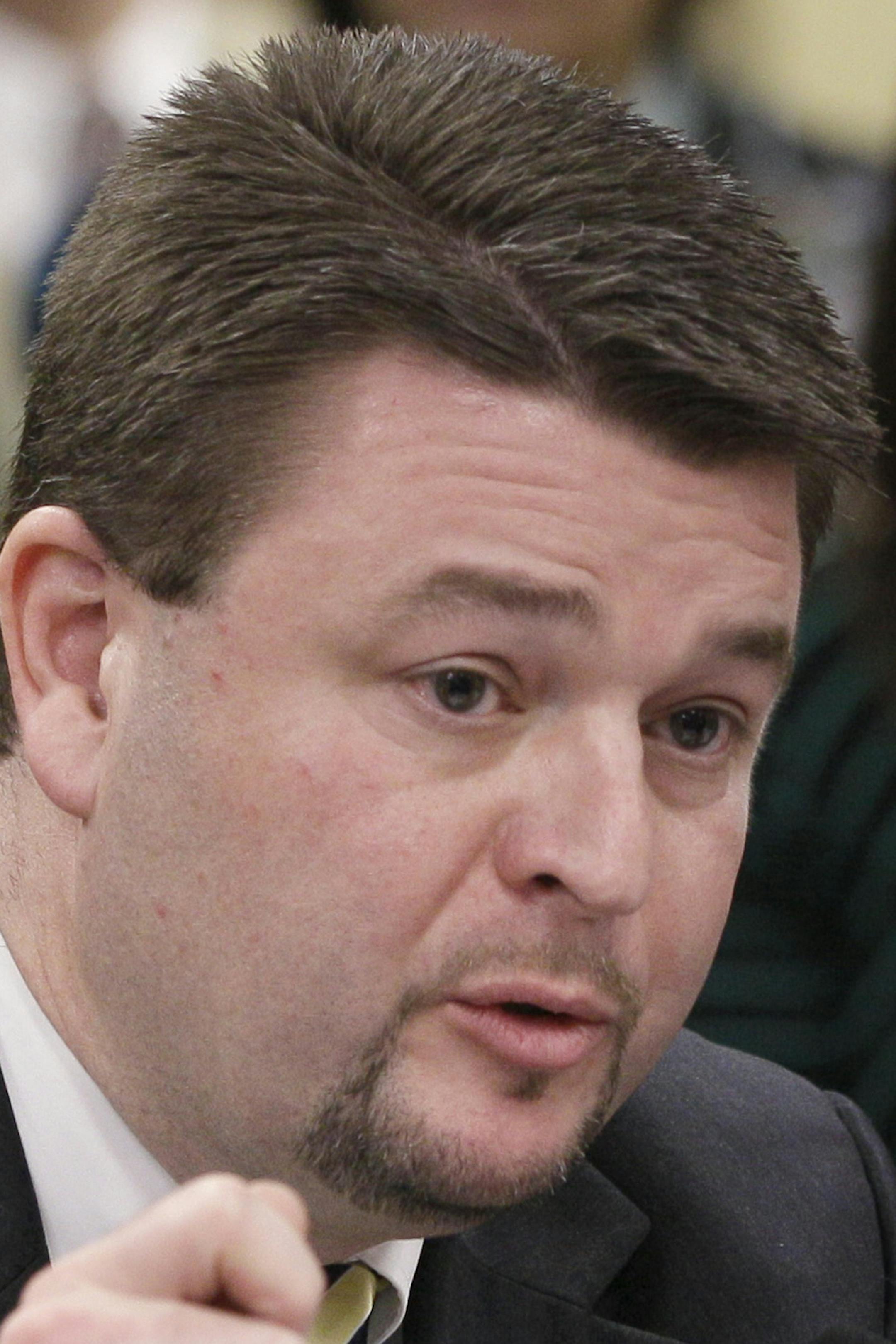
FILE - In this Feb. 7, 2013 file photo, Sen. Jason Rapert, R-Conway, explains his bill dealing with abortion at the Arkansas state Capitol in Little Rock, Ark. The bill, which was passed into law on March 6 when legislators overrode a veto by Democratic Gov. Mike Beebe, would ban most abortions from the 12th week of pregnancy onward. Rival legal teams, each well-financed and highly motivated, are girding for high-stakes court battles over the coming months on this law and one in North Dakota tha
Rapert (The Minnesota Star Tribune)
FILE - In this April 16, 2012 file photo, North Dakota Gov. Jack Dalrymple speaks in Bismarck, N.D. Dalrymple signed legislation on March 26, 2013 that would make North Dakota the nation's most restrictive state on abortion rights, banning the procedure if a fetal heartbeat can be detected ó something that can happen as early as six weeks into a pregnancy. Rival legal teams, each well-financed and highly motivated, are girding for high-stakes court battles in the coming months over this law
Dalrymple (The Minnesota Star Tribune)
about the writer

about the writer

David crary

More from No Section

See More
FILE -- A rent deposit slot at an apartment complex in Tucker, Ga., on July 21, 2020. As an eviction crisis has seemed increasingly likely this summer, everyone in the housing market has made the same plea to Washington: Send money — lots of it — that would keep renters in their homes and landlords afloat. (Melissa Golden/The New York Times) ORG XMIT: XNYT58
Melissa Golden/The New York Times

It’s too soon to tell how much the immigration crackdown is to blame.