

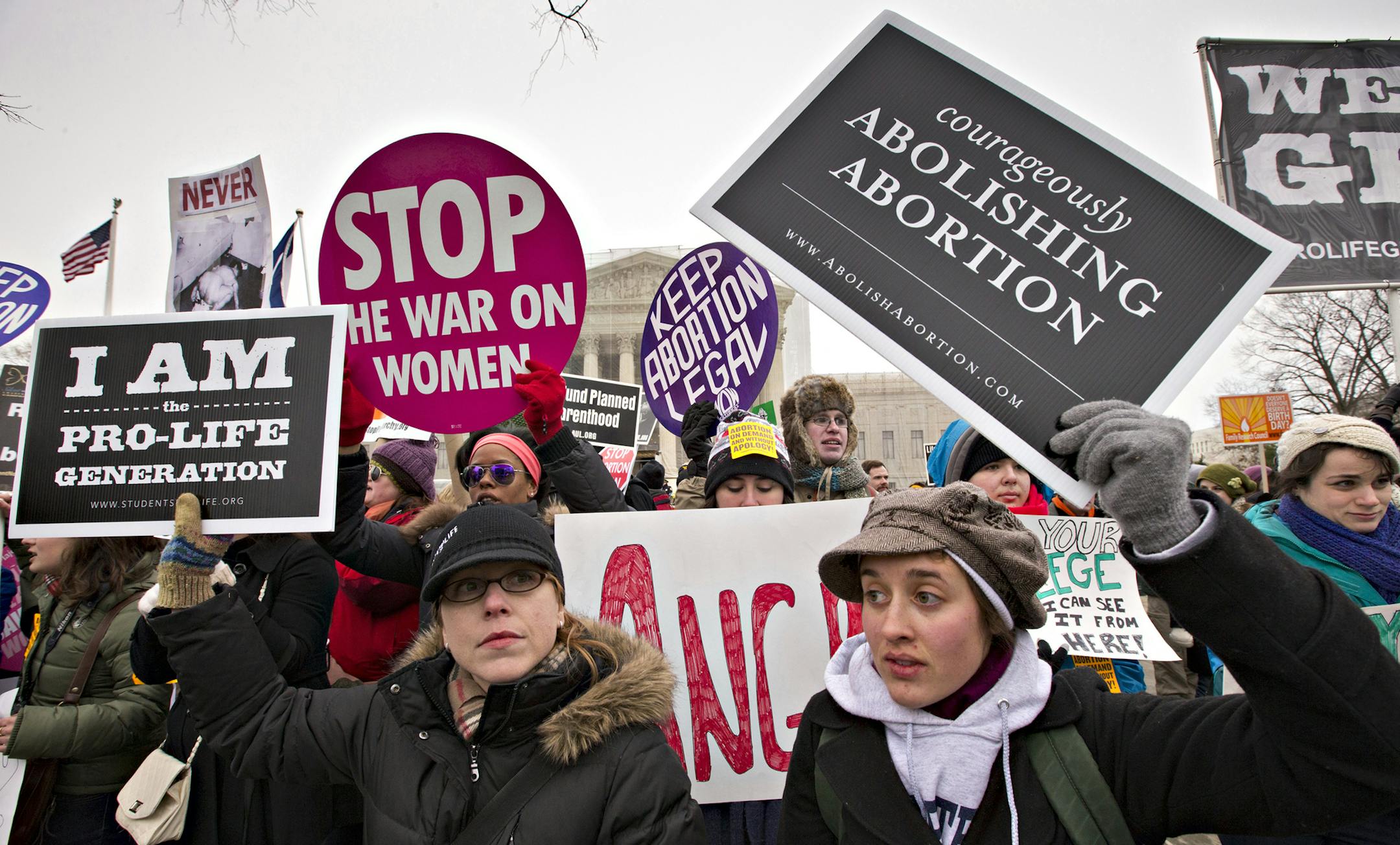
Special to The Washington Post.
Planned Parenthood calls abortion "a difficult decision" in many of its consent forms and fact sheets. When NARAL launched a film on the 40th anniversary of Roe v. Wade in 2013, the president of the pro-choice organization called abortion "a difficult decision" women and couples face.
Lawmakers use the adjective, too. "It was a difficult, difficult decision, but it was the right one," Nevada Assemblywoman Lucy Flores said last month in defending her choice to have an abortion at age 16. In 2005, then-Sen. Hillary Rodham Clinton described the decision to have an abortion as "one of the most fundamental, difficult and soul-searching decisions a woman and a family can make" and "often the most difficult (decision) that a woman will ever make."
However, when the pro-choice community frames abortion as a difficult decision, it implies that women need help deciding, which opens the door to paternalistic and demeaning "informed consent" laws. It also stigmatizes abortion and the women who need it.
Often, abortion isn't a difficult decision. In my case, it sure wasn't.
When I was 18, my boyfriend, whom I was with for more than a year, frequently pressured me into having sex. At the time, I lacked the maturity and experience to exert more control over the situation. For more than 10 weeks, I progressed from obliviousness about my pregnancy to denial to wishful thinking: Maybe if I ignore that I missed two periods, that pesky little fact will go away.
Once I faced reality, though, having an abortion was an obvious decision, not a difficult one. The question wasn't "Should I or shouldn't I?" but "How quickly can I get this over with?"
This was in the mid-1980s, when abortion was about women having control not just over their bodies but over their destinies. An unwanted pregnancy would have derailed my future, making it difficult for me to finish college and have the independent, productive life that I'd envisioned.


