
AARP stands up for health bill

With some "just praying I don't get sick," Minnesotans share why they support endorsement of the health-overhaul bill, which is nearing a vote.

November 6, 2009 at 5:15AM
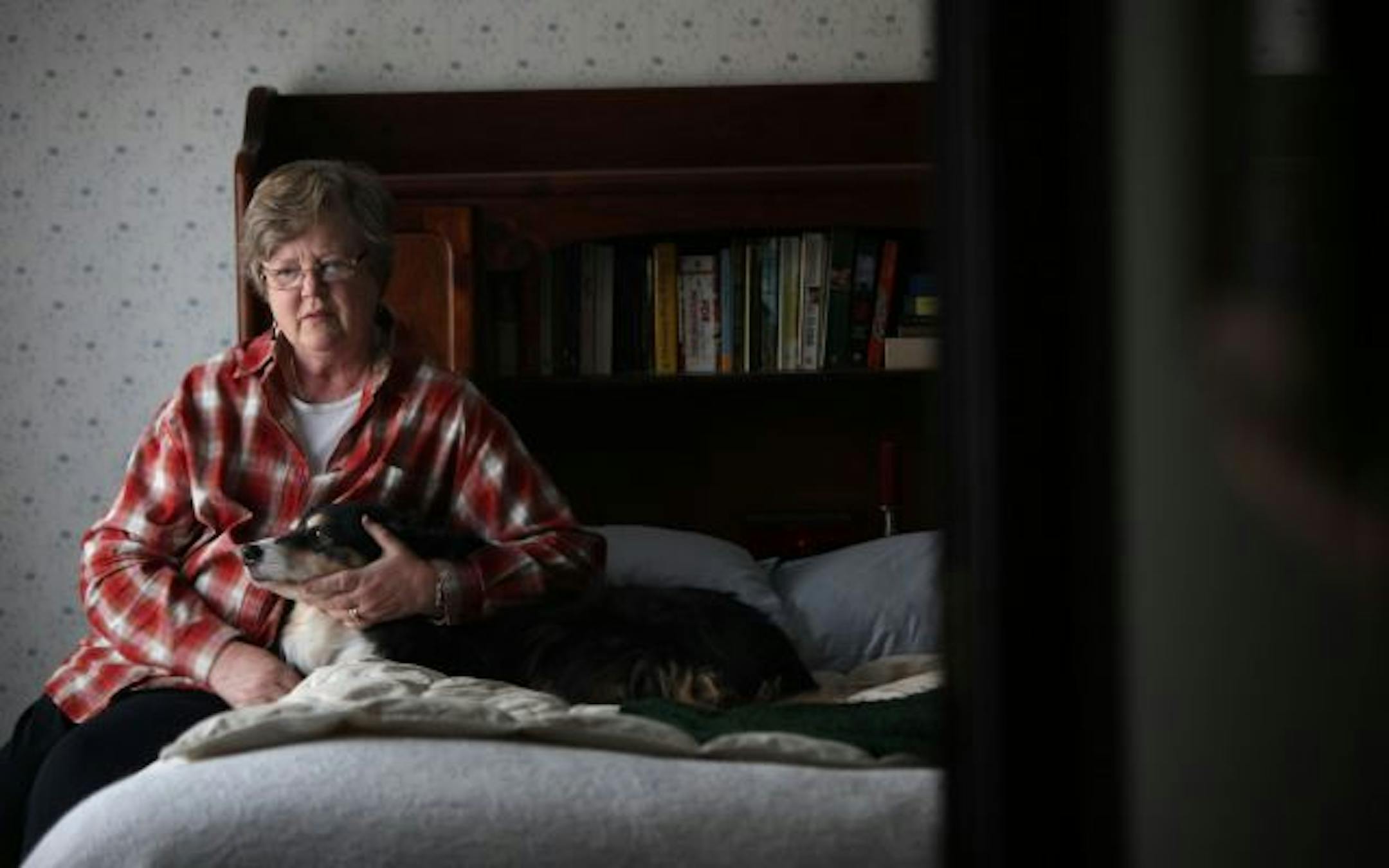
Retired nurse Molly Sullivan, of Maple Grove, said that with her premiums rising it's hard to pay for food for Daisy, her Australian sheepdog and "the life of the house." Sullivan was among older Minnesotans in St. Paul on Thursday to explain why the AARP is backing of a bill in the U.S. House to overhaul health care.
Retired nurse Molly Sullivan, of Maple Grove, said that with her premiums rising it’s hard to pay for food for Daisy, her Australian sheepdog and “the life of the house.” Sullivan was among older Minnesotans in St. Paul on Thursday to explain why the AARP is backing of a bill in the U.S. House to overhaul health care. (Star Tribune/The Minnesota Star Tribune)

To pay her three most recent health insurance premiums -- $800 payments equal to 70 percent of her monthly income -- Molly Sullivan wrote checks against her Maple Grove home equity loan. "When I was working I wasn't poor," said Sullivan, 62, a retired nurse. "I would buy a cheaper policy, but now I have diabetes and arthritis and they won't sell me one."

Sullivan joined other older Minnesotans in St. Paul on Thursday to explain why the AARP, in a step that could prove highly influential, has announced it will endorse a bill in the U.S. House to overhaul the nation's health insurance system.

The bill, which may come up for a vote this weekend, would prohibit insurers from denying coverage because of preexisting conditions, eliminate the Medicare "doughnut hole" gap in prescription drug coverage, and allow the government to negotiate lower drug prices for Medicare.

"These are very important issues for our members," said Hubert (Skip) Humphrey III, former president of the 700,000-member Minnesota AARP and former state attorney general. Now one of 23 national AARP board members, Humphrey voted last week to endorse the House bill. "It's not everything we'd like, but it's pretty darned close," he said.

A final Senate version of the legislation has not been finished. It may be months before a Senate vote.

The House bill would cost $1.2 trillion over 10 years and would extend solvency of the Medicare trust fund by five years. It also would start "shifting long-term care from a welfare system to an insurance system," Humphrey said. Care for about two-thirds of nursing home residents is paid by Medicaid, the health program for the poor. The bill would start a voluntary insurance program with automatic payroll deduction.

Humphrey and other AARP members spoke at the State Office Building in St. Paul after watching live video of the endorsement announcement from the organization's national office in Washington.

Char and Harry Jebens, 67 and 68, of Brooklyn Park, said they have taken measures to reduce their drug costs and avoid the Medicare doughnut hole they fell into last year: They reluctantly started using mail-order drugs this year to save about $800, and she stopped taking an asthma medication.

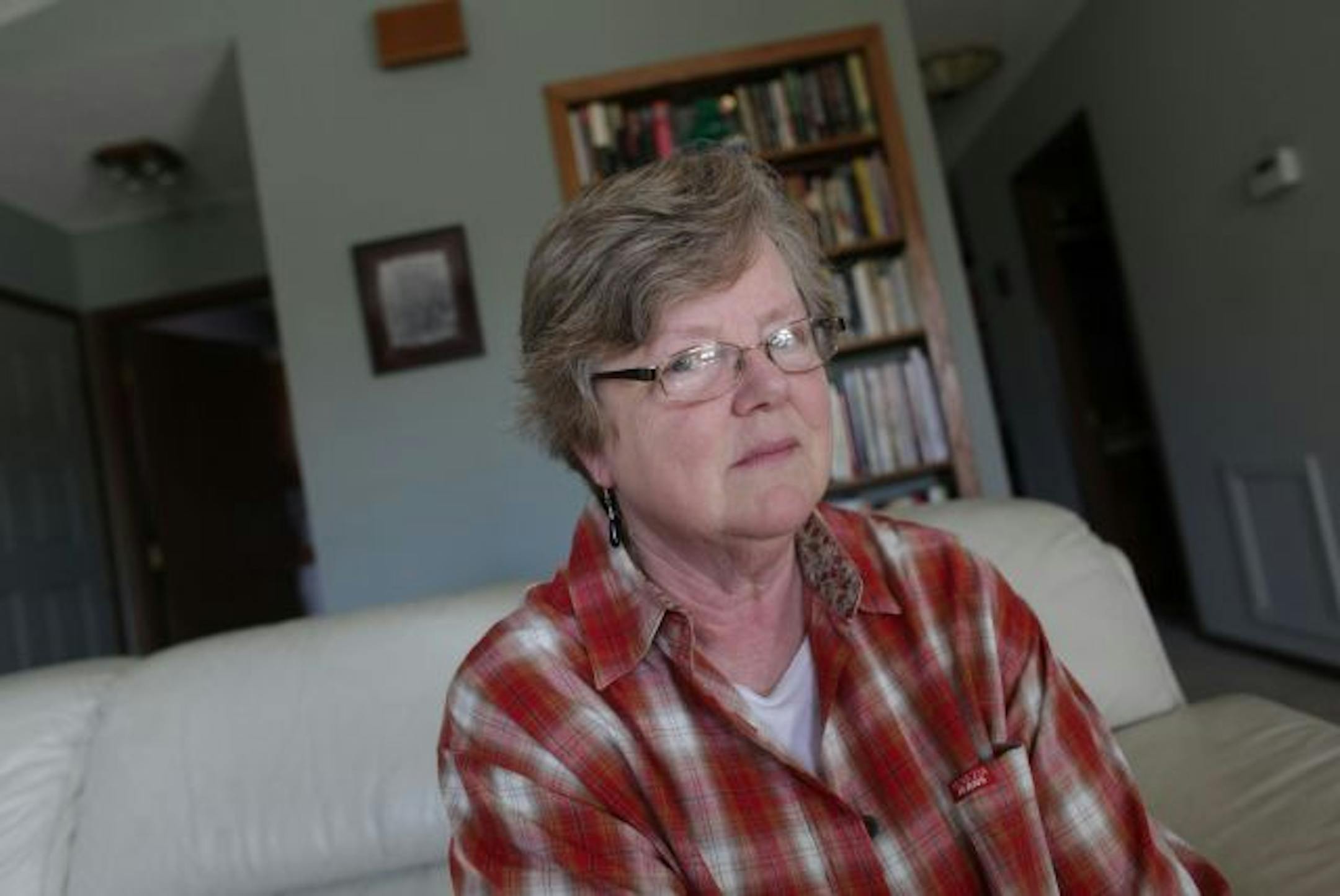
"We're not risk-takers," Char Jebens said. "We don't like the idea of mail-order drugs because we'd much rather consult the pharmacist. But to get by, we're cutting our travel, cutting our giving and cutting our drug costs. Eliminating that doughnut hole, where you pay the whole cost, would be huge."

Delores LaFollett, 64, is "just praying I don't get sick." The self-employed Brainerd children's book publisher said she hasn't been able to afford health insurance since her monthly premium hit $587 when she turned 60. Insurers sometimes charge older people 10 times the amount they charge younger people. The House bill would limit that to double the rate for younger people.

Warren Wolfe • 612-673-7253

Sullivan has written checks against her home equity loan to pay her $800 insurance premium, which is 70 percent of her monthly income.
Sullivan has written checks against her home equity loan to pay her $800 insurance premium, which is 70 percent of her monthly income. (Star Tribune/The Minnesota Star Tribune)
Molly Sullivan said premiums on her COBRA health insurance have doubled in five years. "When I was working I wasn't poor," said the retired nurse from Maple Grove.
Molly Sullivan said premiums on her COBRA health insurance have doubled in five years. “When I was working I wasn’t poor,” said the retired nurse from Maple Grove. (Star Tribune/The Minnesota Star Tribune)
about the writer

about the writer

WARREN WOLFE, Star Tribune

More from No Section

See More
FILE -- A rent deposit slot at an apartment complex in Tucker, Ga., on July 21, 2020. As an eviction crisis has seemed increasingly likely this summer, everyone in the housing market has made the same plea to Washington: Send money — lots of it — that would keep renters in their homes and landlords afloat. (Melissa Golden/The New York Times) ORG XMIT: XNYT58
Melissa Golden/The New York Times

It’s too soon to tell how much the immigration crackdown is to blame.