

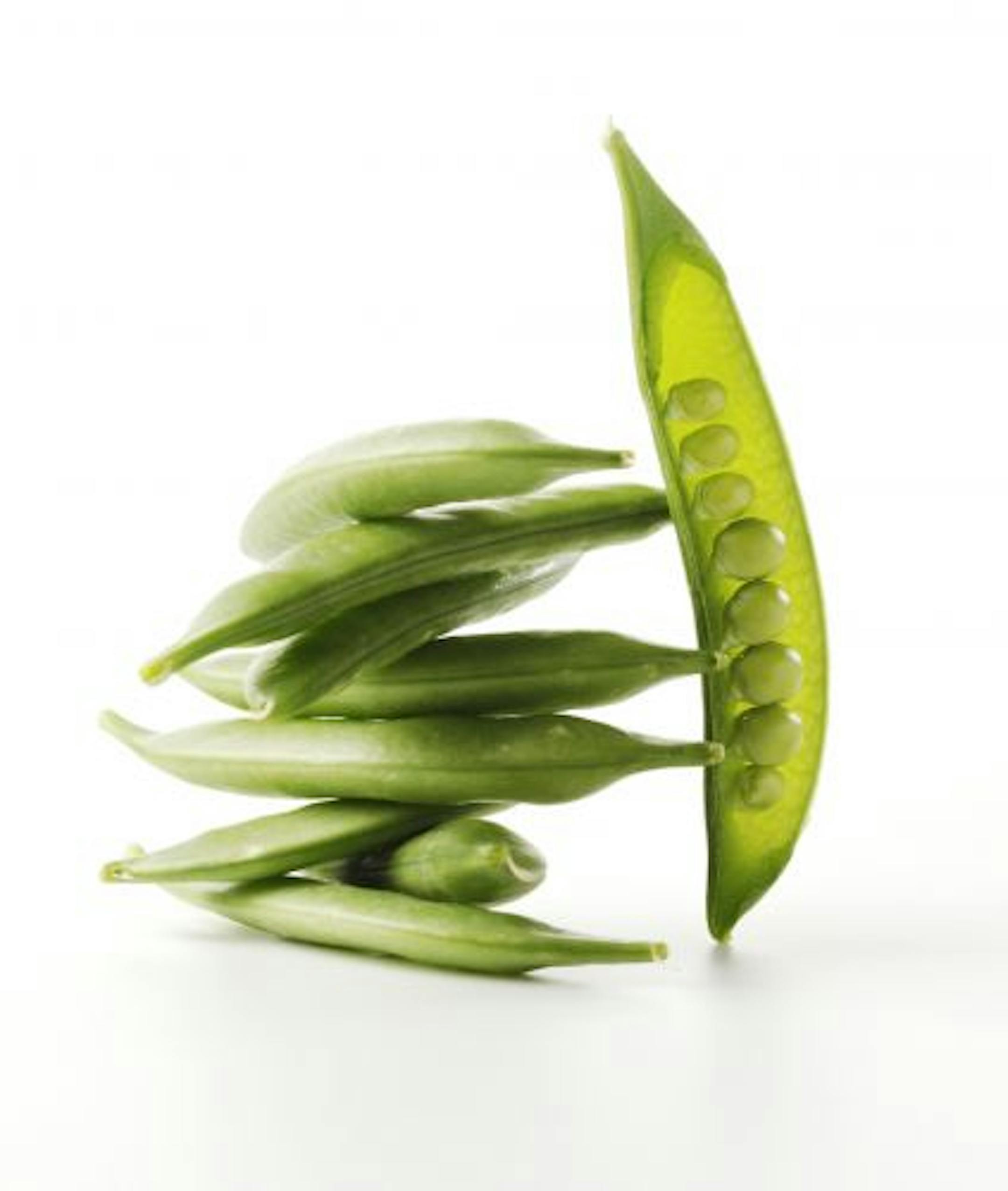
An ancient vegetable is finding legions of new fans as cooks rediscover the joy of peas. Joy? Peas? Don't be hasty and dismiss the pairing. Yes, most of us grew up with frozen, canned or dried split peas. Shelling peas by hand, it seemed, was just too much work.But the flavor of fresh peas rewards those who take on that time-consuming chore. And some peas need no shelling: They're eaten pod and all.
An early spring staple for millenniums, peas are at their best and sweetest just plucked from the vine. Ask any gardener who grows peas; they often get munched before they reach the kitchen. The reason: Peas' sugar content is highest the moment they're picked. Once off the vine, that sugar rapidly converts to starch.
The best time to enjoy fresh peas is now, as a new crop hits the stores and, soon, farmers markets and back-yard gardens. Peas also complement other spring vegetables, such as asparagus, spinach and, of course, carrots.
Humanity's connection to peas is practically in our DNA. Archaeologists have traced their consumption almost 8,000 years to Syria, Turkey and Jordan, where peas grew wild. Ancient Egyptians ate peas as early as 4800 B.C.
Peas also have thousands of years of culinary history in India, Pakistan and southern parts of Russia.
Meanwhile, edible snow peas became a staple throughout Asia.
By the Middle Ages, dried peas were a major source of protein for most of Europe. It wasn't until the 17th and 18th centuries that the Italians, French and English fell in love with immature, fresh green peas.
By any other name


