

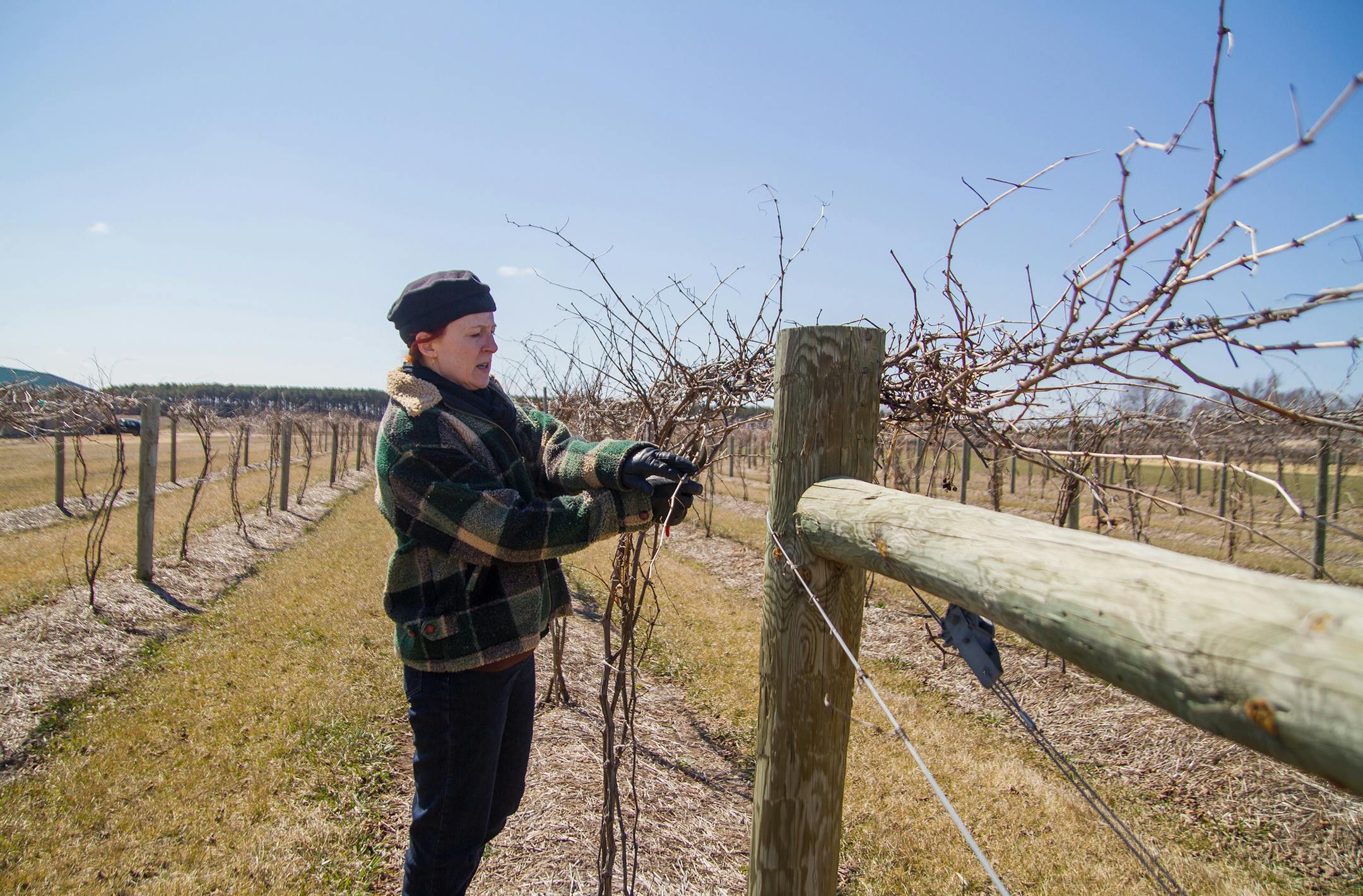
Bundled up against a chilly wind, Nan Bailly strides up to a trellis at her Hastings vineyard, snips off a bit of vine and shaves off its bark.
"That's what we want to see," she says, pointing to the exposed green tissue. The vine is alive and has made it through the winter.
Bailly repeats the process one row away and discovers the news isn't as good. This stem's brown interior means that section of vine is dead.
This winter's intense and persistent cold has laid down an early challenge for Minnesota grape growers, including Alexis Bailly Vineyard, the state's oldest commercial winery.
Fueled by cold weather-hardy grapes — including varieties developed at the University of Minnesota — the state's industry has grown to about 45 licensed wineries, according to the Alcohol and Tobacco Tax and Trade Bureau. A federally funded university study found that the vast majority have sprung up in the past 10 years, and they contribute about $60 million in economic activity throughout the state.
Bailly grew up in the business, knowing she wanted to work in it even as her father, David, began planting the very first vines in the early 1970s. She took charge of the vineyard and winery after his death in 1990.
"I can't remember another winter like this, and we've been growing grapes here for 40 years," she said. It wasn't just the extremely low temperatures, but the length of the deep freeze, which can dehydrate vines.
For the past few weeks, Bailly has been out in the field, pruning vines and assessing winter damage. She'll know more in a few weeks when buds on vines begin to break open (or not). Right now, she believes the harsh winter killed off about 40 percent of the primary buds, the main producers of grape clusters.


