

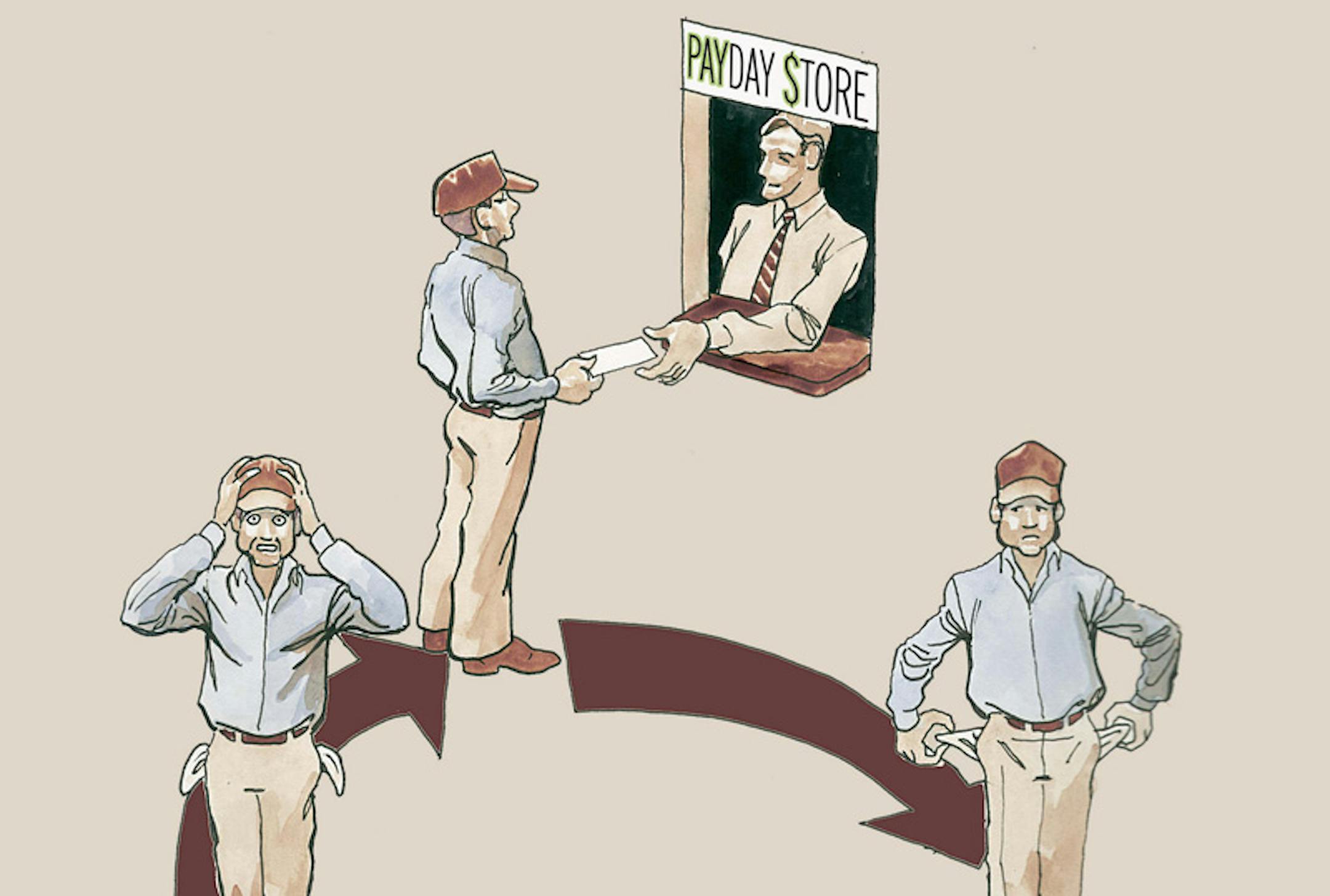
Individually, the poor are not all that tempting to thieves. Mug a banker, and you might score a wallet containing a month's rent. Mug a janitor, and you'll be lucky to get bus fare to flee the crime scene. But the poor in aggregate provide a juicy target for anyone depraved enough to make a business of stealing from them.The trick, however, is to rob them in ways that are systematic, impersonal and almost impossible to trace to individual perpetrators.
Lenders, including major credit companies as well as payday lenders, understand this. They have taken over the traditional role of the street corner loan shark, charging the poor insanely high rates of interest.
When supplemented with late fees (themselves subject to interest), the resulting effective interest rate can be as high as 600 percent a year, which is perfectly legal in many states. Gary Rivlin, who wrote "Broke USA," calculated that the poor pay an effective surcharge of about $30 billion a year for the financial and banking services they use.
Employers, too, have found ways to enrich themselves off the poor -- by taking money from their employees. Kim Bobo documents in her book "Wage Theft in America" how U.S. employers pocket at least $100 billion a year through such things as requiring employees to work hours for which they're not paid, failing to pay minimum wage and refusing to honor overtime pay differentials.
And it's not just the private sector that's preying on the poor. Local governments are discovering that they can partially make up for declining tax revenues through fines, fees and other costs imposed on indigent defendants, often for crimes no more dastardly than driving with a suspended license.
And if that seems like an inefficient way to make money, given the high cost of locking people up, a growing number of jurisdictions have taken to charging defendants for their court costs and even the price of occupying a jail cell.
The poster case for government persecution of the down-and-out would have to be Edwina Nowlin, a homeless Michigan woman who was jailed in 2009 for failing to pay $104 a month to cover the room-and-board charges for her 16-year-old son's incarceration. When she received a back paycheck, she thought it would allow her to pay for her son's jail stay. Instead, it was confiscated and applied to the cost of her ongoing incarceration.
In 2009, a year into the Great Recession, I started hearing complaints from community organizers about ever more aggressive levels of law enforcement in low-income areas. Flick a cigarette butt and get arrested for littering; empty your pockets for an officer conducting a stop and frisk operation and get cuffed for a few flakes of marijuana. Each of these offenses can result, at a minimum, in a three-figure fine.


