
A vast lake on Mars? Rover finds evidence

NASA's Curiosity has lived up to its name, discovering strong evidence that lakes and rivers once existed on the Red Planet.

Los Angeles Times
December 9, 2014 at 2:53AM
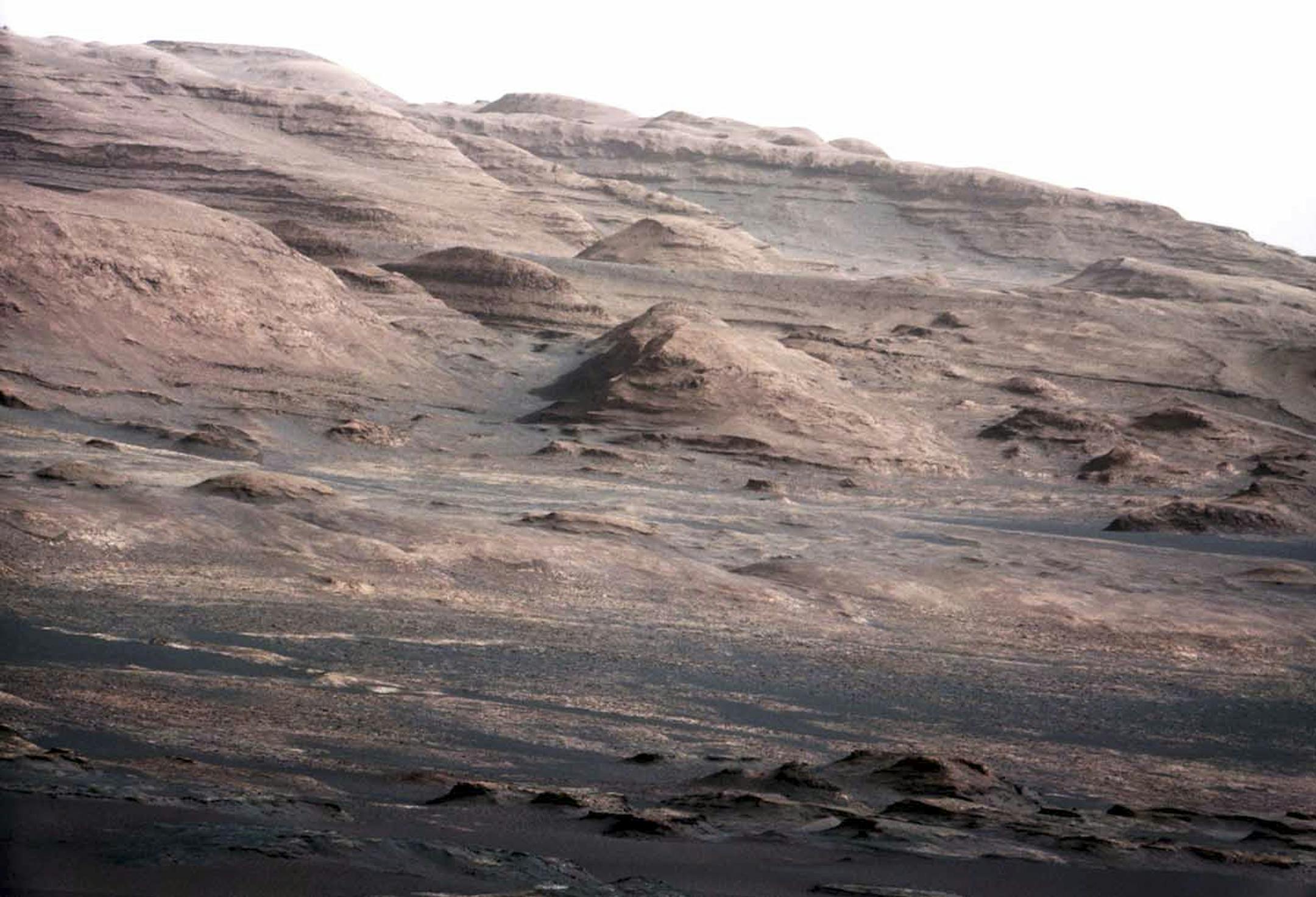
An undated handout image of landscape at the base of Mount Sharp on Mars, taken through a telephoto lens by NASA's Curiosity rover. The rover is expected to reach the 3.4-mile-high peak in about a year, and the layered surface of the mountain should yield information to scientists on the planet's geological history. (Malin Space Science Systems/NASA Jet Propulsion Laboratory via The New York Times) -- FOR EDITORIAL USE ONLY --
An undated handout image of landscape at the base of Mount Sharp on Mars, taken through a telephoto lens by NASA's Curiosity rover. The rover is expected to reach the 3.4-mile-high peak in about a year, and the layered surface of the mountain should yield information to scientists on the planet's geological history. (Malin Space Science Systems/NASA Jet Propulsion Laboratory via The New York Times) -- FOR EDITORIAL USE ONLY -- (The Minnesota Star Tribune)

NASA's Curiosity rover has discovered evidence of a vast lake in Mars' Gale Crater that potentially lasted millions of years — findings that may contradict the idea that much of the planet's water reserves were held only in ice or underground, and made only transient appearances on the surface.

The new results from studying rocks at the base of Mount Sharp (the 3-mile-high mound in the middle of Gale Crater) points to a lake that filled and drained over tens of millions of years and that could have spanned the 96-mile-wide crater, said scientists at Jet Propulsion Laboratory in La Canada Flintridge, Calif. And the sediments deposited in this lake could be what helped form Mount Sharp in the first place.

"The puzzle pieces are coming together," said Michael Meyer, lead scientist for NASA's Mars Exploration Program, at a news briefing. "This lake was large enough, it could have lasted millions of years — sufficient time for life to get started and thrive, sufficient time for lake sediment to build up to form Mount Sharp."

The findings from Curiosity, known formally as the Mars Science Laboratory, show that water could have lasted long enough for microbial life potentially to emerge, the scientists said.

The results also have implications for other theories of Martian planetary evolution. After all, if such lakes were able to survive for so long, then Mars must have had a much thicker atmosphere in order to protect that water from escaping into space.

"The climate system must have been loaded with water. To sustain a lake at Gale Crater for millions of years, Mars would need a vigorous hydrological cycle to keep the atmosphere humid," said Curiosity's deputy project scientist Ashwin Vasavada of Jet Propulsion Laboratory.

The problem is, it's very difficult to generate a realistic model of Martian atmospheric evolution that explains how it could have been warm enough, not just thick enough, Vasavada said.

The researchers had examined rocks that seemed to be forming at strange slanting angles — the kind of buildup seen when fast-moving river water suddenly hits a lake and has to decelerate. And Curiosity spotted these deposits at many different elevations — which means this cycle probably happened many times through the crater's history, said Curiosity participating scientist Sanjeev Gupta of Imperial College in London.
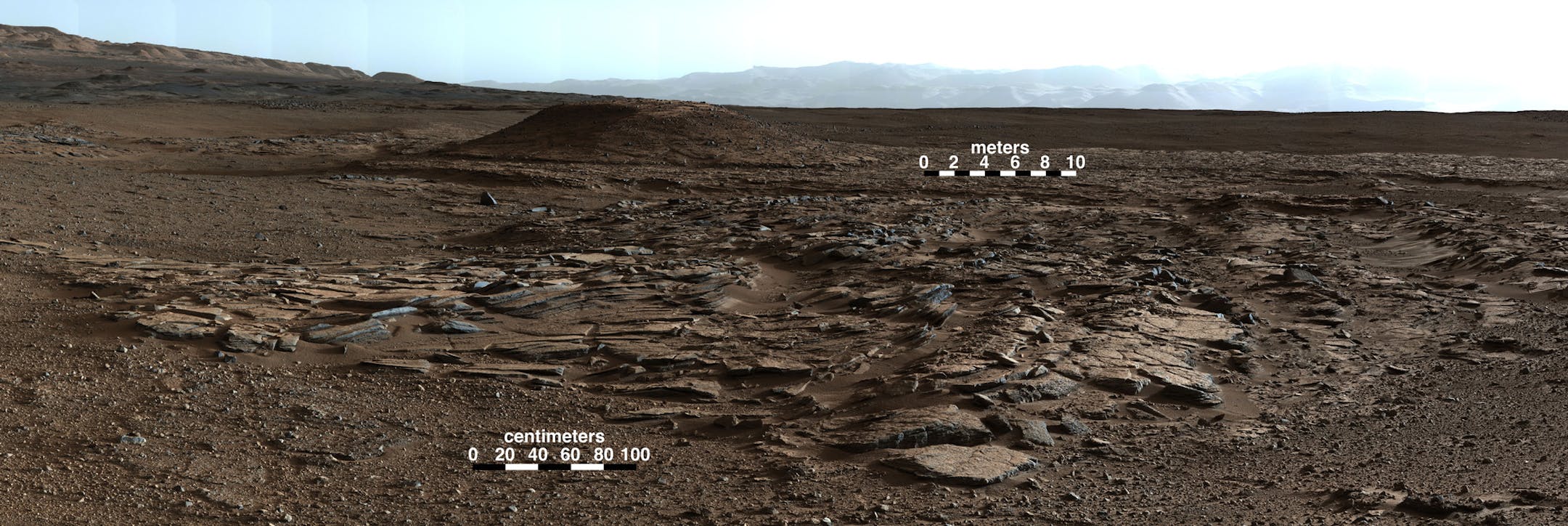
"We believe what we're seeing is multiple cycles of delta migration interspersed between river deposits and probably desert dune deposits, creating quite a complex collage of ancient environments," Gupta said.

Curiosity is in its third year of exploration on the Red Planet. Originally sent to study Mount Sharp, the $2.5 billion laboratory-on-wheels landed in August 2012 and took a detour from its looming target to study a spot called Yellowknife Bay.

After that, the rover drove to Mount Sharp. To date, the rover has driven more than 6 miles, taken more than 104,000 pictures and fired more than 188,000 shots from a laser instrument that vaporizes rock and dirt to identify what they are made of. There, the rover drilled up rocks that revealed signs of a past water-rich, life-friendly ­environment on Mars.

These sedimentary layers could hold the key to whether Mars was a much more habitable planet than it appears today.

The Associated Press contributed to this report.

This mosaic image provided by NASA/JPL-Caltech/MSSS made from photographs taken by the Mast Camera (Mastcam) on NASA's Curiosity Mars rover looks to the west of the Kimberley waypoint on the rover's route to the base of Mount Sharp. The mountain lies to the left of the scene. Sets of sandstone beds all incline to the south, indicating progressive build-out of sediment toward Mount Sharp. These inclined beds are overlain in the background by horizontally bedded fine-grained sandstones that likely
This mosaic image made from photographs taken by the Mast Camera on NASA’s Curiosity rover looks to the west on the rover’s route to the base of Mount Sharp. The mountain lies to the left of the scene. (The Minnesota Star Tribune)
about the writer

about the writer

Amina Khan

More from No Section

See More
FILE -- A rent deposit slot at an apartment complex in Tucker, Ga., on July 21, 2020. As an eviction crisis has seemed increasingly likely this summer, everyone in the housing market has made the same plea to Washington: Send money — lots of it — that would keep renters in their homes and landlords afloat. (Melissa Golden/The New York Times) ORG XMIT: XNYT58
Melissa Golden/The New York Times

It’s too soon to tell how much the immigration crackdown is to blame.