(Now This, YouTube/The Minnesota Star Tribune)
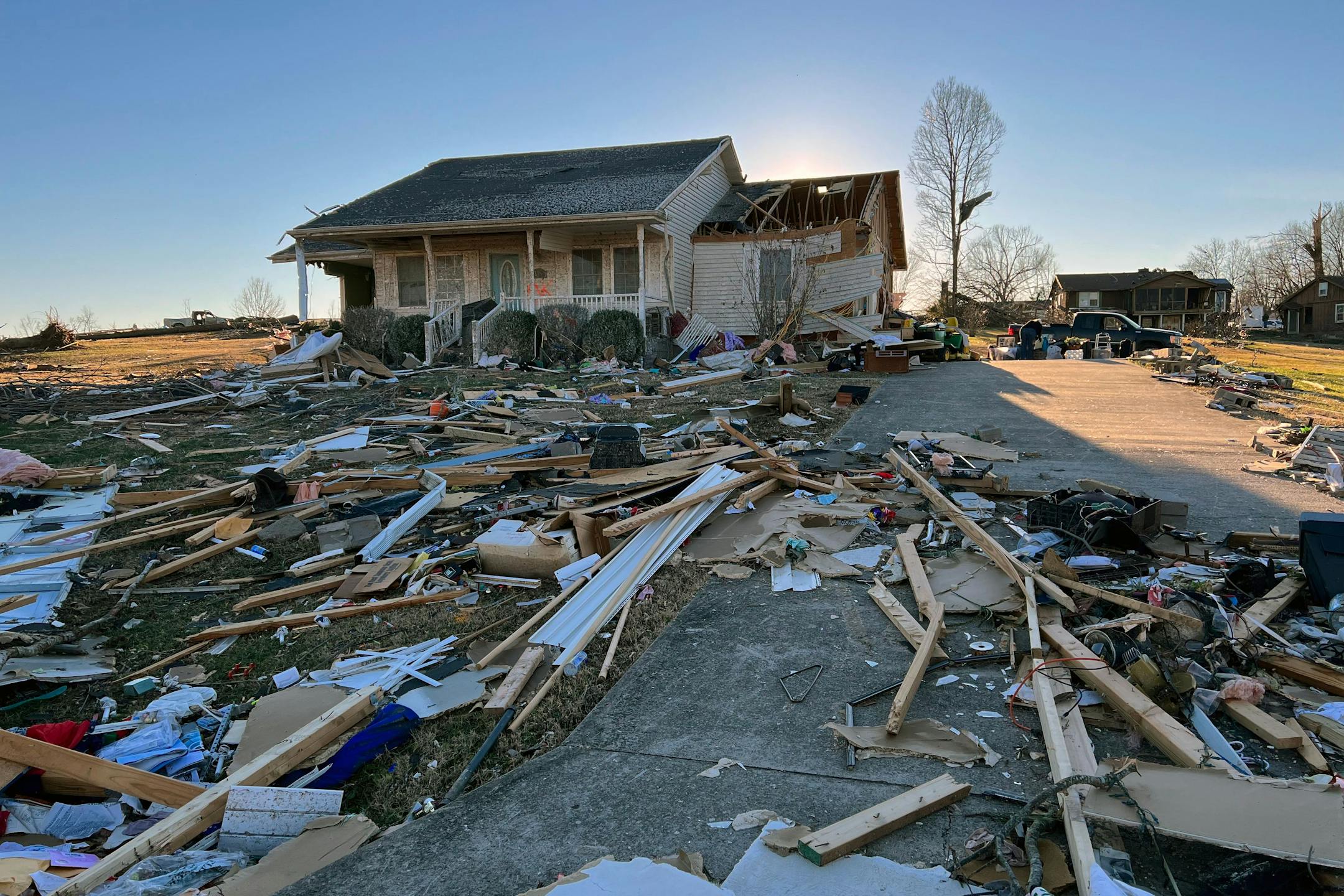
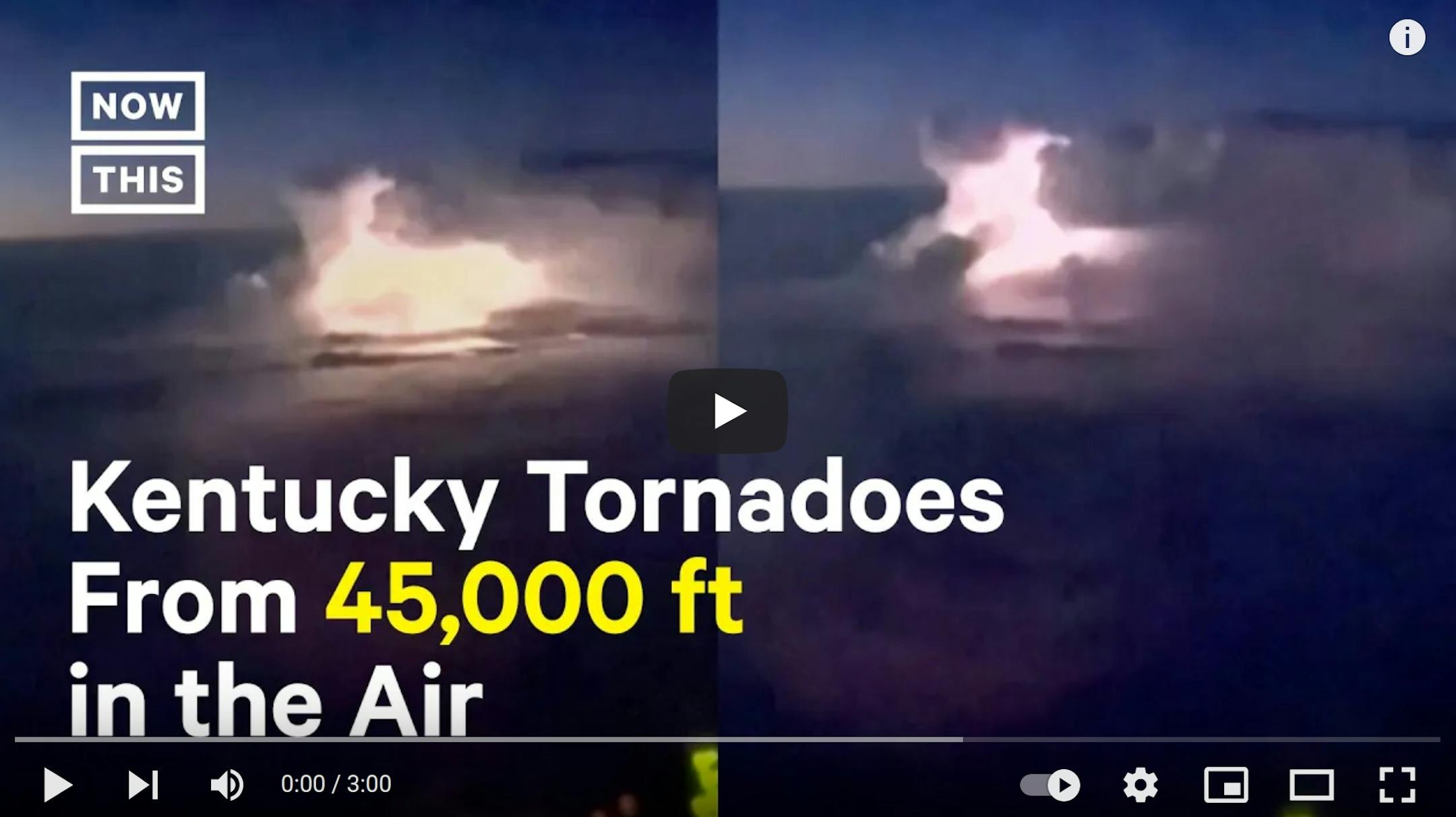
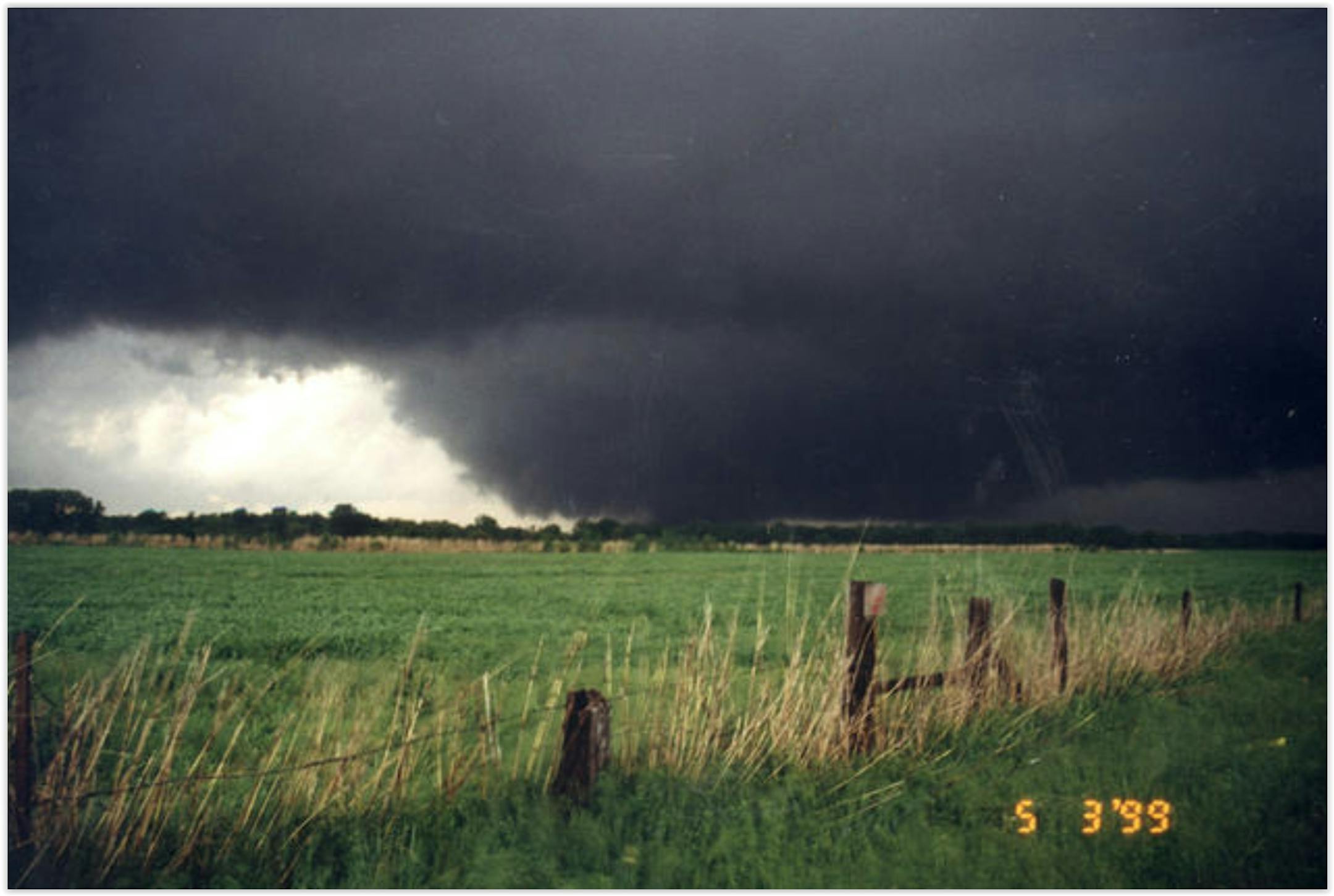
Kentucky Tornadoes From the Air. This is a vantage point you rarely get with tornadoes. Check out the YouTube clip from Now This: "This aerial footage shows just how powerful the tornadoes were that hit Kentucky and other parts of the southeastern U.S. last weekend, resulting in at least 88 deaths. The footage was taken by an airplane pilot from approx 45,000 ft in the air and a distance of about 120 miles away."
(Planet Labs PBC, The Washington Post/The Minnesota Star Tribune)
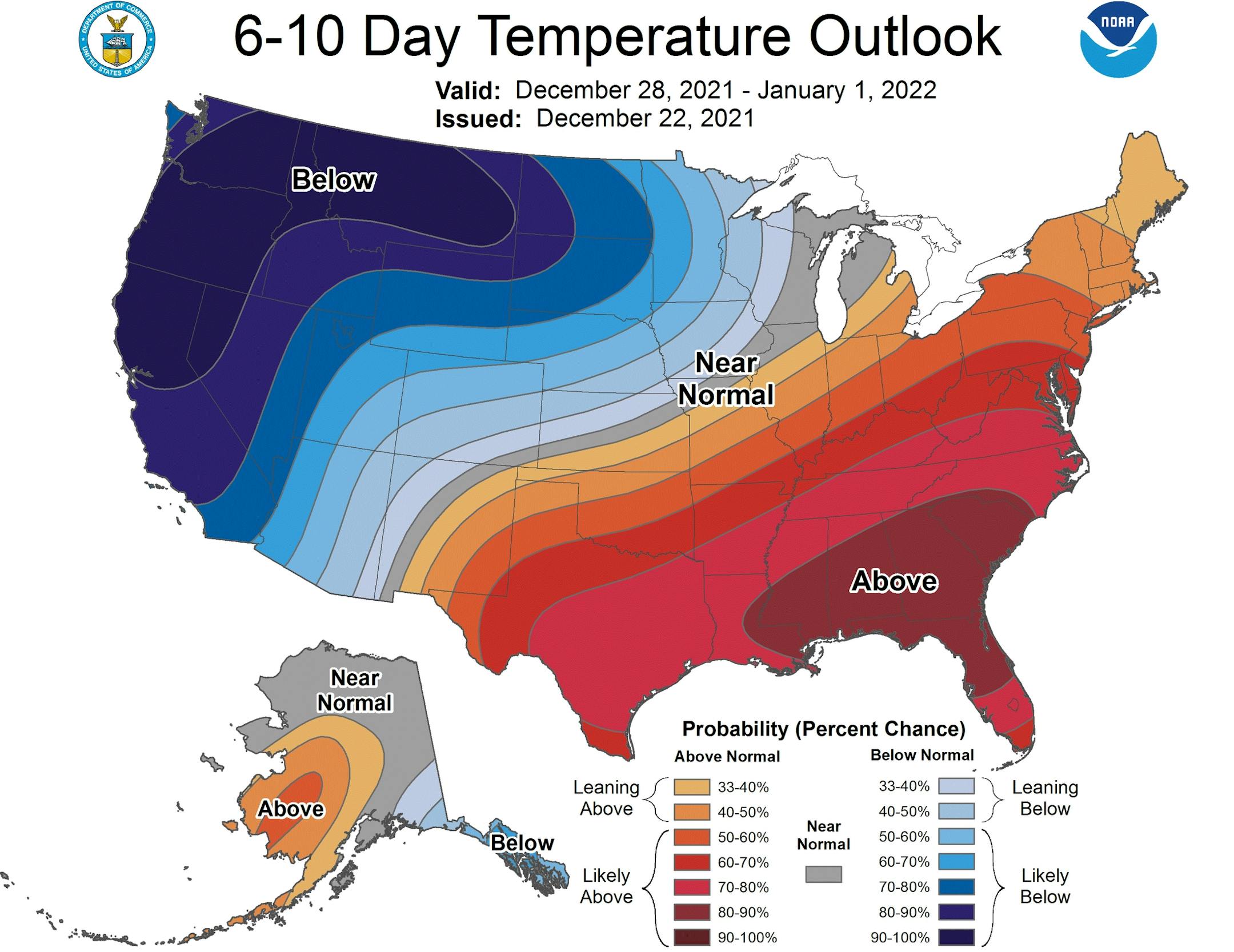
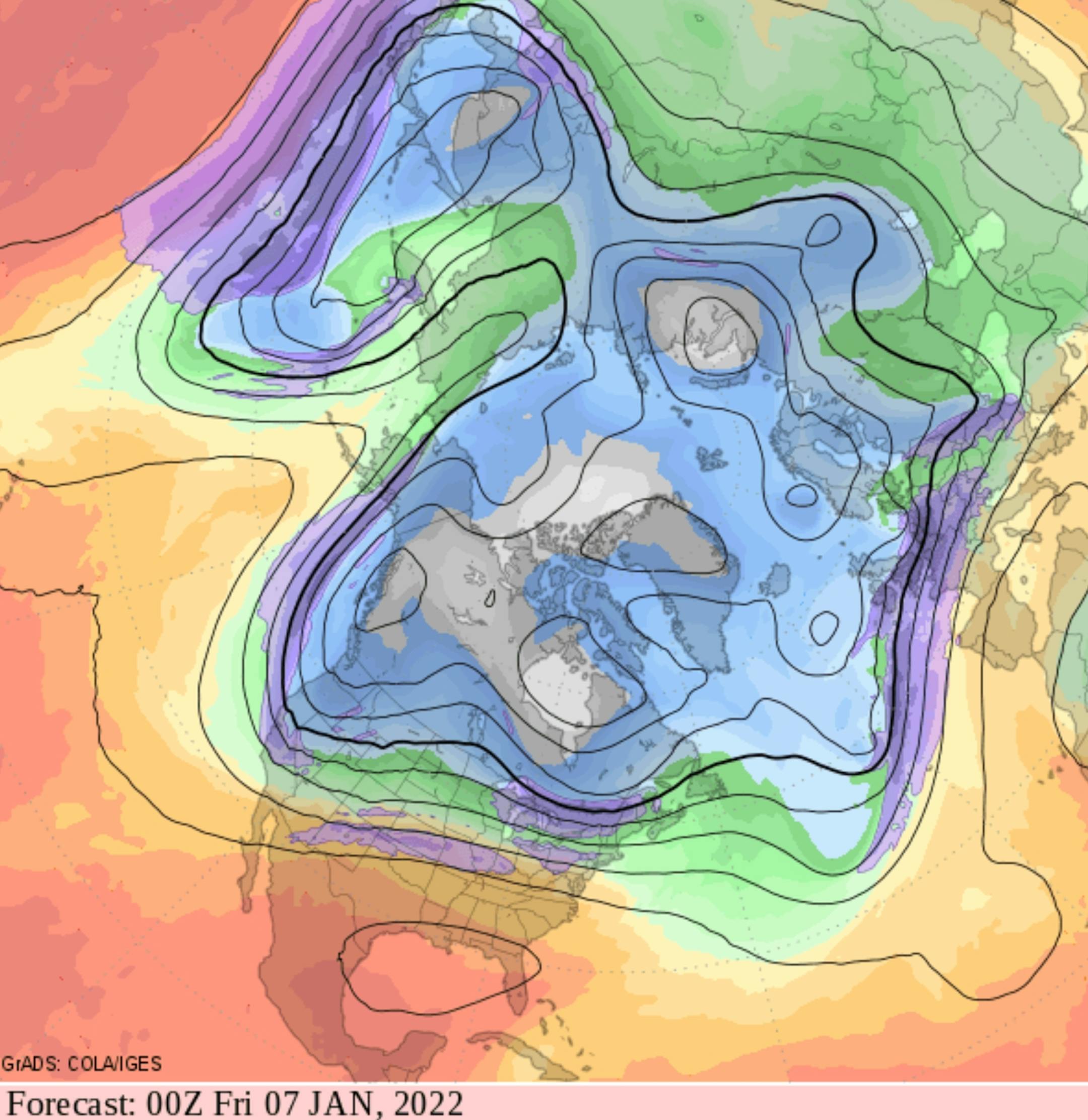
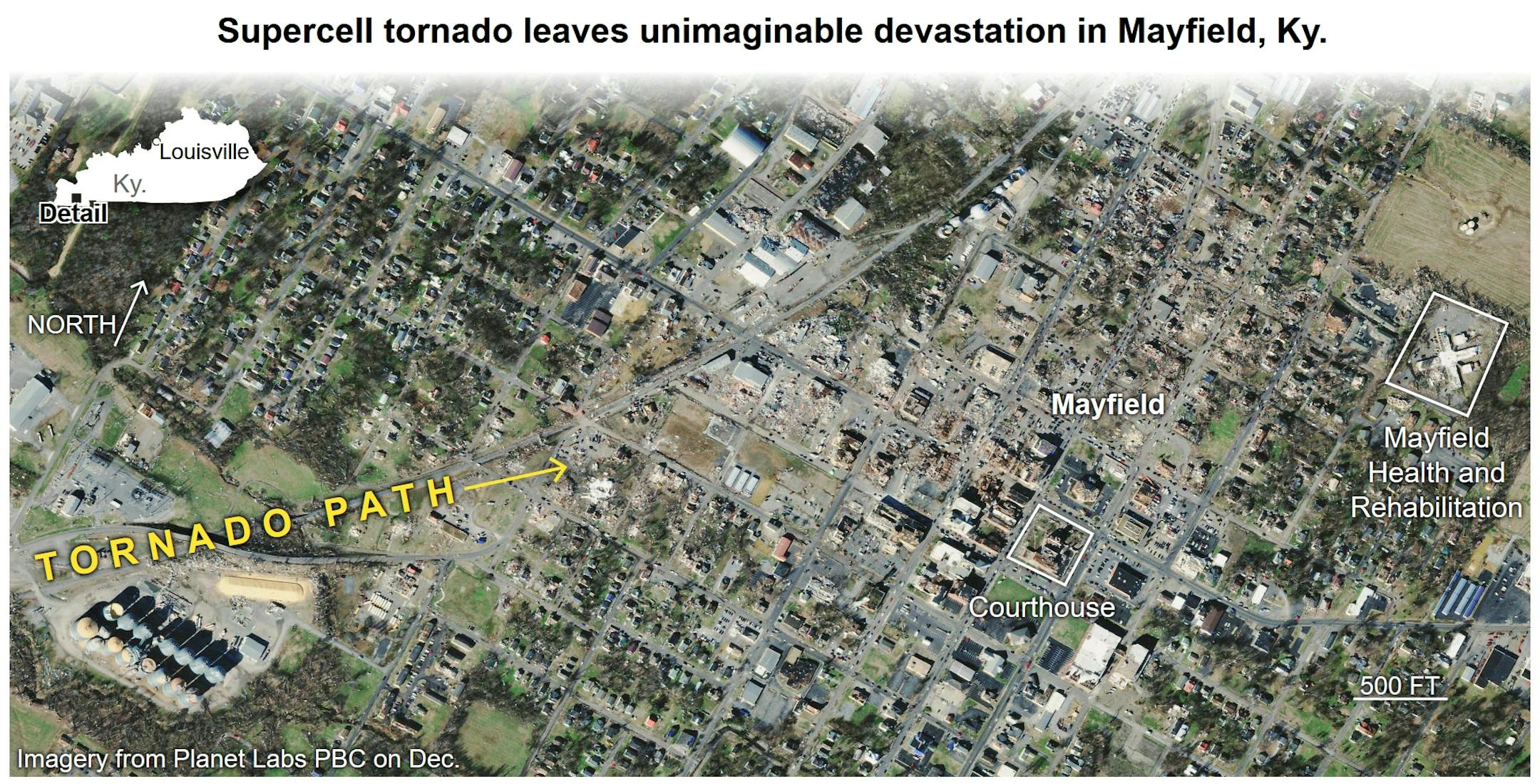
Cold, Heat, Fires, Hurricanes and Tornadoes: The Year in Weather Disasters. The Washington Post has a very good, interactive recap of all the atmospheric craziness: "Vicious wind and tornadoes put a deadly exclamation point on the end of an extraordinary year for extreme weather in the United States. Earlier in 2021, Texas froze and Seattle roasted. Parts of California flooded, burned, then flooded again. A hurricane that slammed Louisiana was so waterlogged that its remnants inundated New York City. A blizzard hit Hawaii. The weather was wilder than usual this year, and the reasons vary, climate experts say. Crazy cold snap? Giant hail? December tornadoes? Those happen now and then on a planet with natural variations in weather patterns..."
2011 Concord, Alabama file (National Weather Service/The Minnesota Star Tribune)
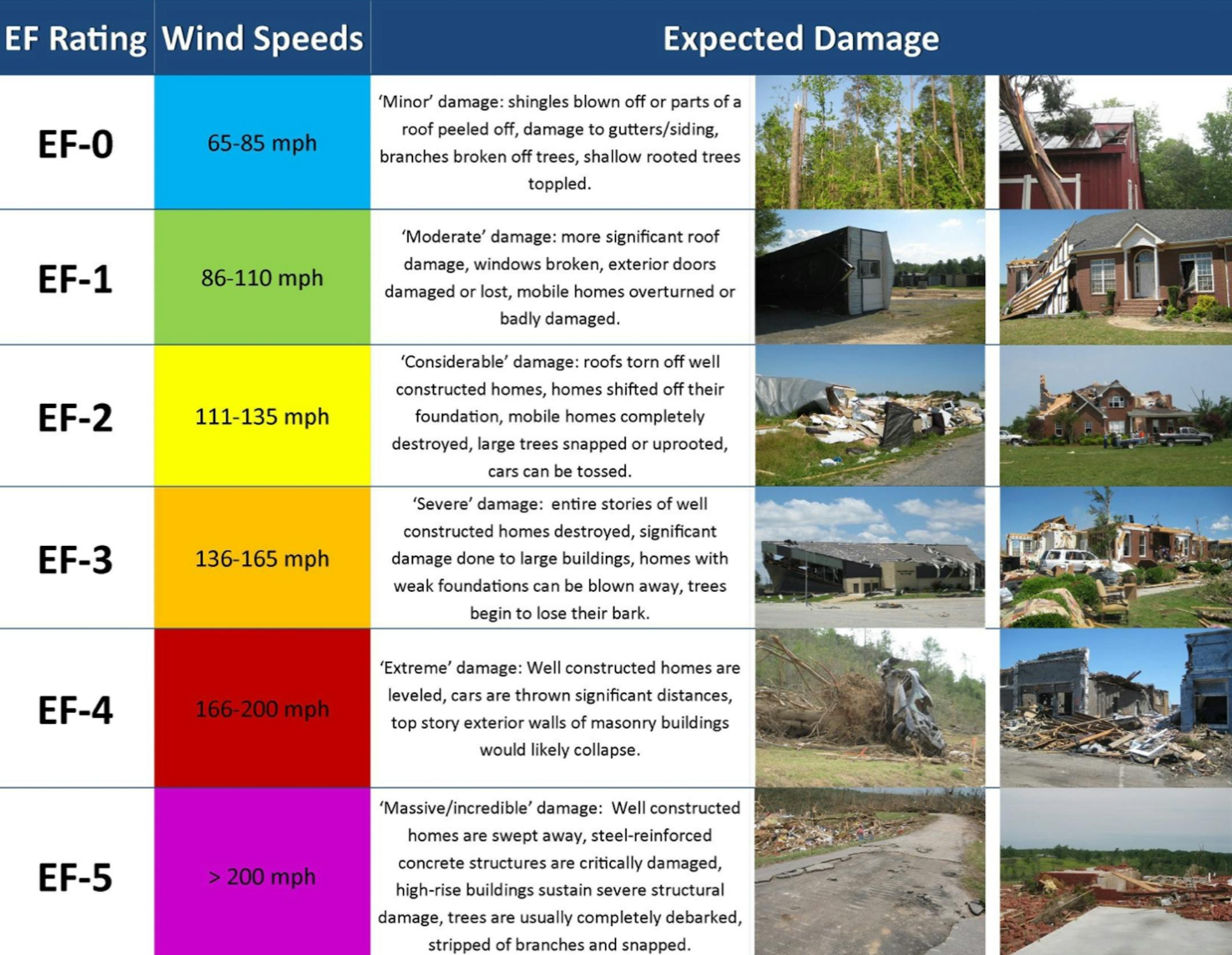
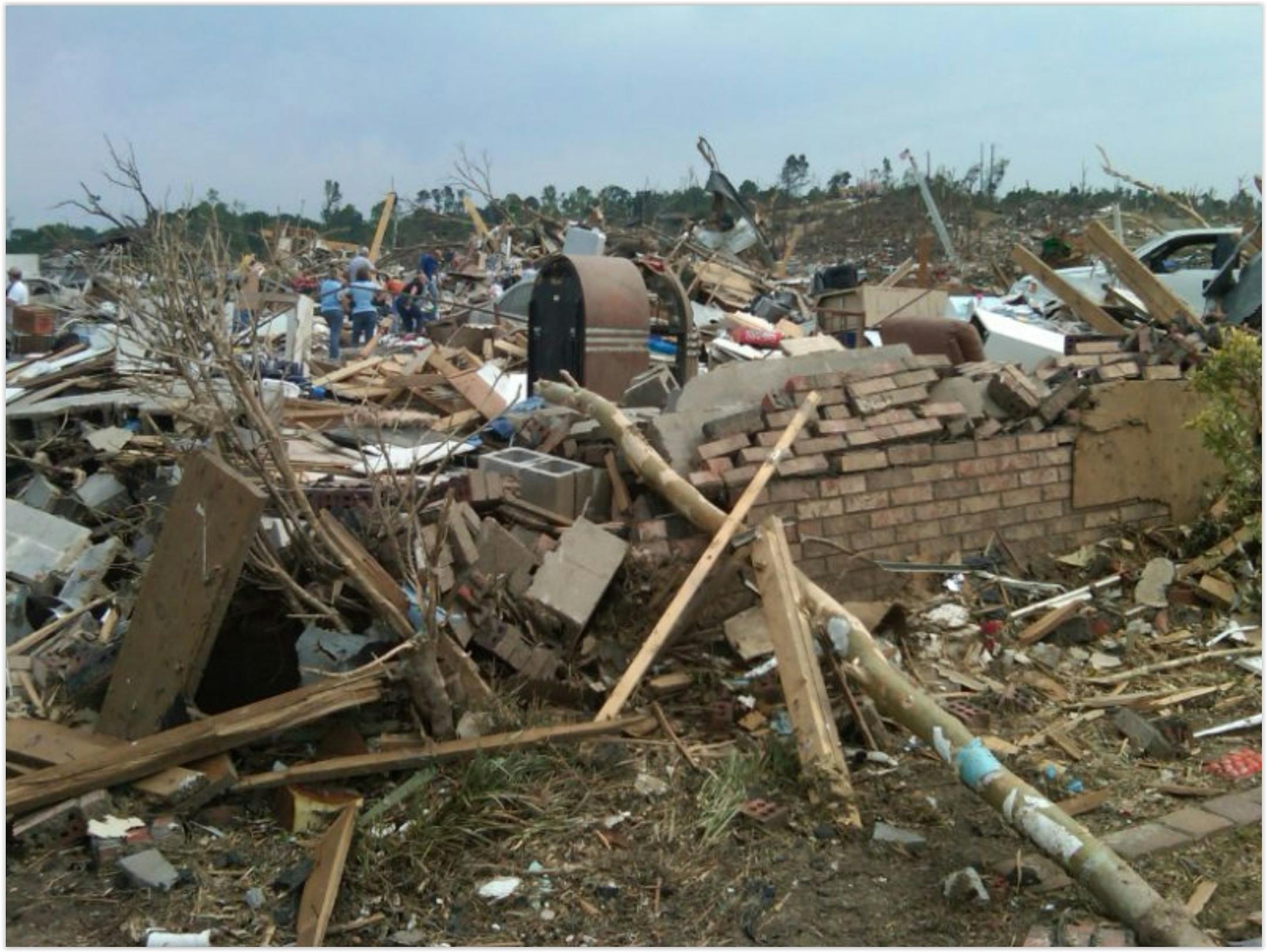
How the Building Industry Blocked Better Tornado Safeguards. The New York Times has analysis: "...While experts say the technology and design standards exist to better protect people and buildings from tornadoes, attempts to incorporate those designs into building codes have repeatedly been blocked or curtailed by the building industry, according to public documents and people involved in efforts to tighten the model codes. "It really does kind of boil down to money," said Jason Thompson, vice president of engineering at the National Concrete Masonry Association and one of the proponents of the 2012 change. "There's just different groups out there that want to keep the cost of construction as low as possible." The stakes are growing..."
(The Minnesota Star Tribune)
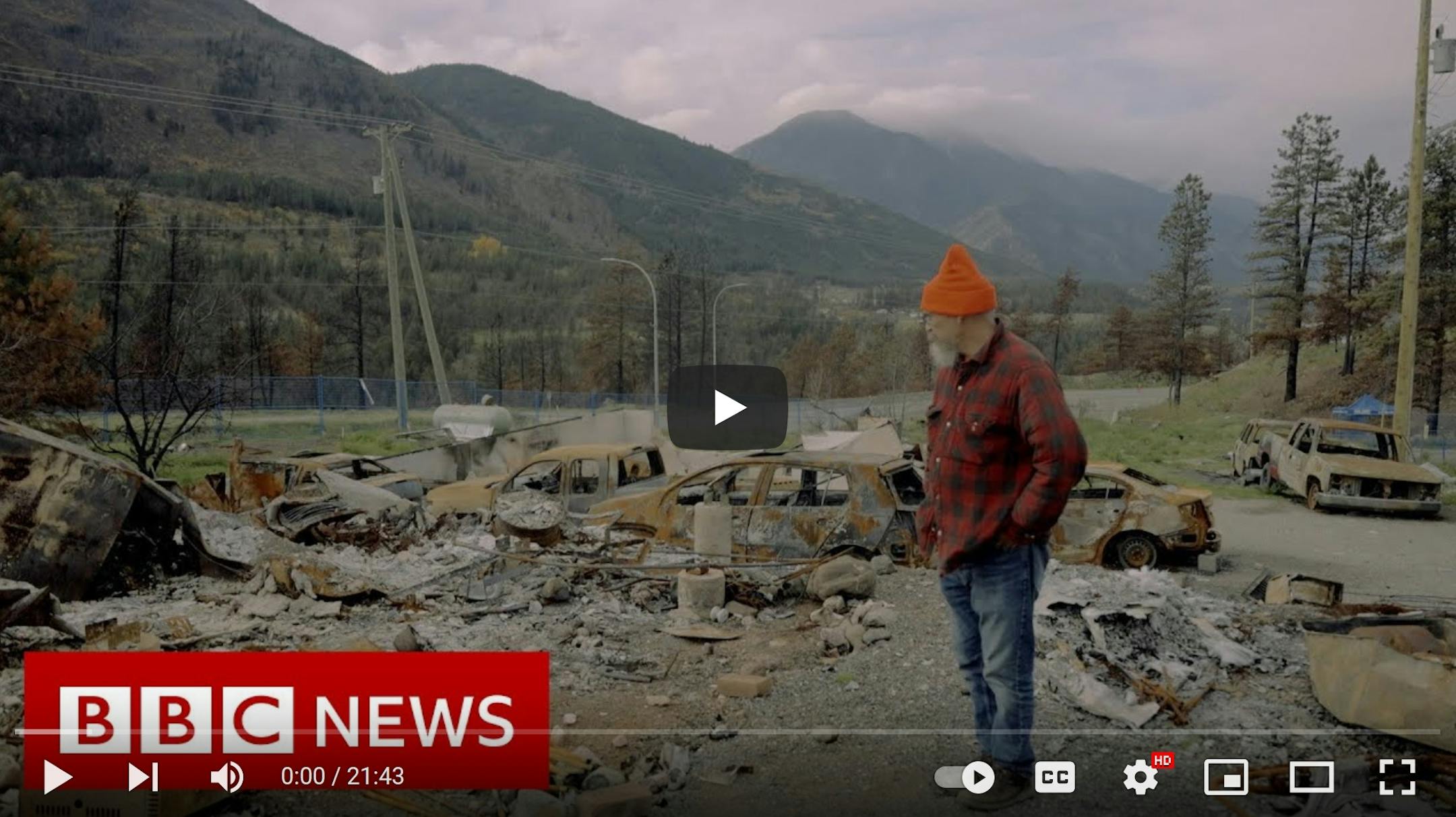
The Canadian Town That Burnt Down in a Day. BBC News has an eye-opening YouTube report: "In 2021, Canada had a record heatwave which scientists say was impossible without climate change. Wildfires engulfed Patrick Michell's hometown of Lytton after it reached 49.5°C. Now he and his community must plan for an uncertain future. Meanwhile, an environmental protest against the logging industry becomes the largest act of civil disobedience Canada's ever seen. BBC Life at 50C looks at extreme heat around the world."
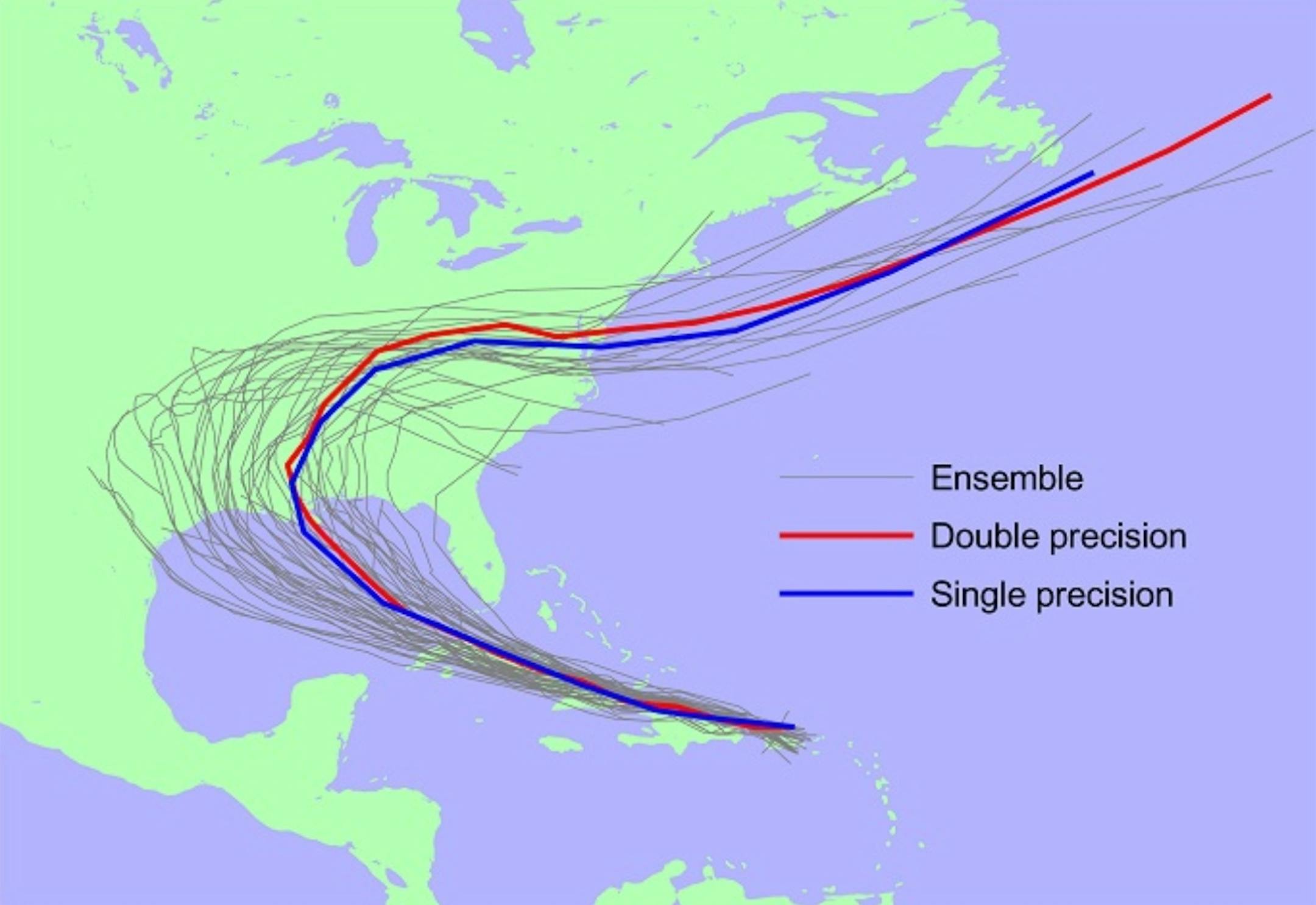
Eight-day tracks of Hurricane Laura from 12 UTC on 22 August 2020 in high-resolution deterministic forecasts with double precision (red) and single precision (blue) along with those from the operational ensemble at the time. (ECMWF/The Minnesota Star Tribune)
ECMWF News Highlights. ECMWF has a recap of 2021; here's the intro: "ECMWF news highlights in 2021 include two upgrades of our Integrated Forecasting System that improved forecasts; projects and workshops to drive forward weather science; and new developments regarding the EU-funded Copernicus services implemented by ECMWF. An upgrade of ECMWF's Integrated Forecasting System (IFS) to Cycle 47r2 implemented on 11 May introduced single precision for high-resolution and ensemble forecasts (HRES and ENS) and increased the vertical ensemble resolution..."
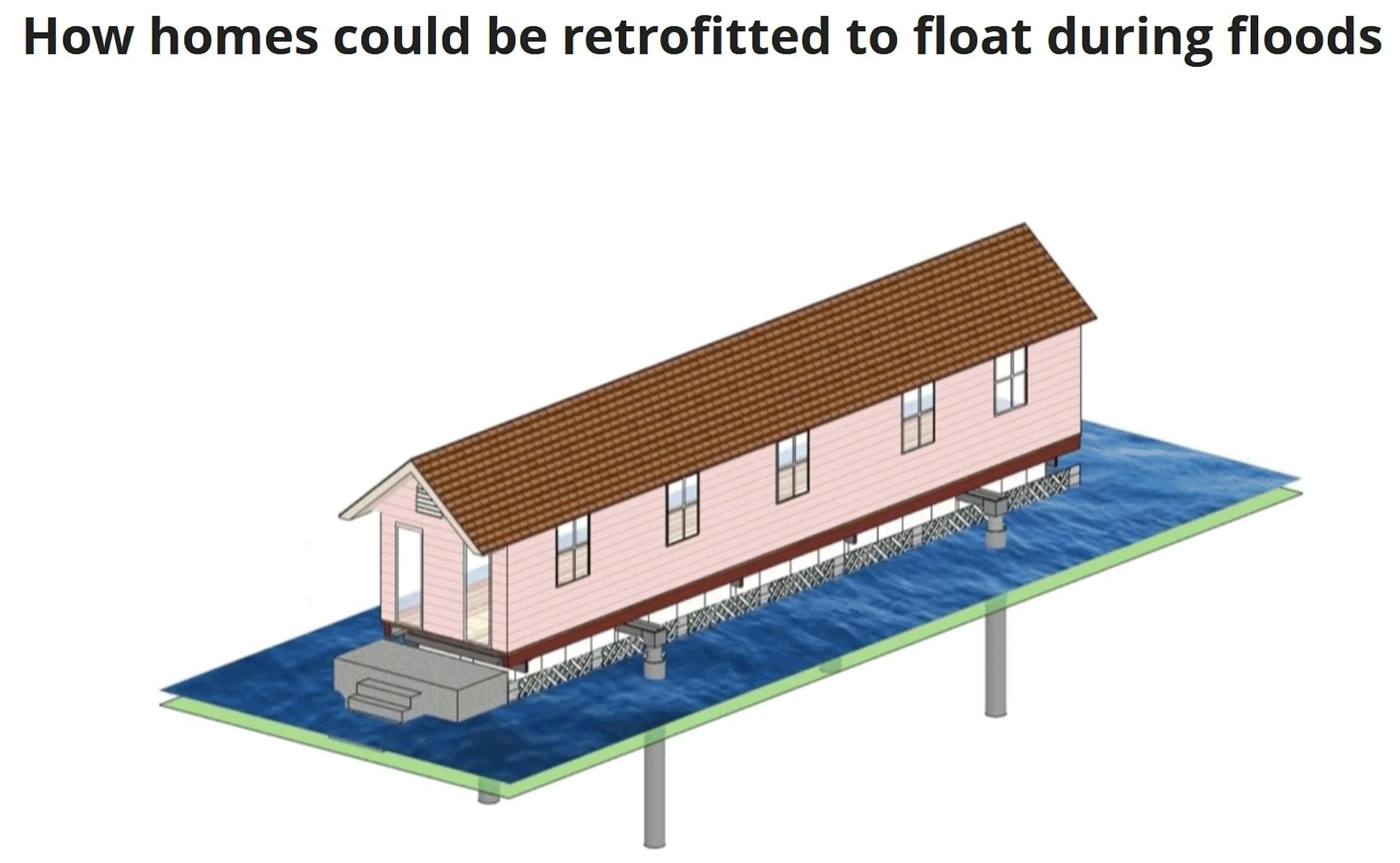
(Julián Goméz B/Buoyant Foundation Project/The Minnesota Star Tribune)
How Homes Could Be Retrofitted to Float During Floods. CBC News takes a look at new approaches and new techniques to try to make buildings more flood resilient; here's an excerpt: "...The project, which conducts research to make low-income housing "amphibious" with such retrofits, was founded in 2006, after whole neighbourhoods of New Orleans were inundated in the wake of Hurricane Katrina. "The technology itself is actually very simple," said English, who is also a professor of architecture at the University of Waterloo in southern Ontario. Buoyant floats are installed underneath the main floor of the house. Then, vertical guide posts are added next to the house and attached to it. That way, it will only move up and down and not side to side. During a flood, the house rises with the floodwaters. When the floodwaters recede, it sits back down on the foundation..."