


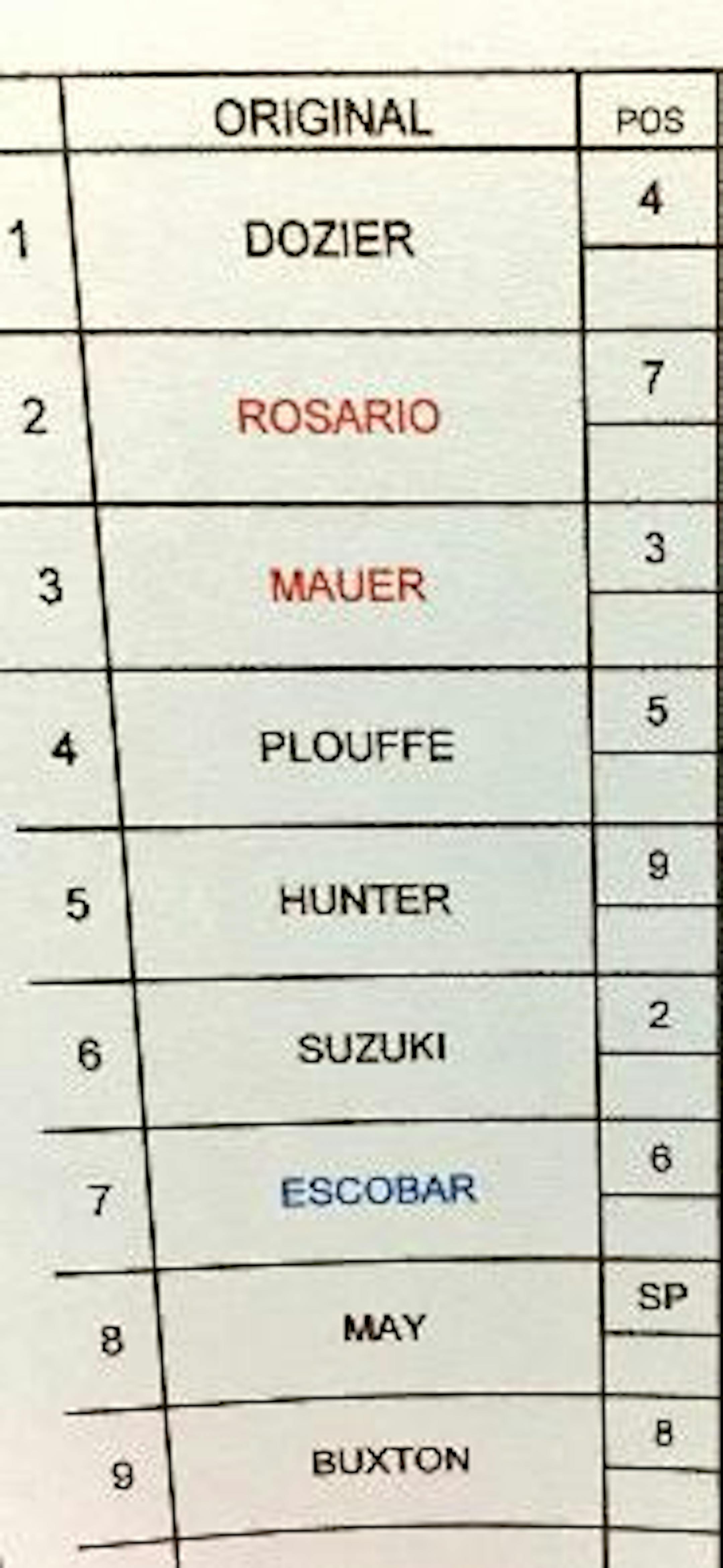
One game into his major league career and phenom Byron Buxton can't even get ahead of the pitcher in the Twins' lineup.
(Yes, that's a joke … the very type of joke I noted in the last much more serious Buxton post).
It's a joke, but it's also true. For the first time in Minnesota Twins history (and the first time in overall franchise history since 1950, per Keith Leventhal), a Twins pitcher will start a game batting eighth while a position player bats ninth. Granted, the Twins have had far fewer opportunities to test out this type of lineup than a National League team, but it's still interesting.
In this case, it's extra-interesting because Trevor May settles in one spot ahead of Buxton under NL rules Monday in St. Louis.
It certainly continues an early trend that suggests new manager Paul Molitor isn't afraid to try different things because while this order has been embraced by Tony LaRussa and now the Cubs' Joe Maddon (who has used the pitcher in the 8-hole all season long, his first managing an NL team), it's still something a lot of baseball fans look at sideways.
The biggest question: Is it smart baseball? The short answer? It really doesn't seem to matter that much.
Russell A. Carleton of Baseball Prospectus wrote a piece for Fox Sports in which he analyzed the numbers and determined that over the course of a 162-game season, batting the pitcher eighth instead of ninth would add 0.6 runs. That's not per game. That's over the course of a season. Part of a run.
And that's without accounting for other individual factors — namely how good the offensive player being displaced to the No. 9 hole is, since that player over the course of a season will get slightly fewer at-bats than if he was in the No. 8 spot.


