

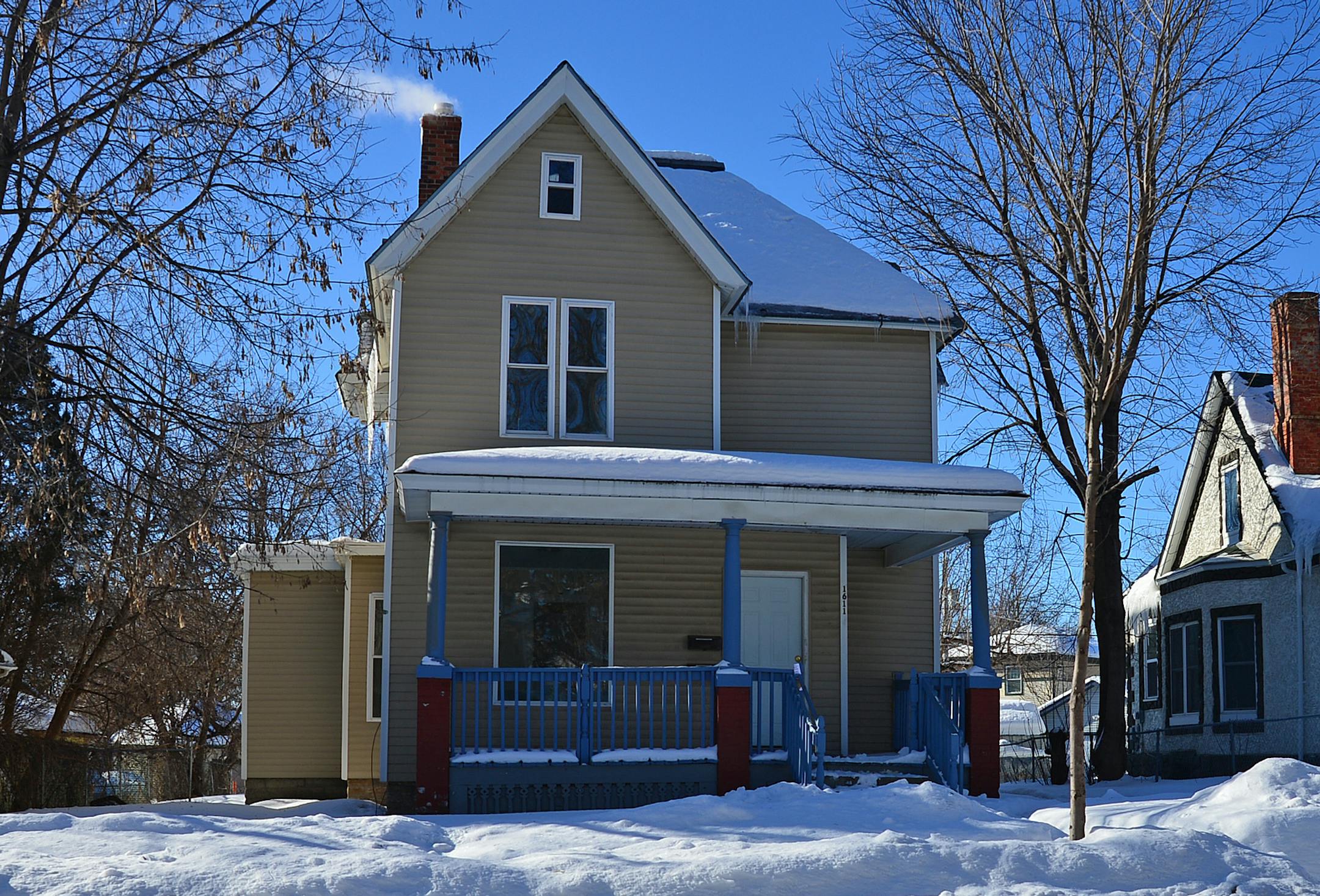
The century-old duplex in north Minneapolis is locked and empty. The front window is cracked. A neighbor says only teenage squatters lived there in the last year, since a blaze displaced 24 people that had been crowding into eight bedrooms.
Last month, the home sold for $46,500 cash to a California investor after languishing for months on the market. It is the latest sale in a tumultuous journey that began nearly a decade ago, when the duplex sold for $290,000 and then endured two foreclosures, an investor that went belly-up, a chain of Wall Street bank trustees, and placement on the city's vacant building registry after the fire rendered it uninhabitable.
The fortunes of the housing market in north Minneapolis are reflected in the tortured history of this home at 1611 Hillside Av., still scarred by fire. The surrounding Jordan community hosts more vacant homes than any other neighborhood in Minneapolis, and here a vacant home typically means an investor is its only way out.
Even as the housing recovery is taking hold throughout the metro area, progress in the neighborhoods of north Minneapolis has been slower. Homes that are in foreclosure or at risk of foreclosure represented about 45 percent of all transactions in 2013, almost twice the rate across the metro area.
Some neighborhoods, such as Willard Hay and Near North, saw significant gains in median sales prices in 2013 as investors swooped in to take advantage of some of the lowest-cost housing in the metro area. But in Jordan, home of 1611 Hillside, the median sales price fell nearly 9 percent from 2012.
"The housing market is rebounding, but there are pockets around Jordan that continue to struggle where homes are in somewhat challenged conditions and the price is right for an investor to come in and buy it, fix it up to minimal standards, rent it and make a lot of money," said Minneapolis housing director Tom Streitz.
City officials and housing advocacy organizations have poured millions of dollars into housing assistance programs, including down-payment assistance and low-interest rehab programs. Increasing the number of owner-occupied homes has long been seen as the best means to improve the overall quality of life on the city's North Side.
But the cycle that has prevailed here — vacant homes, bought by investors, rented to people with little interest in the neighborhood — is still in full force.


