
A trailblazer for women in politics

Chosen by Walter Mondale to be his running mate in the 1984 presidential race, she changed the face of elections.

The Associated Press
March 28, 2011 at 8:50PM
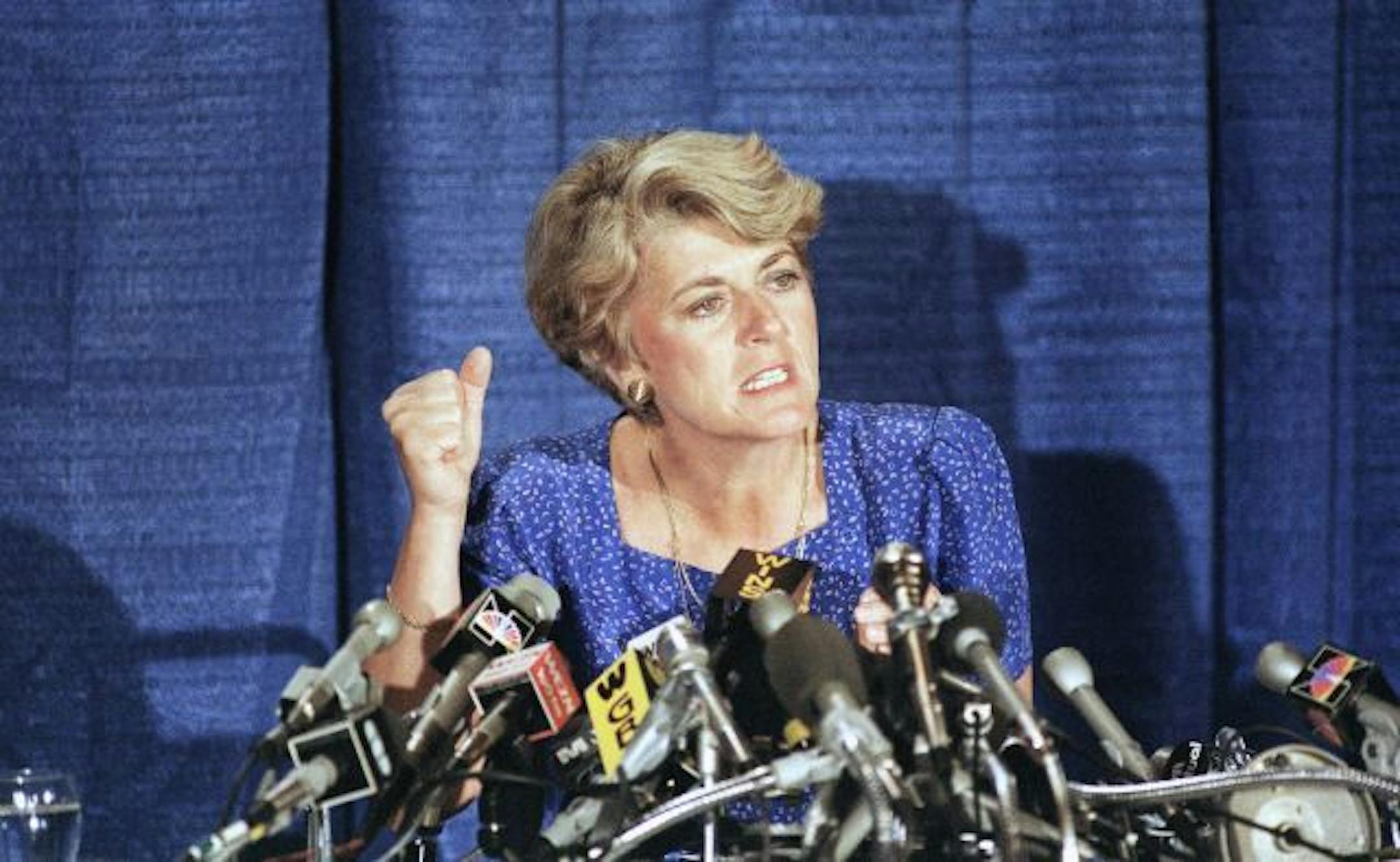
FILE - In this Aug. 21, 1984 file picture, Geraldine Ferraro explains the finances of herself and husband during a news conference in the Queens borough of New York. The first woman to run for U.S. vice president on a major party ticket has died. Geraldine Ferraro was 75. A family friend said Ferraro, who was diagnosed with blood cancer in 1998, died Saturday, March 26, 2011 at Massachusetts General Hospital.
FILE - In this Aug. 21, 1984 file picture, Geraldine Ferraro explains the finances of herself and husband during a news conference in the Queens borough of New York. The first woman to run for U.S. vice president on a major party ticket has died. Geraldine Ferraro was 75. A family friend said Ferraro, who was diagnosed with blood cancer in 1998, died Saturday, March 26, 2011 at Massachusetts General Hospital. (Associated Press - Ap/The Minnesota Star Tribune)

BOSTON - Geraldine Ferraro was a relatively obscure congresswoman from the New York City borough of Queens in 1984 when she was tapped by Democratic presidential nominee Walter Mondale to join his ticket.

Her vice presidential bid, the first for a woman on a major party ticket, emboldened women across the country to seek public office and helped lay the groundwork for Hillary Rodham Clinton's presidential candidacy in 2008 and John McCain's choice of his running mate, Sarah Palin, that year.

Ferraro died Saturday in Boston, where the 75-year-old was being treated for complications of multiple myeloma, a form of blood cancer. She died just before 10 a.m., said Amanda Fuchs Miller, a spokeswoman for the family.

Mondale's campaign against President Reagan had struggled to gain traction, and his selection of Ferraro revived his momentum, at least momentarily, and energized millions of women who were thrilled to see one of their own on a national ticket.

The blunt, feisty Ferraro charmed audiences initially, and for a time polls showed the Democratic ticket gaining ground on Reagan and Vice President George H.W. Bush. But her candidacy ultimately proved rocky as she fought ethics charges and traded barbs with Bush over accusations of sexism and class warfare.

Ferraro later told an interviewer, "I don't think I'd run again for vice president," then added: "Next time I'd run for president."

Reagan won 49 of 50 states in 1984 -- all except Minnesota -- the largest landslide since Franklin D. Roosevelt's first reelection in 1936. But Ferraro had forever sealed her place as trailblazer for women in politics.

"At the time it happened it was such a phenomenal breakthrough," said Ruth Mandel of the Center on the American Woman and Politics at Rutgers University. "She stepped on the path to higher office before anyone else, and her footprint is still on that path."

Palin, who was Alaska's governor when she ran for vice president, often spoke of Ferraro on the campaign trail.

"She broke one huge barrier and then went on to break many more," Palin wrote on her Facebook page Saturday. "May her example of hard work and dedication to America continue to inspire all women."

Ferraro died at Massachusetts General Hospital, where she had gone Monday for a procedure related to her cancer. She developed pneumonia, and it soon became clear she didn't have long to live, said Dr. Noopur Raje, who treated her.

She was too ill to return to New York, and her family went to Boston to be with her.

Ferraro stepped into the national spotlight at the Democratic convention in 1984, giving the world its first look at a co-ed presidential ticket. It seemed, at times, an awkward arrangement -- she and Mondale stood together and waved at the crowd but did not hug and barely touched.

Delegates erupted in cheers at the first line of her speech accepting the vice-presidential nomination:

"My name is Geraldine Ferraro," she declared. "I stand before you to proclaim tonight: America is the land where dreams can come true for all of us."

After losing in 1984, she became a fellow of the Institute of Politics at the John F. Kennedy School of Government at Harvard University until an unsuccessful bid for the U.S. Senate nomination in 1992.

about the writers

about the writers

BETH FOUHY

JAY LINDSAY

More from No Section

See More
FILE -- A rent deposit slot at an apartment complex in Tucker, Ga., on July 21, 2020. As an eviction crisis has seemed increasingly likely this summer, everyone in the housing market has made the same plea to Washington: Send money — lots of it — that would keep renters in their homes and landlords afloat. (Melissa Golden/The New York Times) ORG XMIT: XNYT58
Melissa Golden/The New York Times

It’s too soon to tell how much the immigration crackdown is to blame.