I could see the garbage dump from my Vienna hotel room. Two-hundred-fifty truckloads of refuse a day. Five thousand tons a week, reduced to ash at an inferno called Spittelau.
I wasn't in a crummy neighborhood. It was just that this incinerator is a colorful mammoth, topped by a zany gold-domed minaret of a smokestack that is easily visible, far out on the horizon of Austria's capital.
Vienna is cosmopolitan, stylishly modern and sometimes whimsical despite the weight and girth of dozens of monuments that date from its 600-year span as the center of the Austro-Hungarian Empire. It has been chosen as the city offering the highest quality of life in the world — for the seventh year in a row — by an international business consultancy.
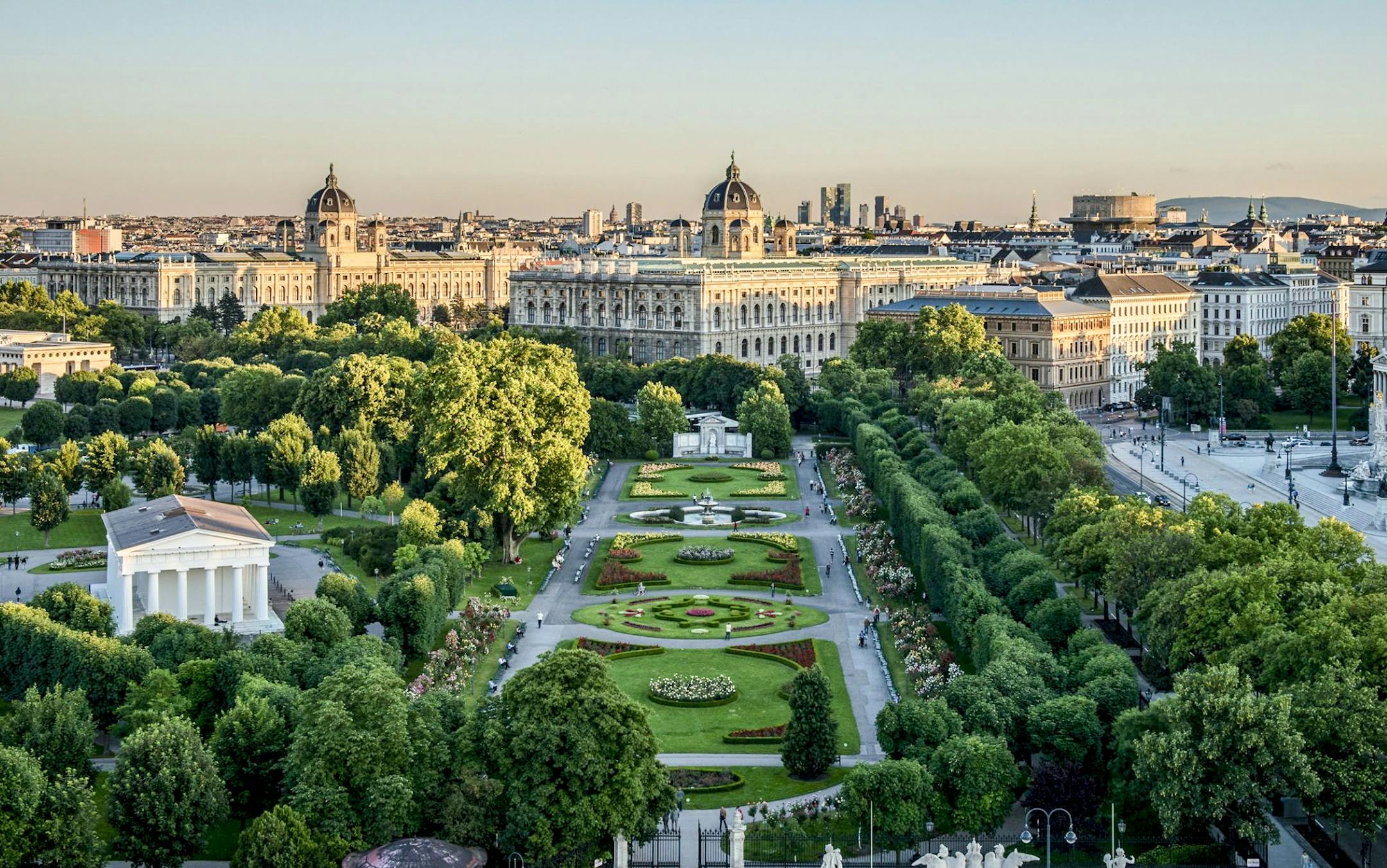
One criterion for that selection is "nature and environment," and it showcases Vienna's commitment to sustainability. The most visible evidence is the green space — 75 square miles of it within the city limits.
Many of its less obvious aspirations and achievements are "green," too. My wife, Linda, and I decided to visit several, including eco-friendly hotels, stores devoted to artistically repurposed castoffs, and that high-tech incinerator complex outside our hotel window. These aren't typical tourist sites, but they're far less crowded and easily as interesting. They offer inspiration — ideas to take home that could wear a lot longer than the dirndls, lederhosen and Tyrolean hats you may have been considering.
These forward-looking entrepreneurial and public works are a counterweight to a rather darker — but also instructive — Austrian state of mind. Even tourism campaigns here are marketed with a certain precarious gusto, under this slogan: "Vienna, Now or Never!" That minor-key vibe is an echo of national politics.
The former leader of Austria's Green Party — one of the strongest in Europe — was recently elected president as the candidate of a political coalition. He won by only by six-tenths of 1 percent, however — a result so close that another election has been scheduled for late this year.
And his near-miss opponent is the first very-far-right politician to come this close to the leadership of a European nation in decades. His party was founded by former Nazis after the war, but parts of his campaign may sound oddly familiar to American visitors. It features high-voltage anti-immigrant appeals, such as "Native Austrian Rights Are Human Rights!" and the interesting "Don't Let Vienna Become Chicago!" Also, appeals for nationalistic toughness: "Austria Needs Security!" "Your Homeland Needs You Now!" "Show the Flag!"