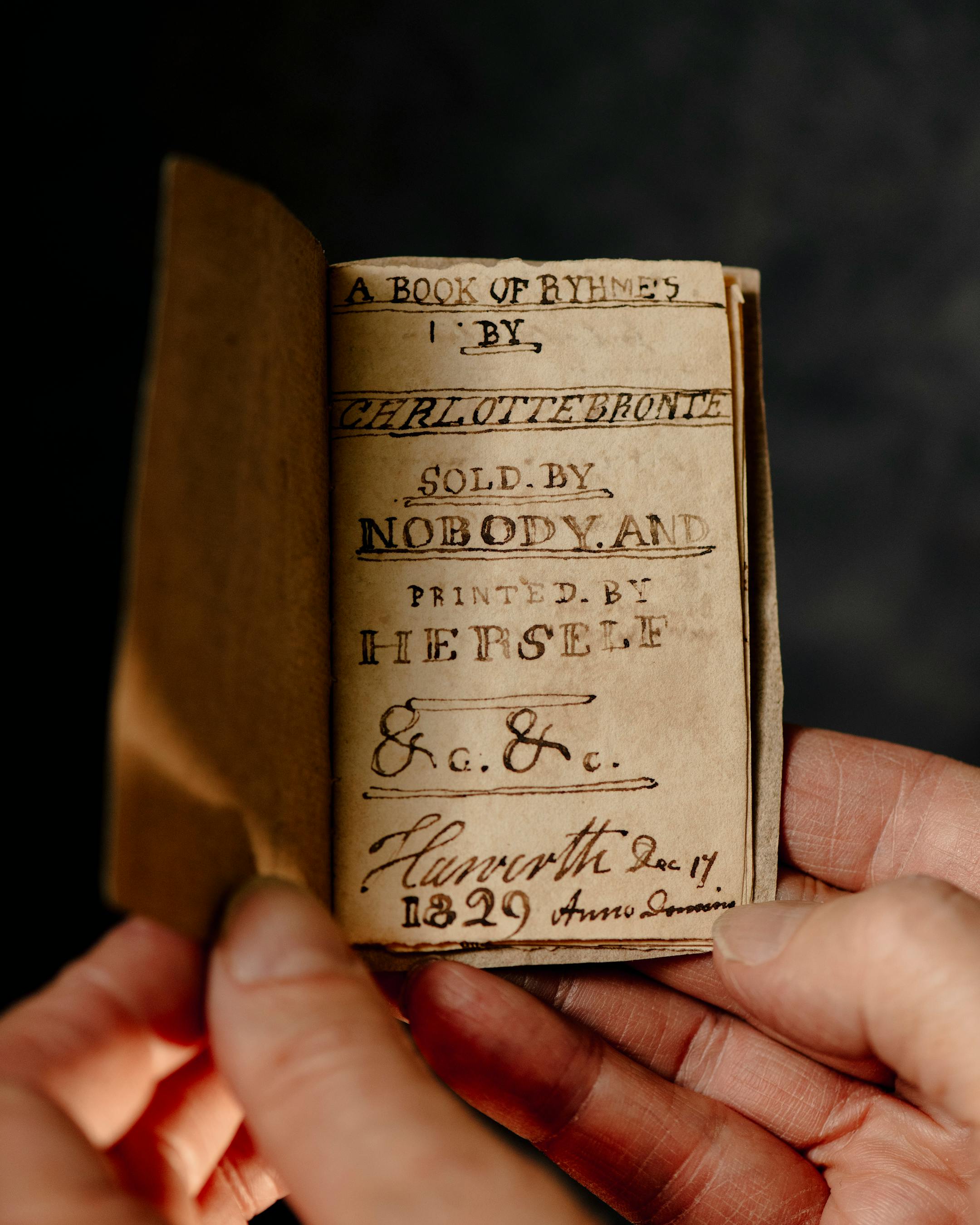
The last of the two dozen miniature books made by the young Charlotte Brontë to remain in private hands, which resurfaced last month after nearly a century, will soon be heading home to the remote parsonage on the moors of northern England where it was made.
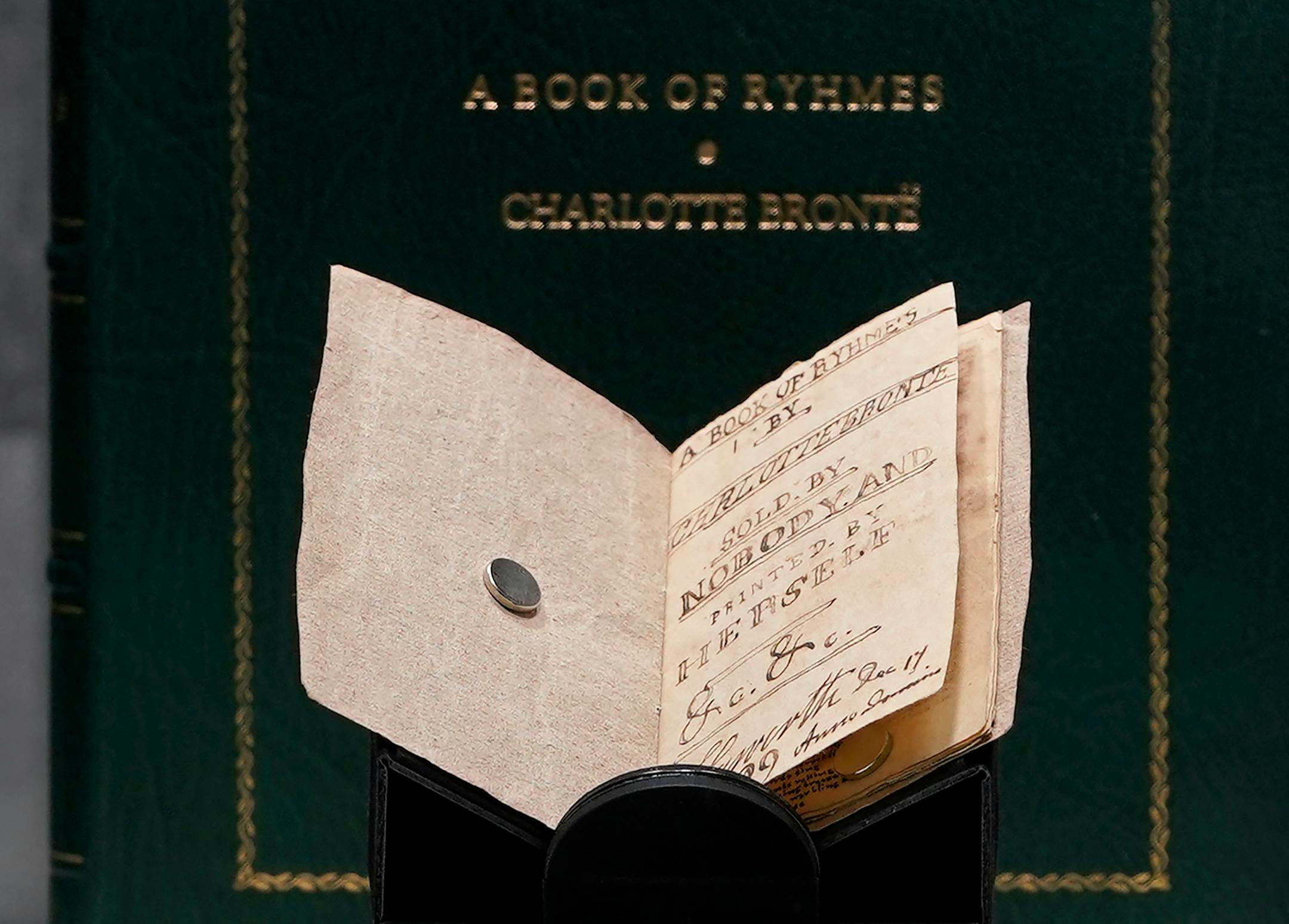
"A Book of Rhymes," which contains 10 previously unpublished poems by the 13-year-old Brontë, was a star attraction last month at the New York International Antiquarian Book Fair, where it was offered for $1.25 million. At the fair's preview, a red dot indicating it had been sold appeared on the label inside the specially constructed display case, setting off speculations about the buyer.
It was later revealed that the buyer is the Friends of the National Libraries, a British charity, which is donating it to the Brontë Parsonage Museum in Haworth, Yorkshire, home to one of the world's largest collections of Brontë manuscripts.
Ann Dinsdale, the museum's chief curator, said in a statement that she was "absolutely thrilled" by the turn of events.
"It is always emotional when an item belonging to the Brontë family is returned home, and this final little book coming back to the place where it was written after being thought lost is very special for us," she said.
According to a news release, the book will be put on public display and also digitized, making poems that have been virtually unseen since they were written accessible to readers around the world.
The miniature books and magazines created by the young Charlotte, Emily, Anne and Branwell Brontë in the 1820s have long been objects of fascination for ordinary people and deep-pocketed collectors alike. Initially created to entertain their toy soldiers (and sewn together from sugar packets, wallpaper scraps and other stray bits of paper), the tiny volumes reflected the rich imaginary world they created in the isolation of the family home, which fed into novels like Charlotte's "Jane Eyre" and Emily's "Wuthering Heights."
"A Book of Rhymes," a 15-page volume smaller than a playing card made in 1829, was last seen at auction in 1916 in New York, where it sold for $520. It then disappeared from view, its whereabouts — and even its survival — unknown.