Opinion editor's note: Editorials represent the opinions of the Star Tribune Editorial Board, which operates independently from the newsroom.
•••
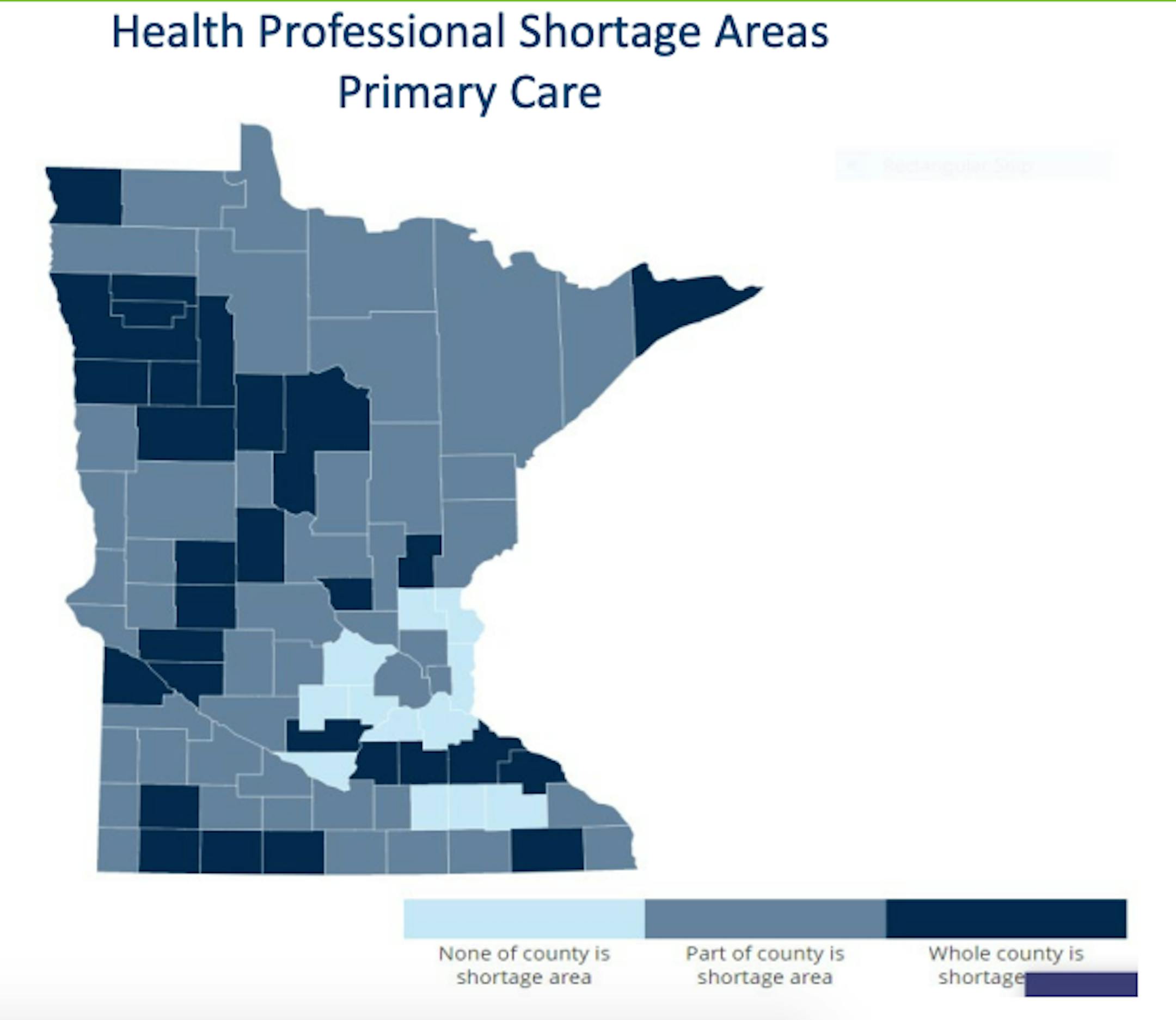
Few things are more fundamental to Minnesotans' quality of life than access to medical providers. That's why it doesn't take long for alarm bells to sound during a dive into the data collected by the state Department of Health's Office of Rural Health and Primary Care.
While the health care workforce across Minnesota is struggling with burnout and looming retirements, the problem is especially acute outside metro areas, where doctors' median age is a decade higher than their urban counterparts — 58 vs. 48.
"One out of every three rural physicians reports planning to leave their profession within the next five years, exacerbating existing shortages," according to the rural health office's sobering 2022 analysis.
Another data point underscores concerns about the need for more doctors. Per capita, far fewer physicians are already serving the state's rural areas than its urban areas. The population-to-physicians ratio for urban areas is 245. For rural areas, it's 894.
There isn't a cure-all for this workforce crisis. But one sensible solution is training more physicians interested in practicing outside the Twin Cities. Fortunately, a new proposal between the University of Minnesota Medical School and CentraCare, a St. Cloud-based health system, aims to achieve that. The appropriate reaction: "How can we make this happen?"
Last week, the two organizations announced they are working to open a new branch of the U's medical school in St. Cloud to recruit doctors interested in practicing in a small town or rural setting. As a Jan. 16 Star Tribune story noted, it would be the state's "first new medical campus in 50 years." While cost details are still emerging, this is a timely, innovative idea.