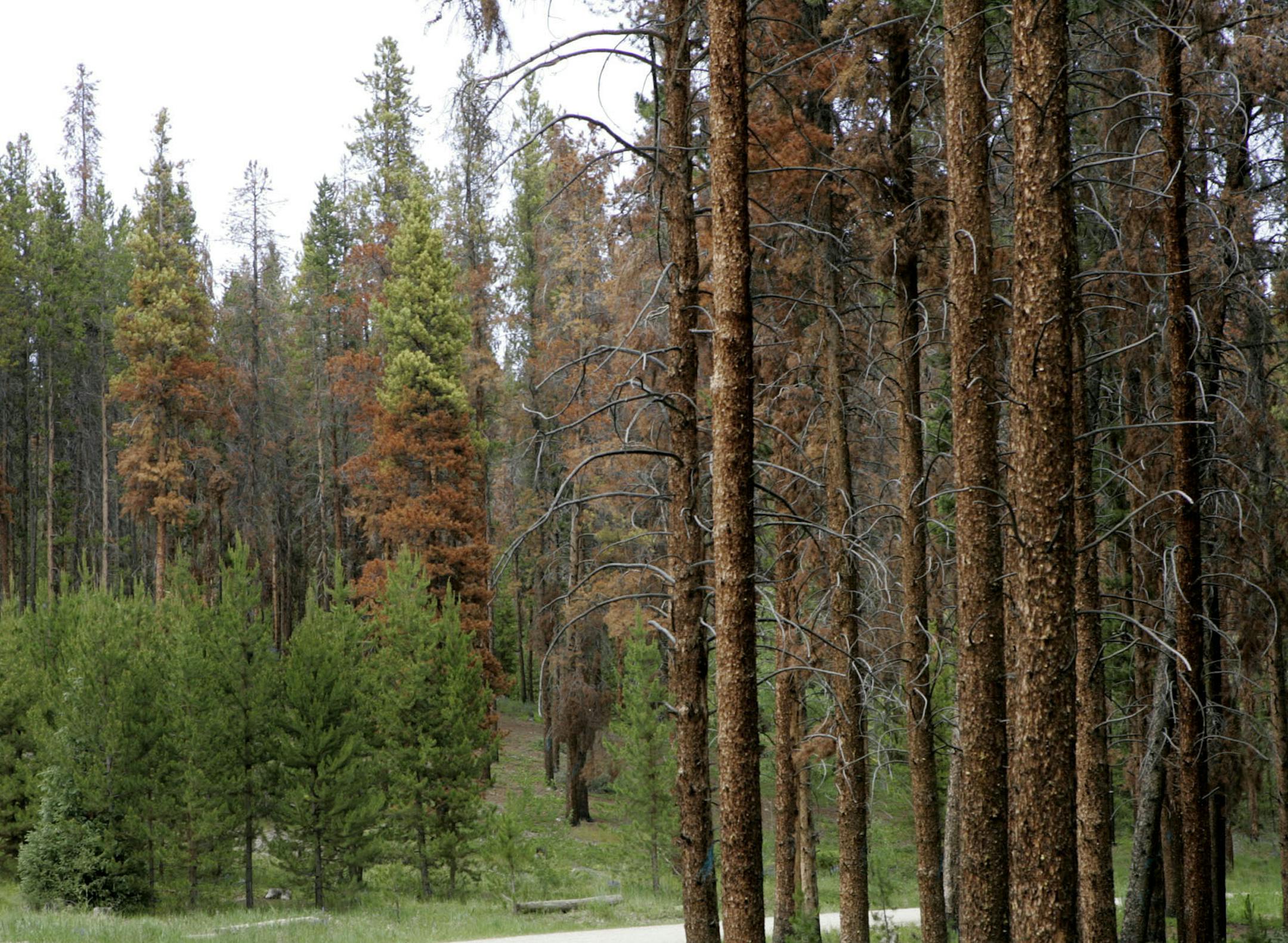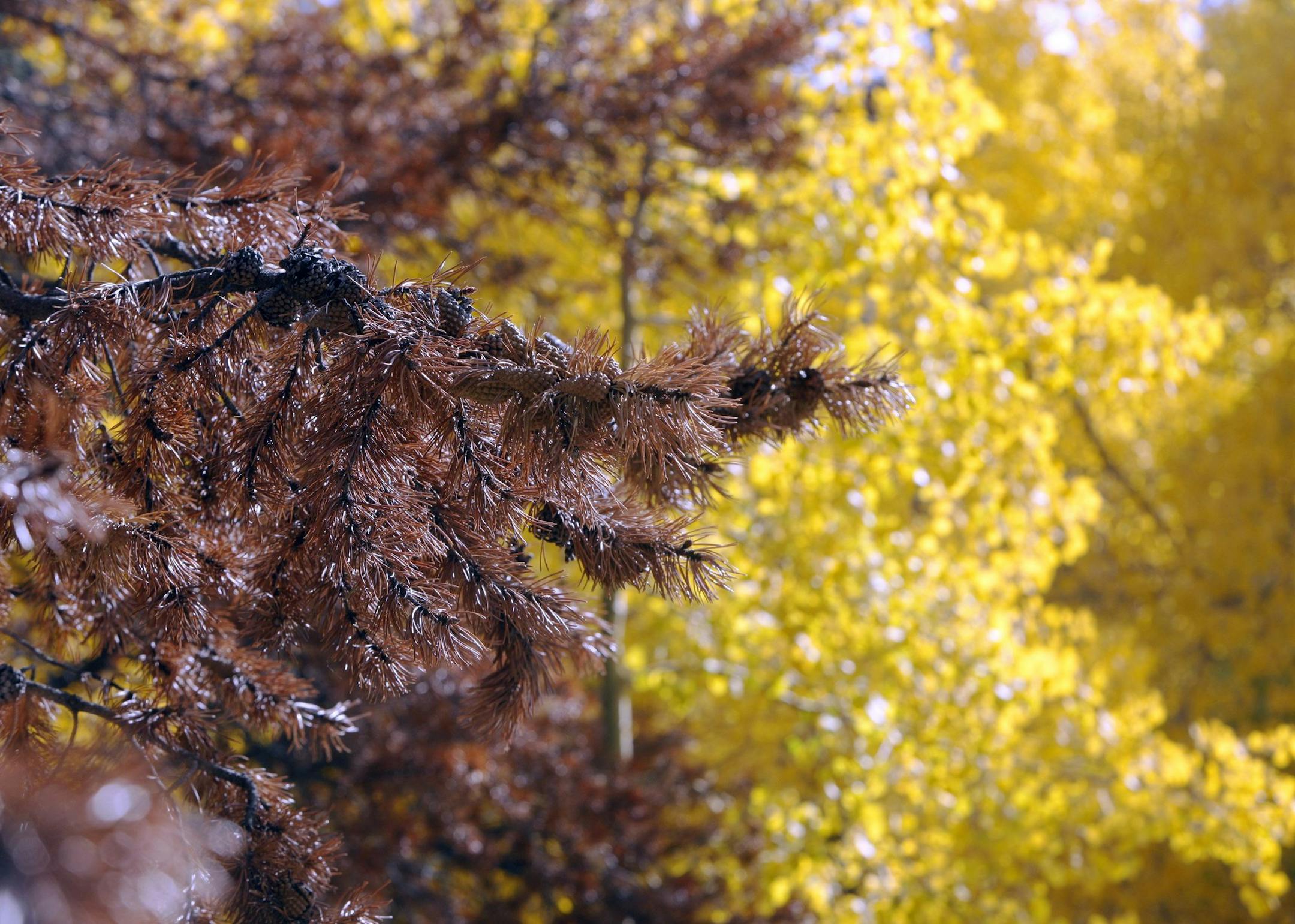
If trees could talk, the red pines in the St. Croix River Valley would tell a tale of woe.
Two successive summers of drought combined with the area's sandy soil have left them too parched to retain as much moisture as they normally would over the long, cold winters that have followed.
As a result, large stands of pines appear to be dying in Washington County. The damage extends from Taylors Falls — north of Stillwater — south along the Mississippi to southeastern Minnesota. Their green needles have turned red and are falling off. And those trees that failed to produce new growth this past spring most likely have died, according to two area tree disease experts, meaning all of this year's snow and heavy rain may have come too late.
The situation could worsen dramatically for two reasons. Stressed trees act like beacons to pine bark beetles and to a tree root fungus lurking in Wisconsin forests. Either one could kill off those trees that survived extreme weather conditions.
"Once a tree is infested [with pine bark beetles], there is very little that can be done effectively to save it," said Chris Muehleck, district manager of St. Croix SavATree, which has offices in Roberts, Wis., and Hopkins.
Annosum root rot, caused by the fungus, Heterobasidion irregulare, has been found in conifers in Wisconsin since 1993, according to the Wisconsin Department of Natural Resources. The disease causes the most damage in plantation-grown conifers (especially pines). Tree stumps offer a place for infection to start. Connected roots provide a pathway for annosum root rot to move underground from tree to tree, according to the Wisconsin DNR website.
Where roots connect, the disease moves from tree to tree at the rate of 3.2 to 6.5 feet per year, the website says. Infected trees are shorter and more slender than healthy ones, have fewer leaves and less shoot growth.
"It's underground and very, very difficult to control. This is why we need to act quickly," University of Minnesota plant pathology professor Robert Blanchette said of the fungus. "Once it's established, it's very hard to eliminate."