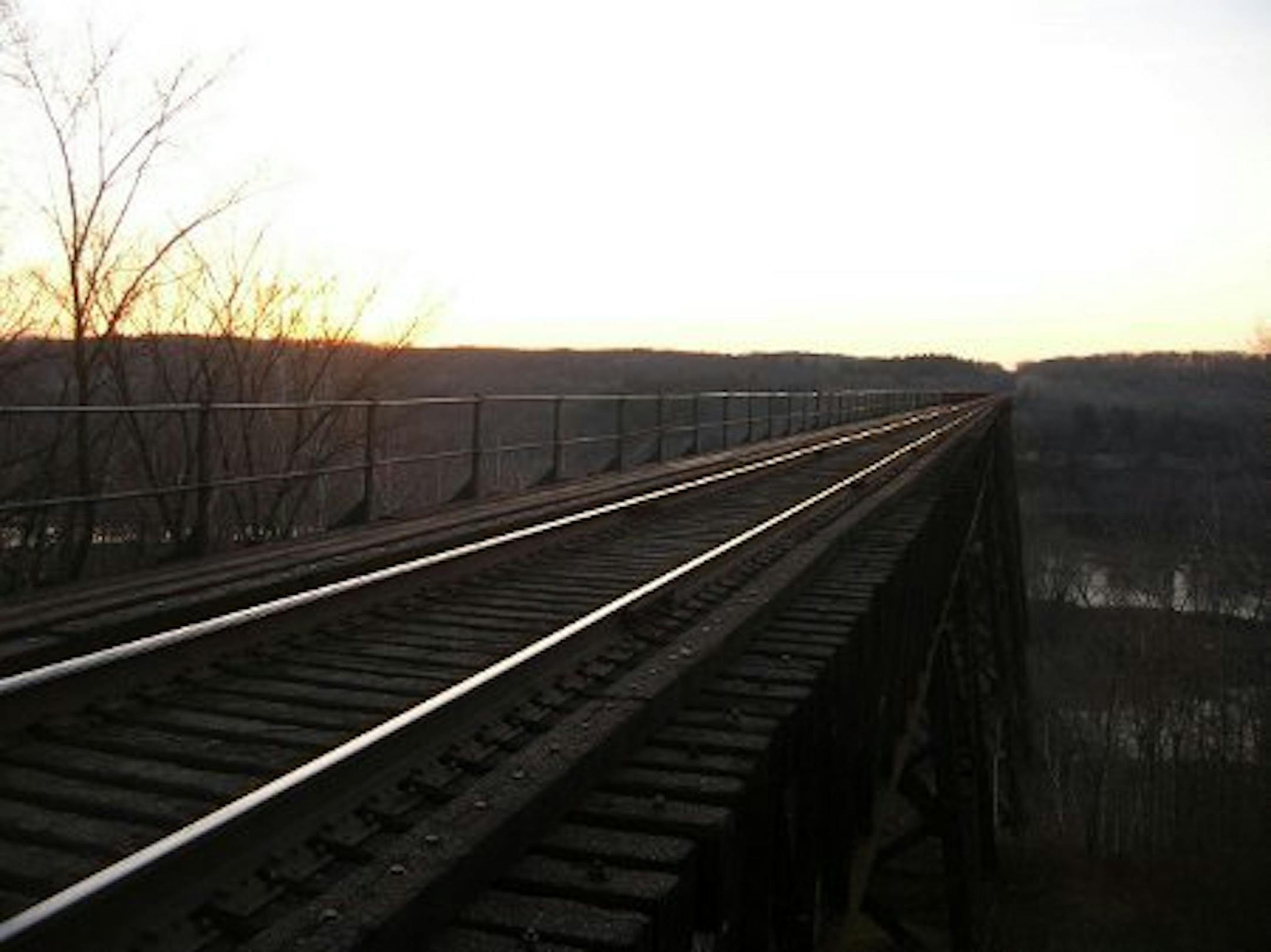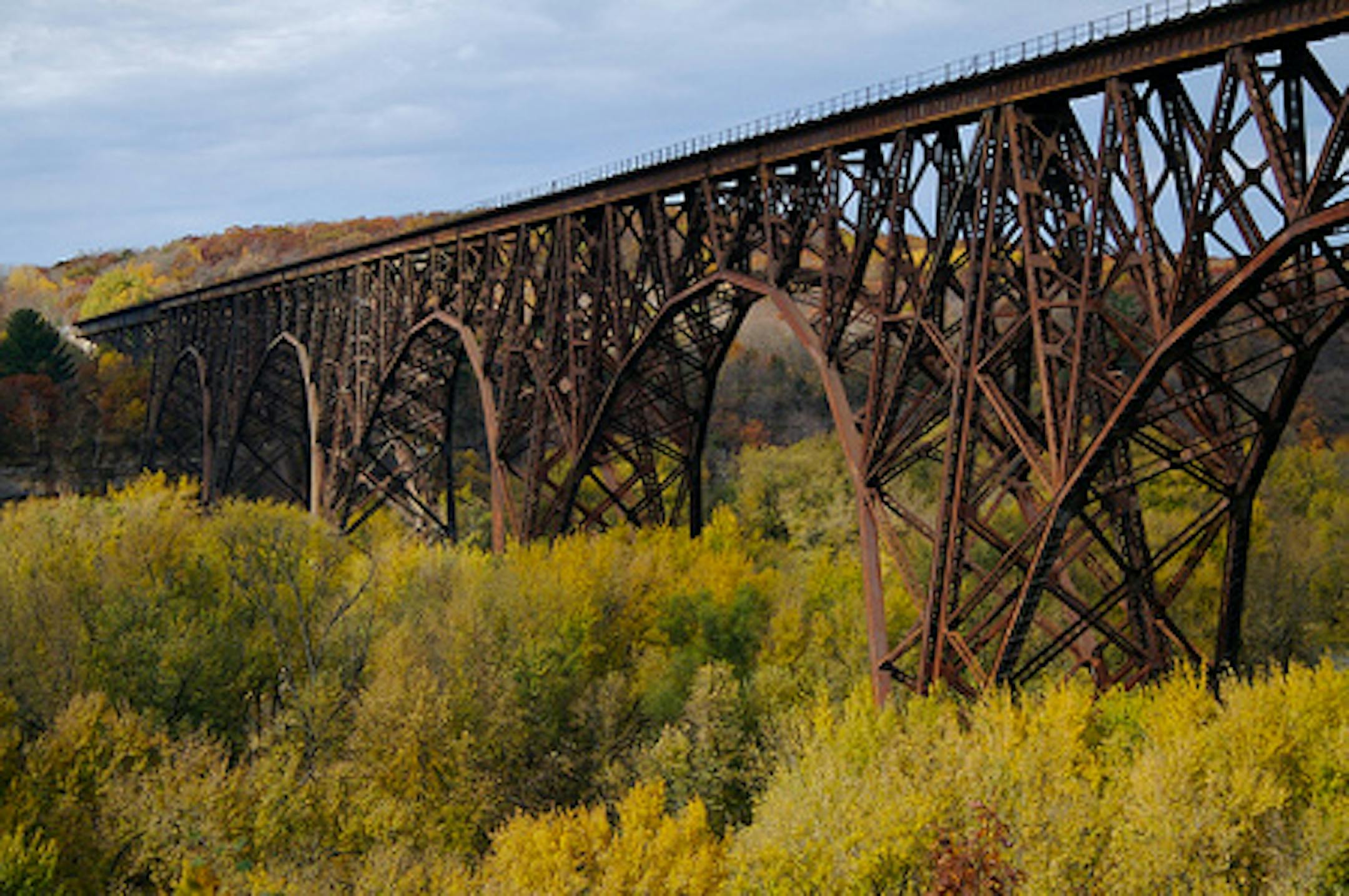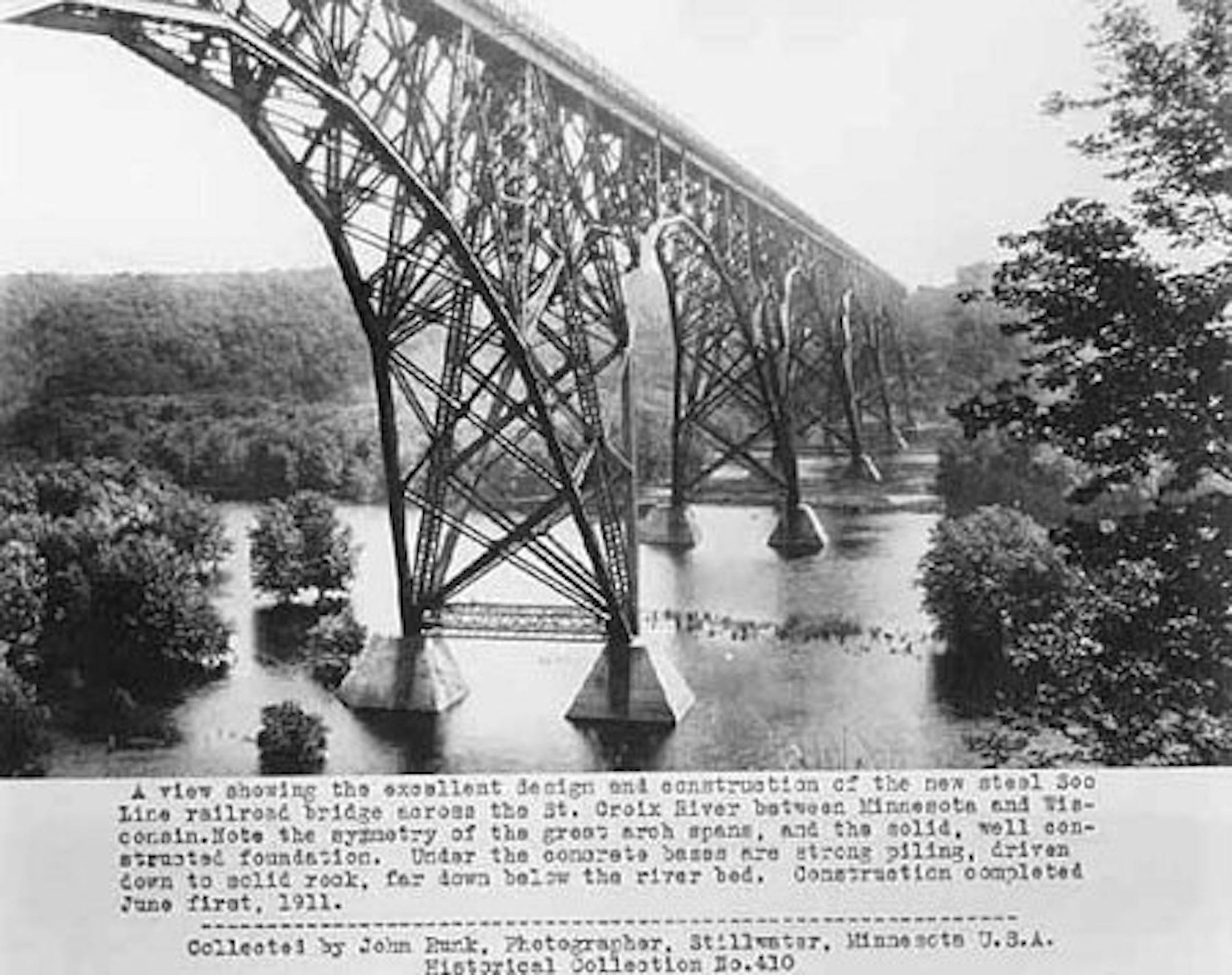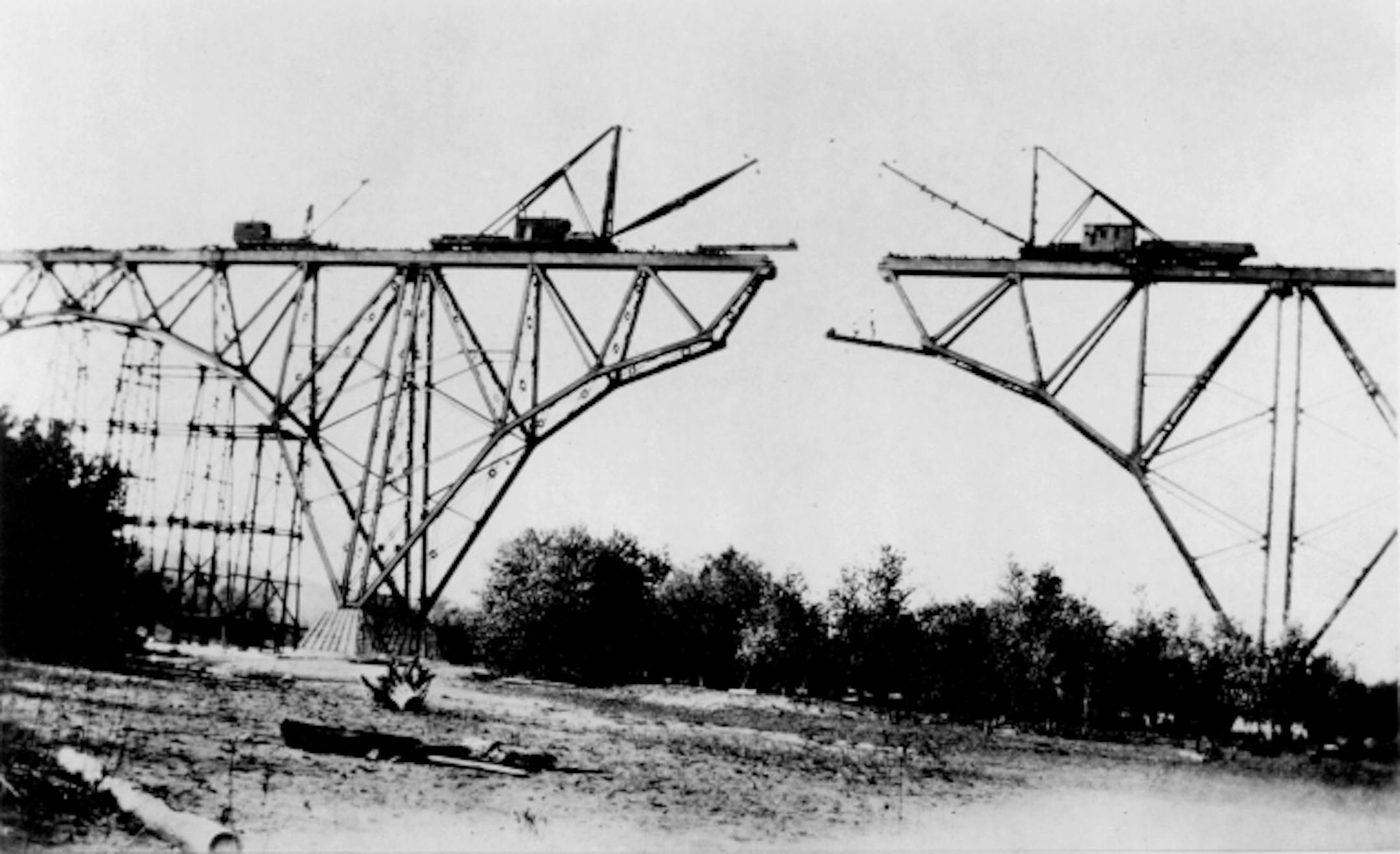
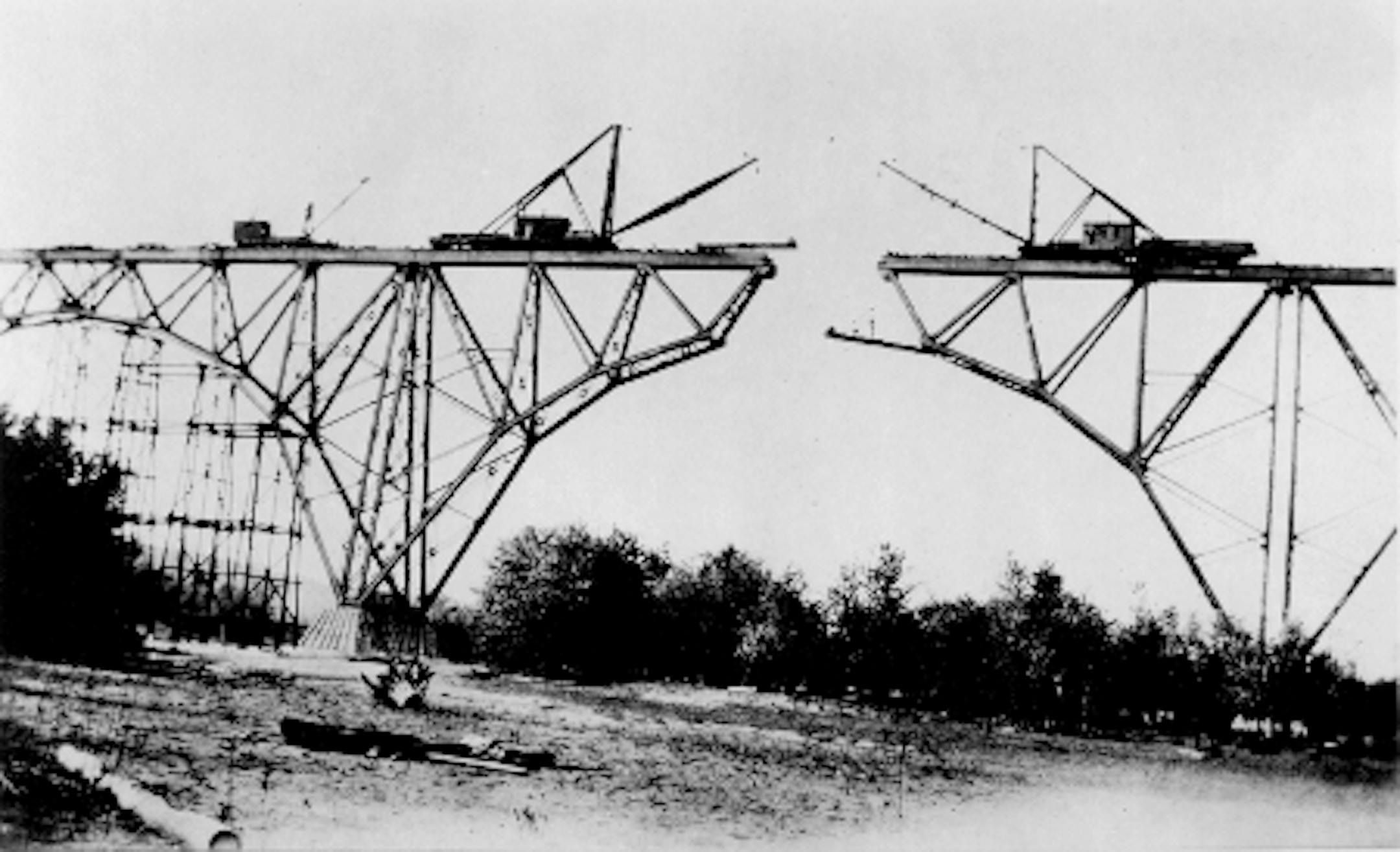
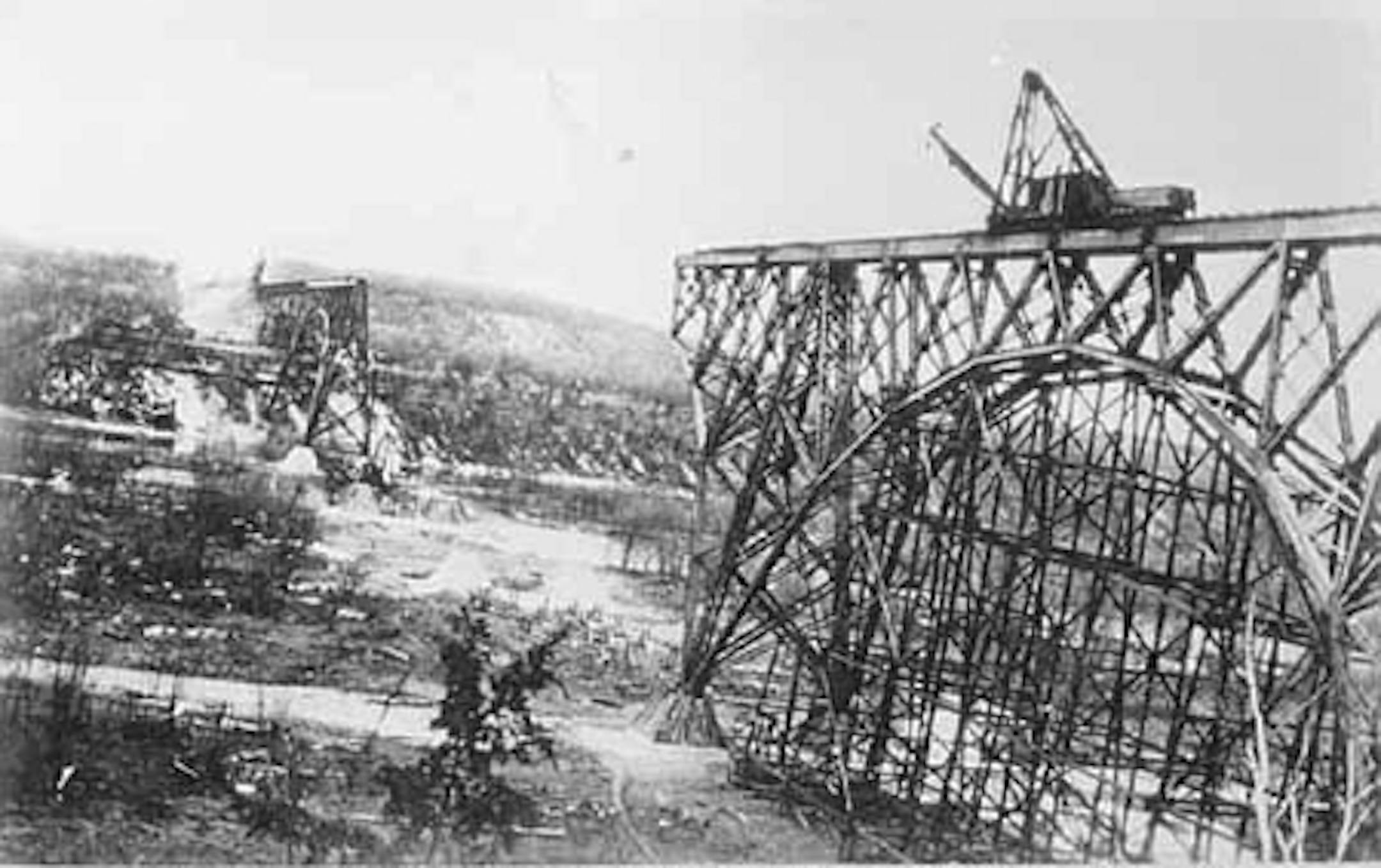
On June 1, 1911, construction was completed on a half-mile long, 185-foot tall railroad bridge near Stillwater. Two days later, the first train crossed the bridge. About four still do so every day.
A small group of people visited the bridge on the Minnesota side Wednesday evening, its 100th birthday. The gravel pull-off on the road where the trail leads down to the river was otherwise empty; no other well-wishers had come. But the bridge sees plenty of revelers — mostly 80 or more years younger than itself — on a regular basis. They make circles of rocks in the woods and light fires inside them, then they drink beer and leave the cans as offerings to the bridge or the river or their own self-centered youth.
The place was quiet Wednesday evening, but perhaps the bridge didn't want a party.
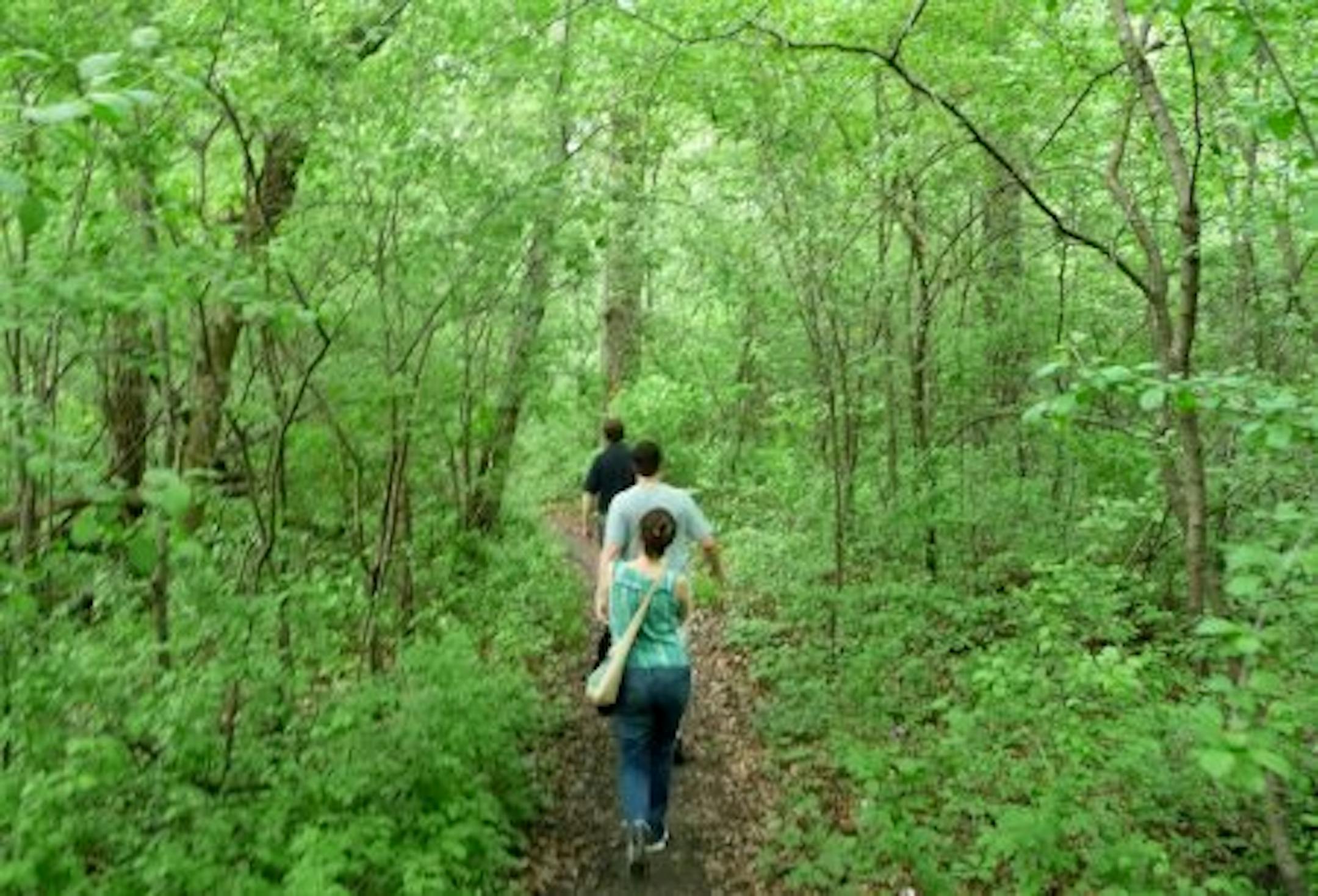
The walk down the bluffs to the foot of the bridge follows an old road that was once a driveway for some cabins, which the bridge has outlived. Stretches of concrete and asphalt reveal its history, but today it is just a scenic trail through thick green woods.
Wayside rests include a stand of cedars overlooking a deep ravine with a spring-feed creek at its bottom; a massive white pine, which probably has the bridge beat for years; and a short set of stairs from the road to the site of a former cabin, where a small ring of rocks encircles charred logs.
When the trail reaches the bottom of the bluff, it crosses the spring-fed creek on a little wooden footbridge, which was askew when we walked across it, tilted at a precarious angle toward the water. That bridge was probably only 10 years old.
The St. Croix River was still up high — the normal pebble and gravel beach underneath the bridge was submerged. A muddy flat spot on the banks featured a circle of rocks with the remnants of a fire inside. And there it was.
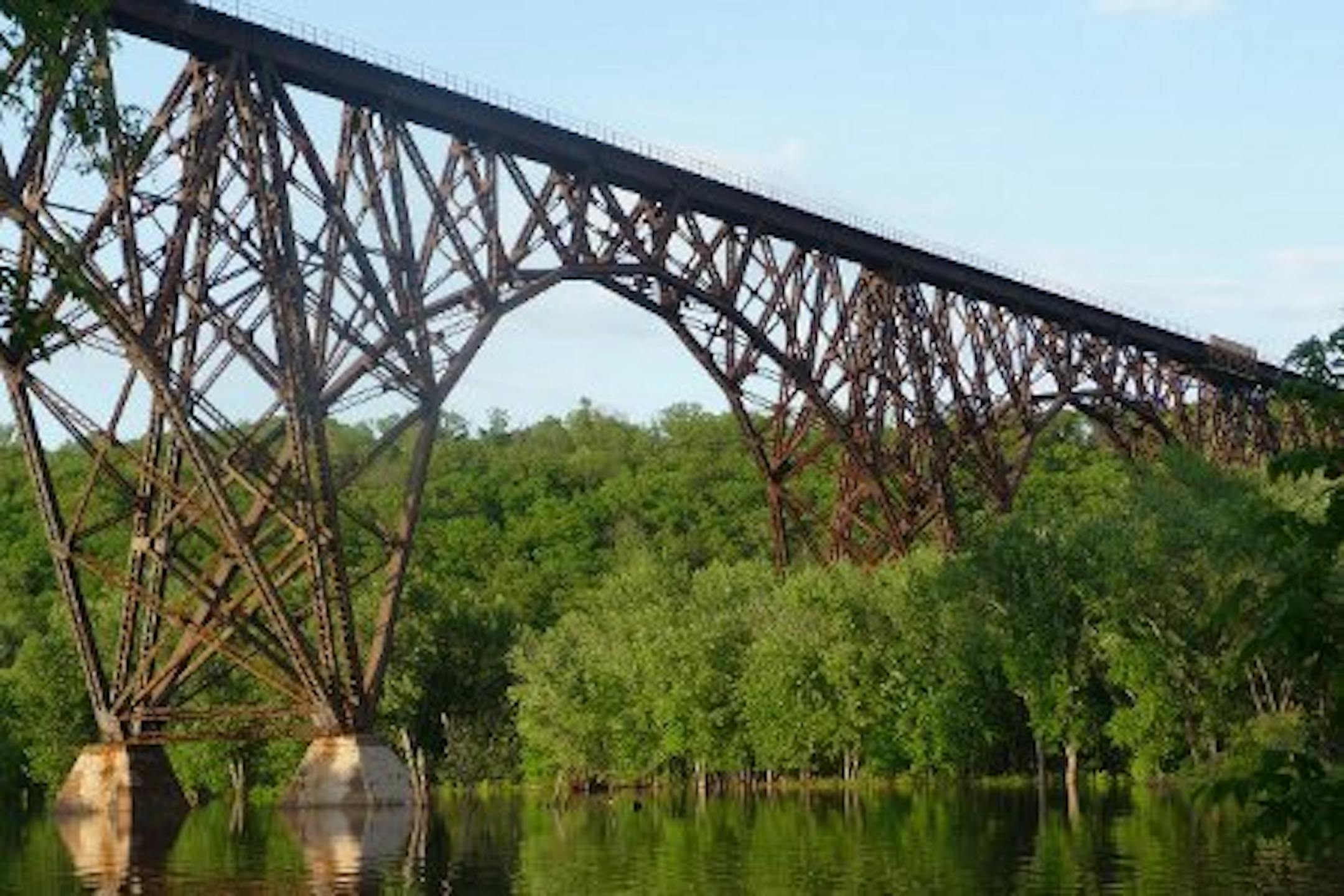
The High Bridge was designed by C.A.P. Turner, six years after he designed Duluth's Aerial Lift Bridge and 15 years before designing the Mendota Bridge over the Minnesota River. It rises out of the wooded islands of the river as if to inspire the trees.