
A secure Olympics will take a team effort

President Vladimir Putin is turning to President Obama for help protecting the costliest Winter Games ever from attacks by Islamic extremists, including hundreds of battle-hardened jihadists now fighting in Syria.

Bloomberg News
October 26, 2013 at 2:10AM
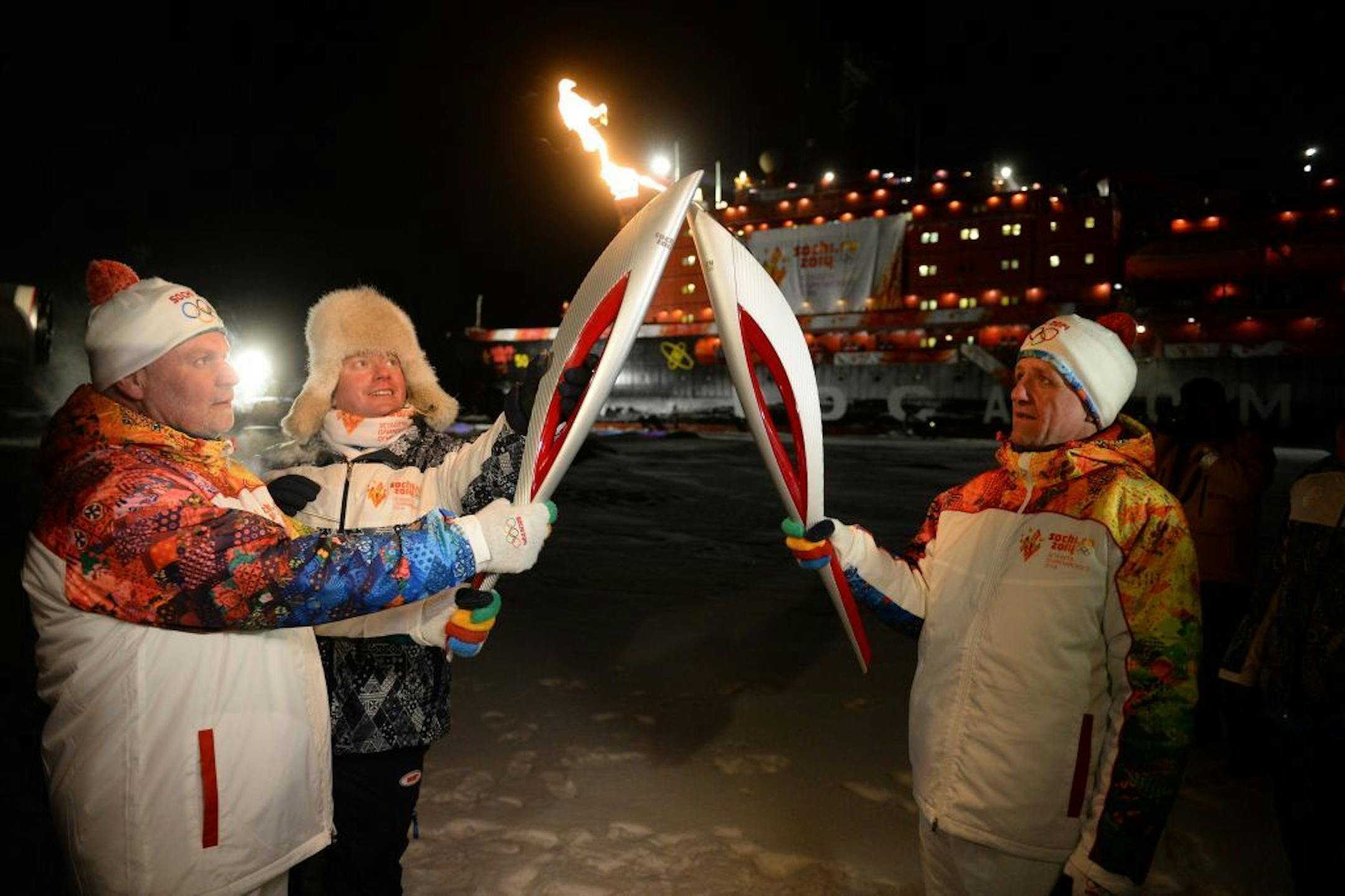
In this photo taken on Saturday, Oct. 19, 2013 and made available by olympictorch2014.com on Friday Oct 25, a group of torch bearers hold torches at the North Pole, Arctic Ocean. The nuclear-powered icebreaker 50 Let Pobedy (50 Years of the Victory) is in the background. For the first time in history the Olympic flame was brought to the North Pole, on board the ship as part of the torch relay to the 2014 Sochi Winter Games.
In this photo taken on Saturday, Oct. 19, 2013 and made available by olympictorch2014.com on Friday Oct 25, a group of torch bearers hold torches at the North Pole, Arctic Ocean. The nuclear-powered icebreaker 50 Let Pobedy (50 Years of the Victory) is in the background. For the first time in history the Olympic flame was brought to the North Pole, on board the ship as part of the torch relay to the 2014 Sochi Winter Games. (Associated Press - Ap/The Minnesota Star Tribune)

MOSCOW – President Vladimir Putin is turning to President Obama for help protecting the costliest Winter Games ever from attacks by Islamic extremists, including hundreds of battle-hardened jihadists now fighting in Syria.

About 400 Russian nationals, mainly from the North Caucasus, are battling President Bashar Assad's forces in Syria, and their return poses a "big threat," according to Sergei Smirnov, deputy director of the Federal Security Service, or FSB, the main successor to the Soviet KGB.

"Many of our compatriots are fighting on the side of Al-Qaida in Syria," Deputy Prime Minister Dmitry Kozak, who's in charge of preparations for the Feb. 7-23 event, said in an interview in Moscow. "We understand that this is a global threat and we can only prevent it through joint efforts."

As Russia prepares to seal off Sochi, a Black Sea resort of 345,000 people, it's reaching out to the United States and about 80 other nations for help identifying potential threats from abroad, said Alexei Lavrishchev, a senior FSB official.

At the top of the list are the Russian militants in Syria, whose numbers may be triple what the FSB is saying publicly, according to the Russian Institute of Strategic Studies in Moscow, which expects a third of those fighters to return home.

"Their experience and exposure to Al-Qaida groups represent a real danger," said Elena Suponina, who runs the institute's Middle East and Central Asia Center. "The Russian security services are very worried about this."

Russian forces are battling almost daily attacks by extremists in the North Caucasus.

Putin and Obama agreed to intensify security cooperation for the Games after two ethnic Chechen brothers allegedly detonated a homemade bomb at the Boston Marathon in April that killed three people and injured more than 260. The U.S. State Department will send an undisclosed number of Diplomatic Security agents to Sochi to help ensure the safety of thousands of American athletes and corporate sponsors, the embassy in Moscow said.
Russia is spending about $48 billion to host its first Winter Olympics.

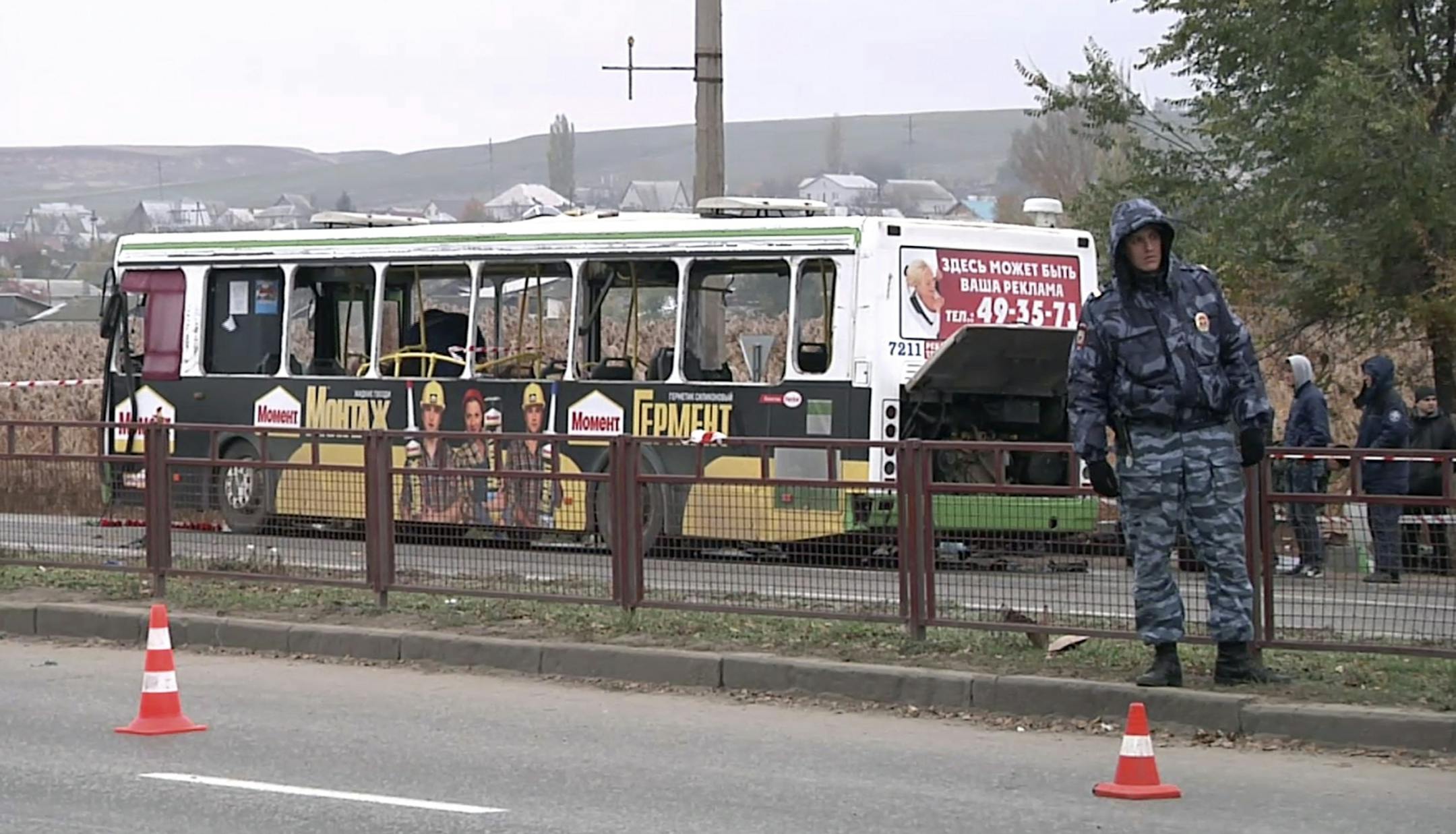
In this image made from video, experts and officials examine a wreckage of a bus in Volgograd, Russia Tuesday, Oct. 22, 2013. A female suicide bomber blew herself up on the city bus in southern Russia on Monday, killing six people and injuring about 30, officials said. The attack in Volgograd added to security fears ahead of the Winter Olympics in Sochi.
In this image made from video, experts and officials examine a wreckage of a bus in Volgograd, Russia Tuesday, Oct. 22, 2013. A female suicide bomber blew herself up on the city bus in southern Russia on Monday, killing six people and injuring about 30, officials said. The attack in Volgograd added to security fears ahead of the Winter Olympics in Sochi. (Associated Press - Ap/The Minnesota Star Tribune)
about the writers

about the writers

Ilya Arkhipov

Henry Meyer

More from No Section

See More
FILE -- A rent deposit slot at an apartment complex in Tucker, Ga., on July 21, 2020. As an eviction crisis has seemed increasingly likely this summer, everyone in the housing market has made the same plea to Washington: Send money — lots of it — that would keep renters in their homes and landlords afloat. (Melissa Golden/The New York Times) ORG XMIT: XNYT58
Melissa Golden/The New York Times

It’s too soon to tell how much the immigration crackdown is to blame.