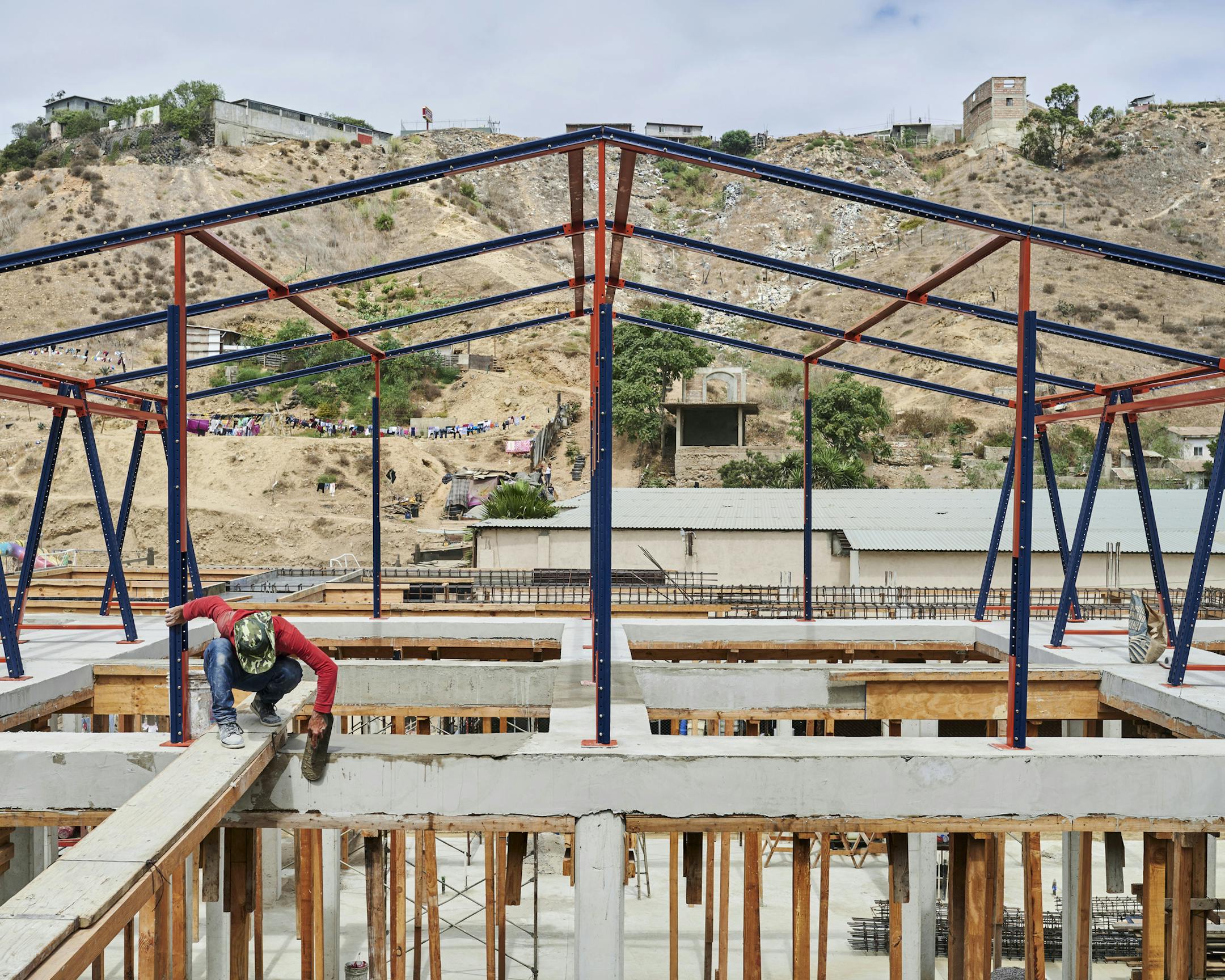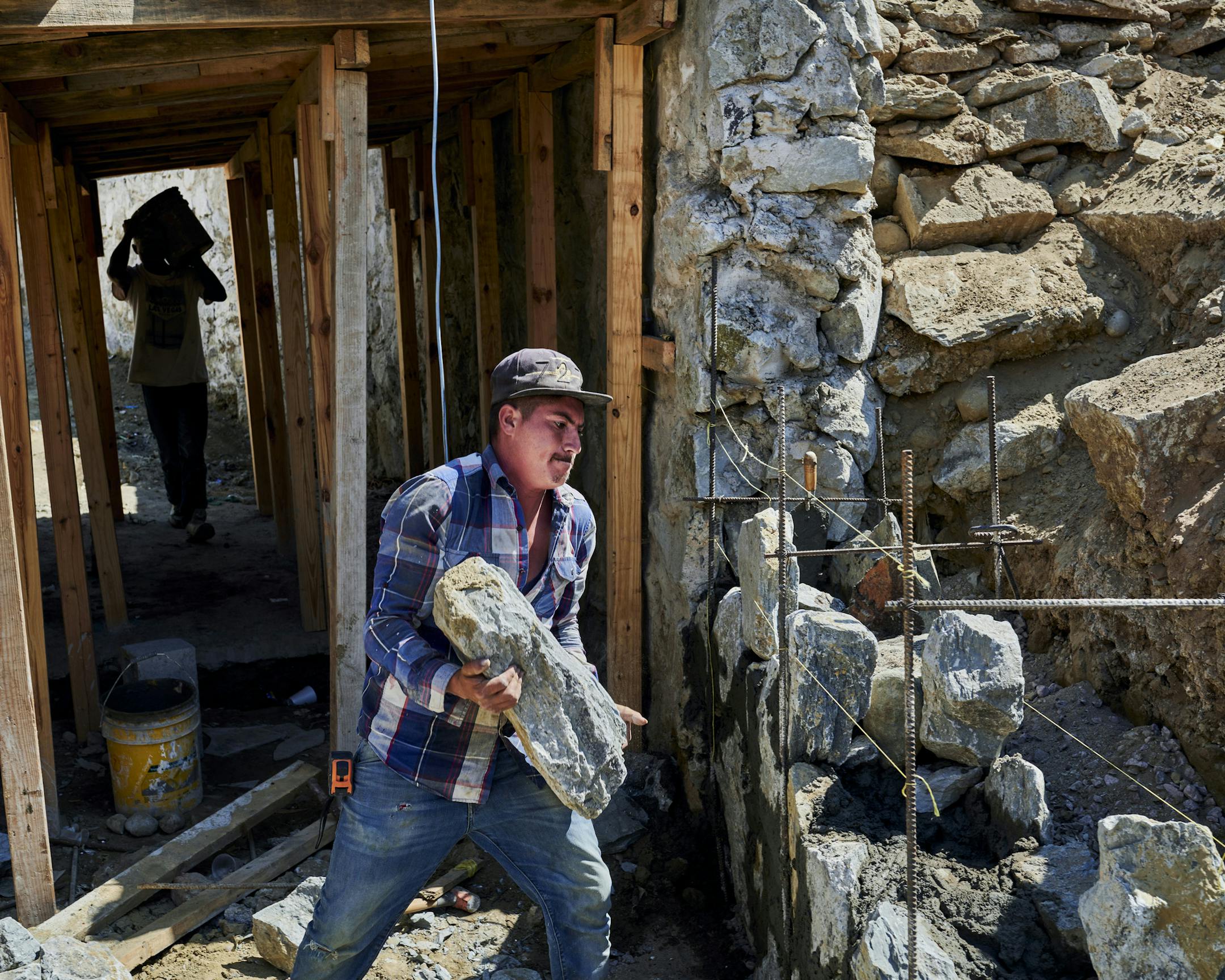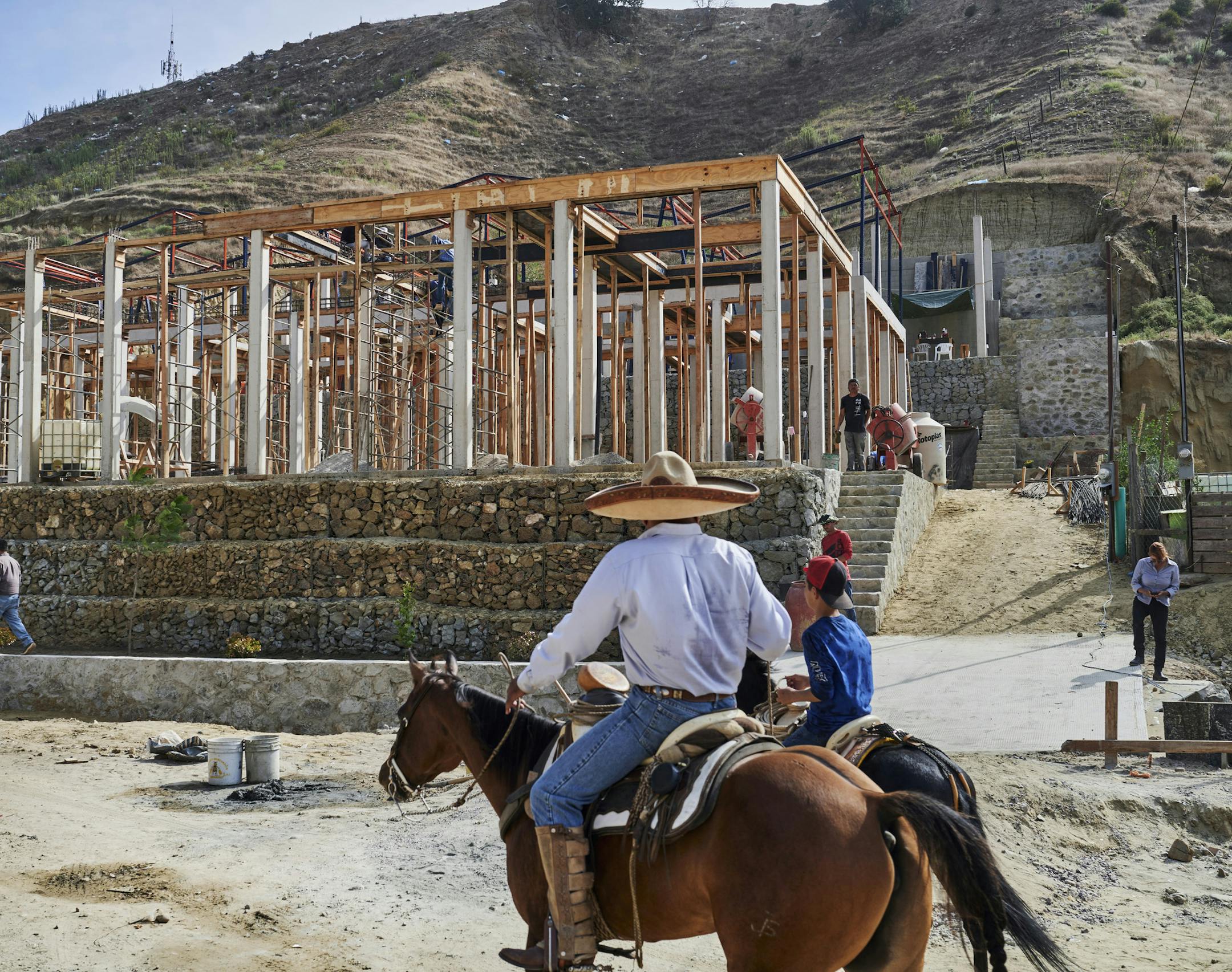
The Cañón de Alacrán (Scorpion's Canyon) is a rough and craggy valley that butts up to the U.S. border wall just west of Tijuana, Mexico. It winds through an arid landscape of garbage-strewn arroyos, yucca and sagebrush, without paved roads or sewerage. Roughly 93,000 inhabitants, many of them refugees from Central America, live there in illegal squatter settlements inside roughly built lean-tos, tents and ad hoc shacks made from scavenged refuse.
Until now, the area's impoverished population has made do with these rudimentary shelters. But deep within the fractured landscape, a bold new experiment in social housing is being realized. It's called El Santuario Frontera, or the Border Sanctuary, a live-work collective for homeless refugees.
The sanctuary's designers, Teddy Cruz, a Guatemalan-born architect, and Fonna Forman, a political scientist from Milwaukee, have been working on both sides of the border for more than a decade, studying the transient population and the process of informal urbanization taking place. Professors at the University of California, San Diego, where they lead a cross-disciplinary design practice, Cruz and Forman see an increasingly urgent need for humanitarian shelter, as more and more immigrants flee northward, many to escape climate change, drug cartels or political oppression. Some — blocked, deported or caught in the U.S. immigration system — have been camped at the border for years.
Cruz and Forman observed how the refugees recycled the waste materials of San Diego and built ingenious shelters in slow, incremental stages with leftover debris from construction sites and landfills.
"Out of necessity, everything becomes useful," Cruz said. "Time itself becomes a material."
Working with two activist pastors, Gustavo Banda Aceves and his wife, Zaida Guillén, who have been running a refugee camp in the Alacrán canyon since 2016, they set out to develop not just emergency housing but also a stable community that made use of the resources at hand.
The project's design team created drawings and architectural models and brought them back to community members for their suggestions. They eventually came up with a multitiered master plan designed to house 350 homeless immigrants.
It is a modern, pared-down pueblo, like the ancient stacked dwellings of Taos, N.M. But instead of adobe, the housing is being built with concrete and modern steel framing that can be easily expanded and replicated in other parts of the canyon to accommodate the growing population.