
A remote job comes with free land and a sense of community; 50,000 apply

Thousands applied for spot in remote Canada with land included.

October 20, 2016 at 11:31PM
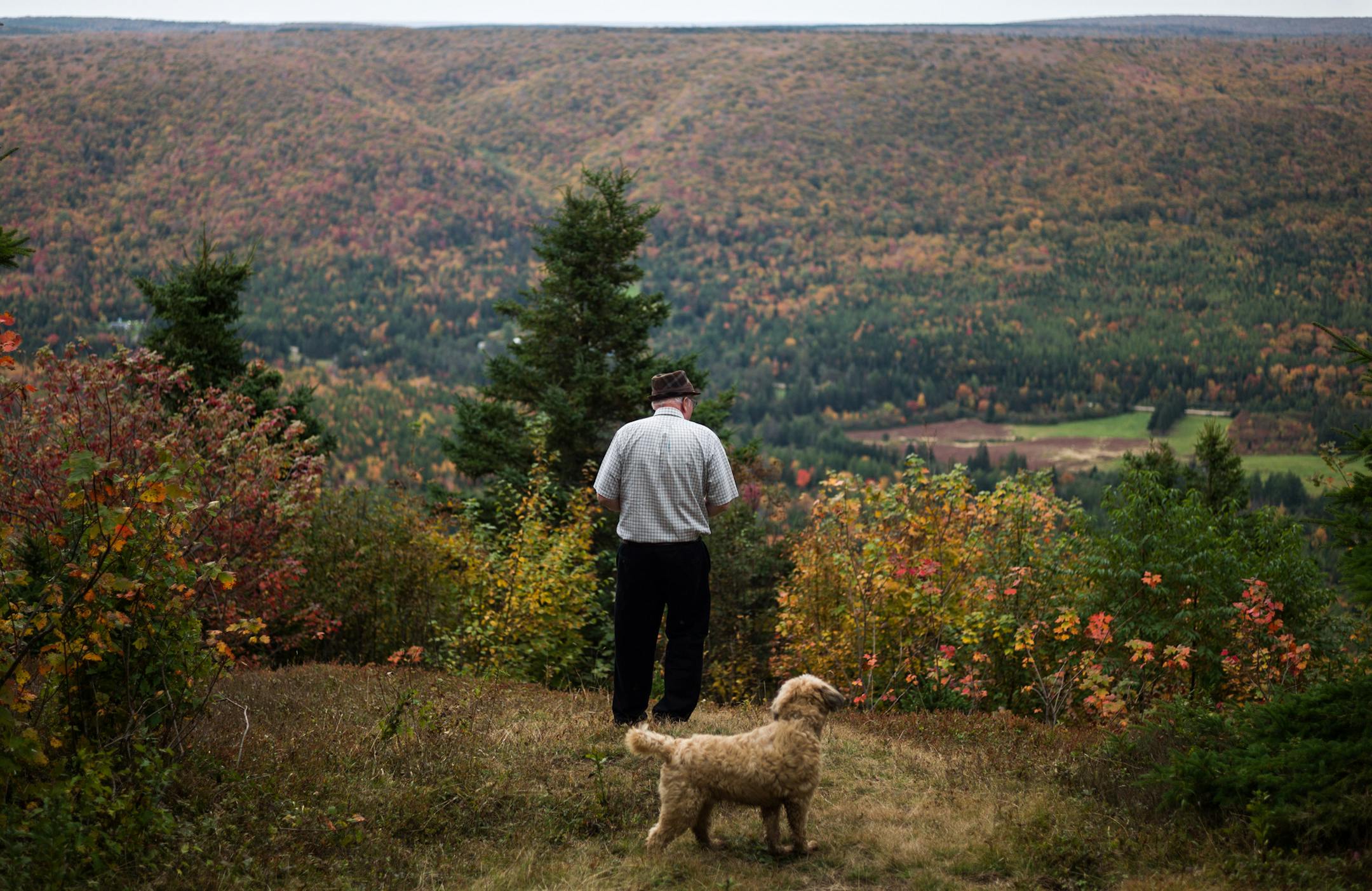
Jim Austin stands on a lookout near the edge of his land in Cape Breton, Nova Scotia, Canada, Oct. 13, 2016. Jim Austin and his family are giving away parcels of land to people who will come and work at their market for five years. (Ian Willms/The New York Times)
Jim Austin stood on a lookout near the edge of his land in Cape Breton, Nova Scotia. (The Minnesota Star Tribune)

WHYCOCOMAGH, Nova Scotia – When a land-rich family in sparsely populated Cape Breton wanted to attract workers for its understaffed country store, it offered free land to anyone who would come and work for five years.

The family expected a few dozen responses; more than 50,000 poured in — and the calls keep coming.

"I expected a response, just not one as huge as this," said Sandee MacLean, a woman with multiple tattoos and copper red hair, who came up with the idea with her sister.

Of course, Canada has a lot of land, but not a lot of people, and economically sleepy regions like Cape Breton in Nova Scotia have steadily leaked population. The island, a scenic 4,000-square-mile patch of rolling forest and farmland jutting into the northern Atlantic Ocean, has only about 130,000 residents and has been losing well over 1,000 people a year for the past two decades.

As Cape Bretoners become increasingly frantic about stemming the tide of outward migration, giving away land just might be a solution.

"It is validation that land is an attraction," said Chris van den Heuvel, president of the Nova Scotia Federation of Agriculture. He hopes the strong response to the giveaway will help his group's effort to create a land bank that would make farmland affordable and bring newcomers to the province.

Several economically depressed communities in the United States have tried the same idea in recent years, including towns in Minnesota, Iowa and Kansas.

But in Nova Scotia, the overwhelming response is also a measure of how many people, unmoored by the global economy, are hungry for a sense of community. To many, the proposal seemed to present a connection to a famously rich regional culture full of Scottish fiddling, community suppers and square dancing.

All of that was far from mind when Jim and Ferne Austin decided to turn their store over to their daughters this year. For the two women, MacLean and Heather Austin Coulombe, the most immediate concern was where to find employees.

"We were in a panic, we were so short staffed," Coulombe said.

The Austins opened the business, the Farmer's Daughter Country Market, in 1992 in Whycocomagh, Nova Scotia, after a life spent dairy farming. The combination bakery, produce market, ice cream parlor, fudge factory and gift shop now occupies a collection of barn-red buildings along the side of the road on a quiet stretch of the Trans-Canada Highway.

Austin's father, also a dairy farmer, had amassed more than 600 acres; after sell-offs, about 200 acres remain. The land that is left is mostly mountain woodland — pretty to see, but not of much value unless it were logged. No one in the family wants to shave the hillsides for that.

By the end of this summer, the country market was down by three full-time workers, making it difficult to meet a local grocery chain's demand for baked goods from the Farmer's Daughter. The baking business helps the operation stay afloat in the bleak winter months.

MacLean and Coulombe tried hiring locally, but said capable and dependable hands were not available. The visa process for foreign workers was too cumbersome, too.

That's when they came up with the idea of giving away land.

Around 10 p.m. one Sunday in late August, the sisters posted a gentle appeal on the market's Facebook page under the title, "Beautiful Island Needs People."

By morning, the appeal had been shared 200 times. By afternoon, a local radio station had called for an interview. Soon national radio and television stations were calling and the land offer was the top trending news story on the Canadian Broadcasting Corp.'s website. When the report was picked up around the world, the floodgates opened.

The sisters had already zeroed in on several candidates well before their appeal went viral. Within a week of the original post they had interviewed the people they eventually hired.

The newcomers consist of three families: the Andersons, the Walkinses and the Taits, who arrived in time for Canada's Thanksgiving on Oct. 10. The Austins, the parents of the sisters who are taking over the store, invited them all to their home for a traditional feast, the biggest Thanksgiving dinner they had ever put on, they said.

Over plates of turkey and turnips, the families appeared to blend effortlessly.

All three families said that it was the promise of community in a simpler, beautiful place that was the biggest attraction.

about the writer

about the writer

Craig S. Smith, Whycocomagh Journal

More from No Section

See More
FILE -- A rent deposit slot at an apartment complex in Tucker, Ga., on July 21, 2020. As an eviction crisis has seemed increasingly likely this summer, everyone in the housing market has made the same plea to Washington: Send money — lots of it — that would keep renters in their homes and landlords afloat. (Melissa Golden/The New York Times) ORG XMIT: XNYT58
Melissa Golden/The New York Times

It’s too soon to tell how much the immigration crackdown is to blame.