

Opinion editor's note: Star Tribune Opinion publishes a mix of national and local commentaries online and in print each day. To contribute, click here.
•••
One of the essential principles of free enterprise depends on an understanding so conventional that it largely goes unspoken: When people borrow money, they must pay it back — usually with interest.
We've established guardrails to protect naive borrowers from usurious lenders, and defaulting on a loan has legal consequences. But our system reflects the good-faith principle that borrowed money must be repaid.
Then how do we justify debt relief for students who borrowed money to go to college?
President Joe Biden's proposed program for student debt relief is a modest attempt to alleviate the financial pressure on students who left college — with or without a degree — under a staggering debt burden that currently amounts to $1.7 trillion for 44 million Americans. Figures vary, but the average student debt is pushing $30,000, and some students' financial liability reaches six figures.
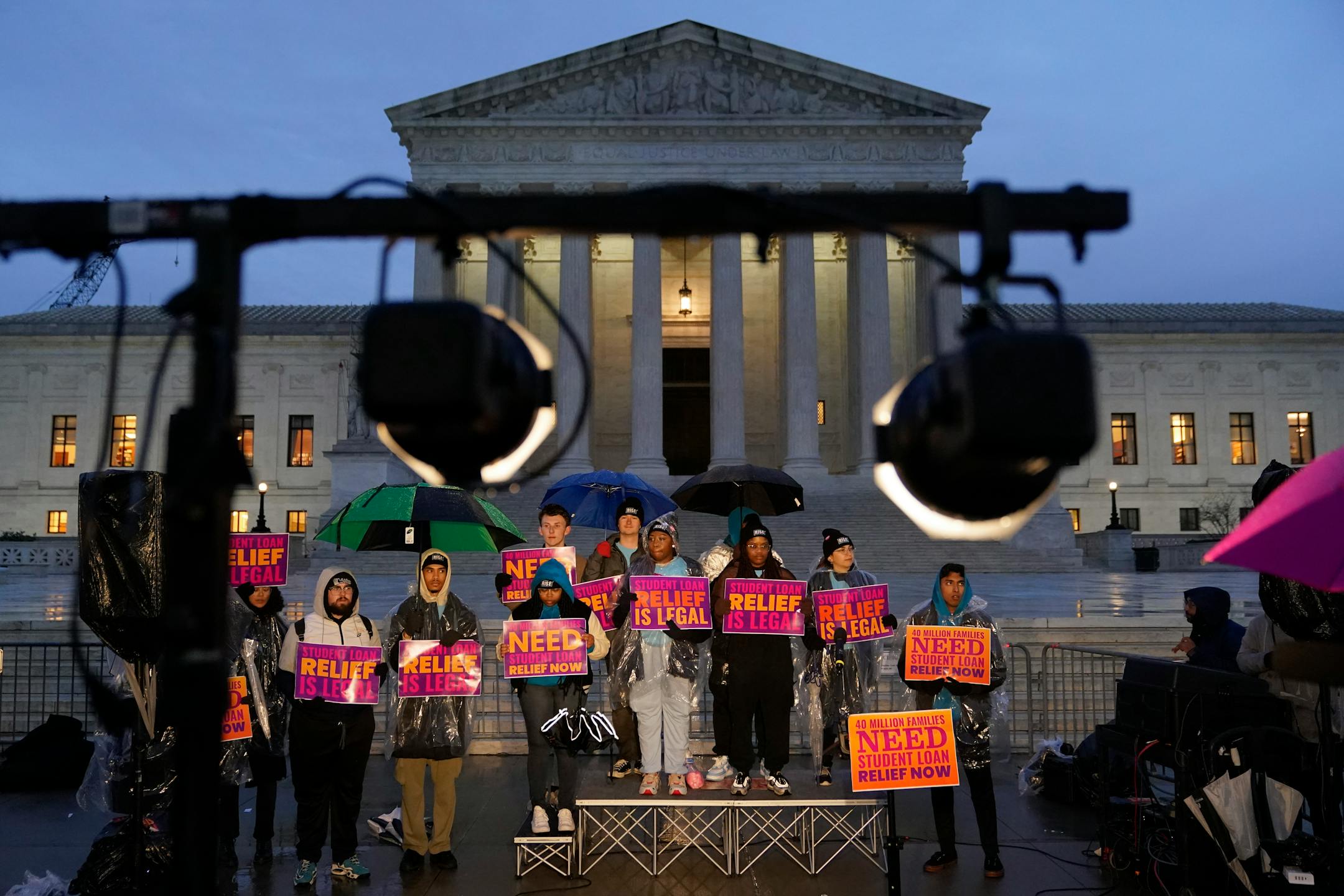
Biden's proposal would help young Americans just beginning their careers by forgiving up to $20,000 of debt. At present the proposal is stalled in the courts, and it is receiving considerable resistance from its opponents.
And why not? Why should college students be treated any differently than the purchaser of a home or automobile?


