

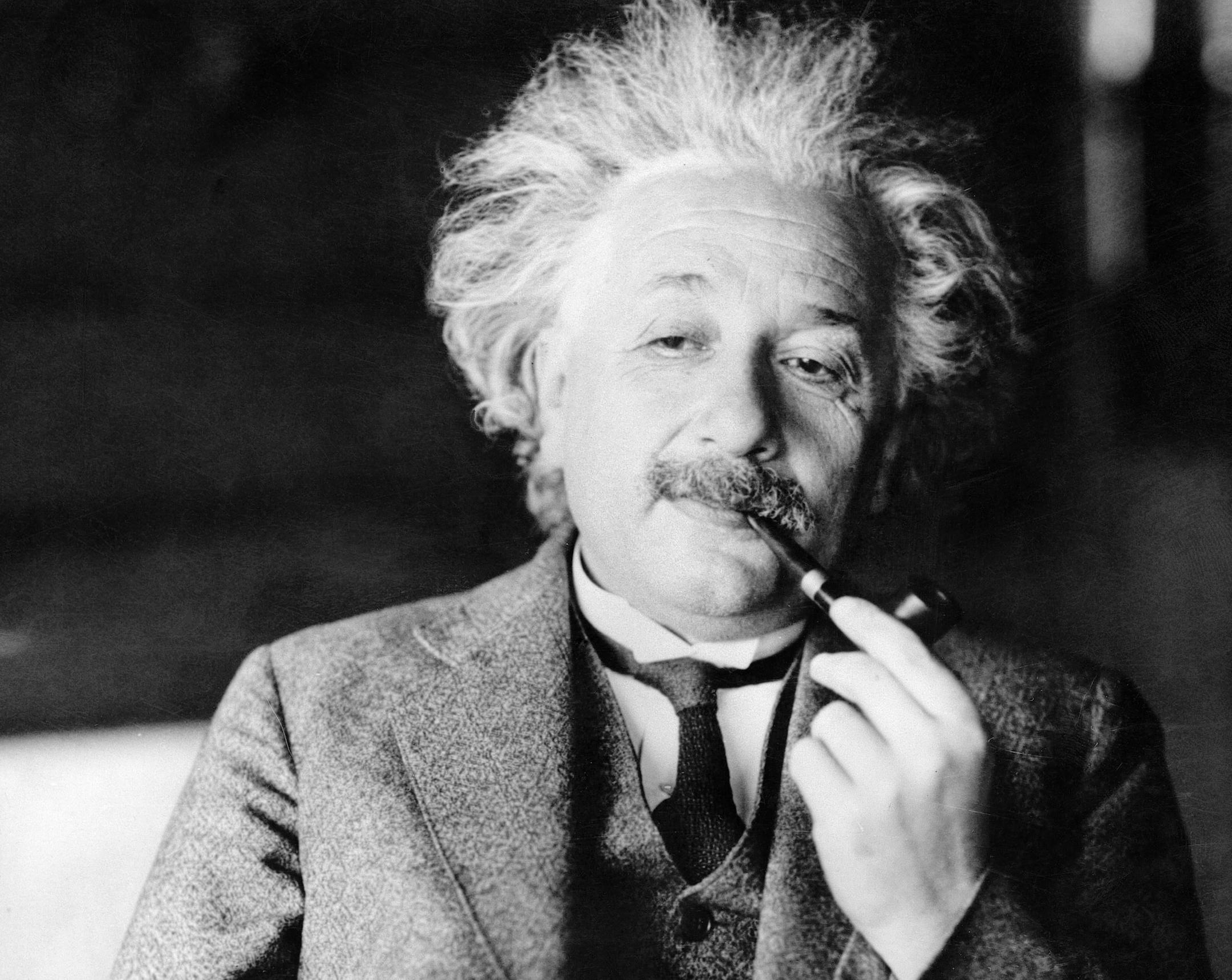
Today's amazing communication technologies owe much to some of Albert Einstein's greatest discoveries.
For example, the cameras in cellphones and other electronic devices are based on the photoelectric effect, for which Einstein was awarded the Nobel Prize. GPS systems take into account the stretching of time due to gravity, another of Einstein's predictions in his magnificent general theory of relativity.
Given that many scientists embrace technology, it is interesting to speculate what kind of phone or device Einstein would be using if he were alive today. Would he be texting, tweeting or video-chatting?
The surprising answer might be none of the above.
By today's standards, Einstein was a loner. He didn't like any kind of phone, which, of course, in his time was a simple land line. Much of his day was spent in silent reflection, save short breaks to discuss ideas with his assistants or to indulge in his passion for music (he loved playing violin).
Sure, he enjoyed fiddling with gadgets. He relished the gift of a compass as a child, and loved tinkering with a microscope given to him at his 50th birthday party. He even invented a kind of refrigerator.
But in terms of communications devices, he liked them as far away as possible. He once declared that he could concentrate best and be most creative "away from the horrible ringing of the telephone," such as on ocean voyages.
In the early 1930s, Einstein spent each summer in a custom-built house in a lakeside village near Potsdam, Germany. The house had no phone. Visitors would write to him in advance or just stop by unannounced. He didn't care if dignitaries surprised him when he was in his pajamas. He argued to his wife that they came to see him, not his clothes.


