
A quest to see condors

June 28, 2016 at 2:38PM
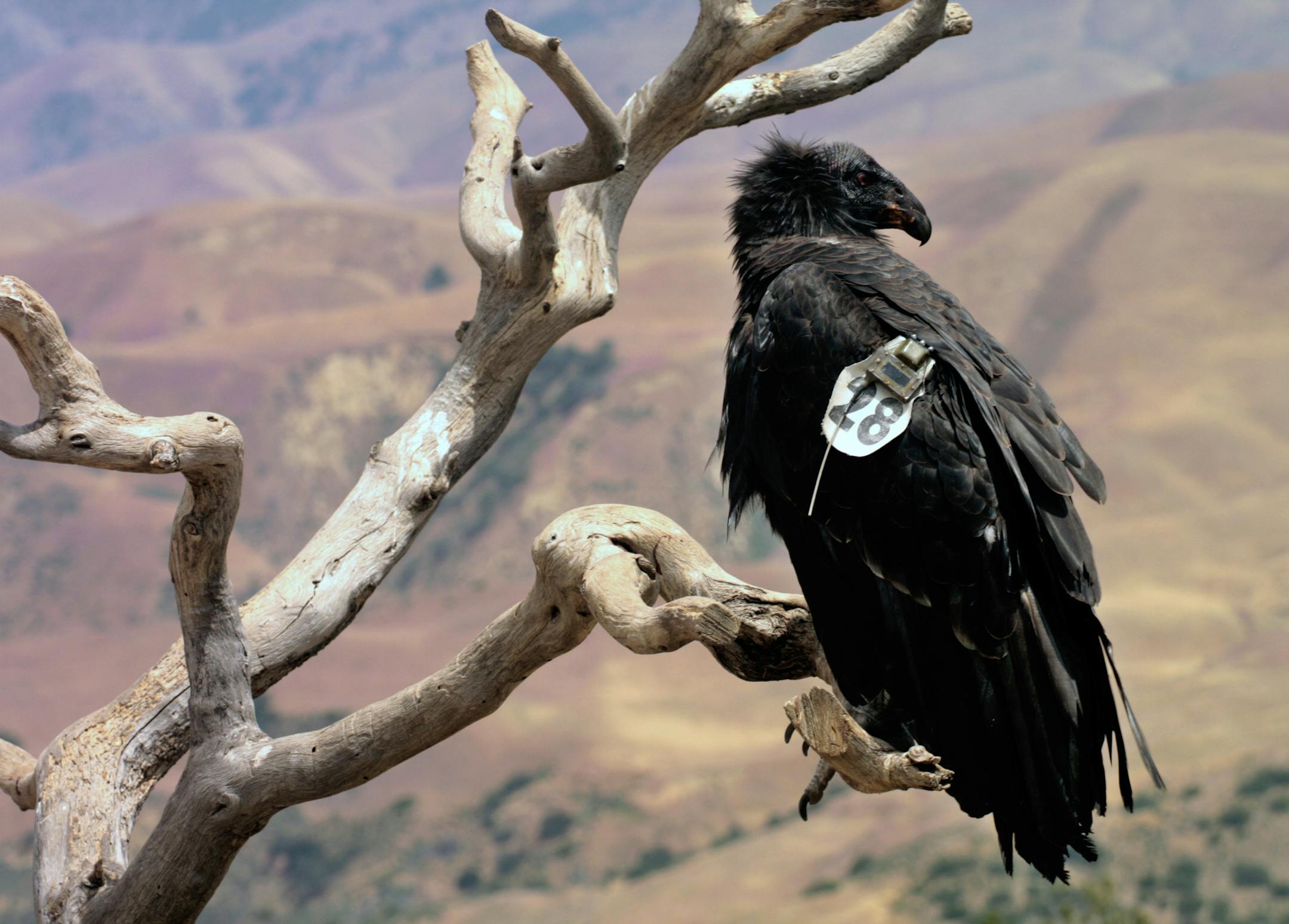
This undated photo provided by the U.S. Fish and Wildlife Service shows a juvenile California condor, identified as No. 428, wearing a GPS transmitter while perched at the Bitter Creek National Wildlife Refuge near Maricopa, Calif. Condor No. 428 died during surgery while being treated for lead poisoning in 2013. The FWS says that in 2015, for the first time in decades, more condors hatched and fledged in the wild than adult wild condors died.(Angela Woodside/U.S. Fish and Wildlife Service via A
A juvenile California condor wore a GPS transmitter while perched at the Bitter Creek National Wildlife Refuge near Maricopa, Calif. (The Minnesota Star Tribune)

"Yes," the young woman said, "we see condors here, like, almost every day."

The key word in that sentence is not "condor." It is "almost."

California condors once were among the rarest birds in the world. The known population had dropped to 22 individuals. In 1987 all of these birds were captured, first, to save them from dying — mostly of lead poisoning — and, second, to begin a breeding program.

The program was successful, all things considered. Today there are about 450 California condors in the world. About 250 are free-flying in California, Arizona and Baja California in Mexico.

The 250 include the birds seen "almost" every day from the canyon rim at Bright Angel Lodge.

Bright Angel is one of the National Park Service's guest accommodations at the Grand Canyon. My wife and I visited the canyon in May. The woman whom I questioned was tending a patch of lawn at Bright Angel, 50 feet from the canyon rim, her view unlimited.

She told me she thought condors were nesting "out there." She pointed to a distant rock formation crowned with a wig of stone.

The park ranger at the canyon's park entrance also told me to check Bright Angel. He said he saw them there "often." That's another vague word, but he might have been a reliable source. He was in uniform.
The clerk at our motel, when asked, gave me a completely different location.

I acted first on the room-clerk tip. I saw no condors. I did speak with a young couple, the male of which said he had seen one of those birds, "right back there.

"Remember, that big bird, with the red head, the one I showed you," the man said to the woman. She did not remember a bald red-headed bird with a 9-foot wingspan, large identification numbers clipped to each wing. I am a skeptic.

At Bright Angel, I saw far down near the canyon floor a tiny white object moving rapidly across the rock. With binoculars I identified it as a helicopter.

I had been watching the possible nesting site with the same binoculars. Perhaps I would see a parent condor drafting home with something dead to feed babies.

The helicopter was several times closer to me than that rock. I could not identify a large white helicopter even at that relatively close distance. So, could I realistically expect to see a black bird several times smaller, even with its 9-foot wingspan, flying against dark rocks at maybe miles away if I could not identify a helicopter?

No, and that was not a vague answer. We went out for dinner, and moved on the next morning.

I'd like to see a condor. I'd like to photograph a condor. I'd like to win the lottery.

Read Jim Williams' birding blog at startribune.com/wingnut.

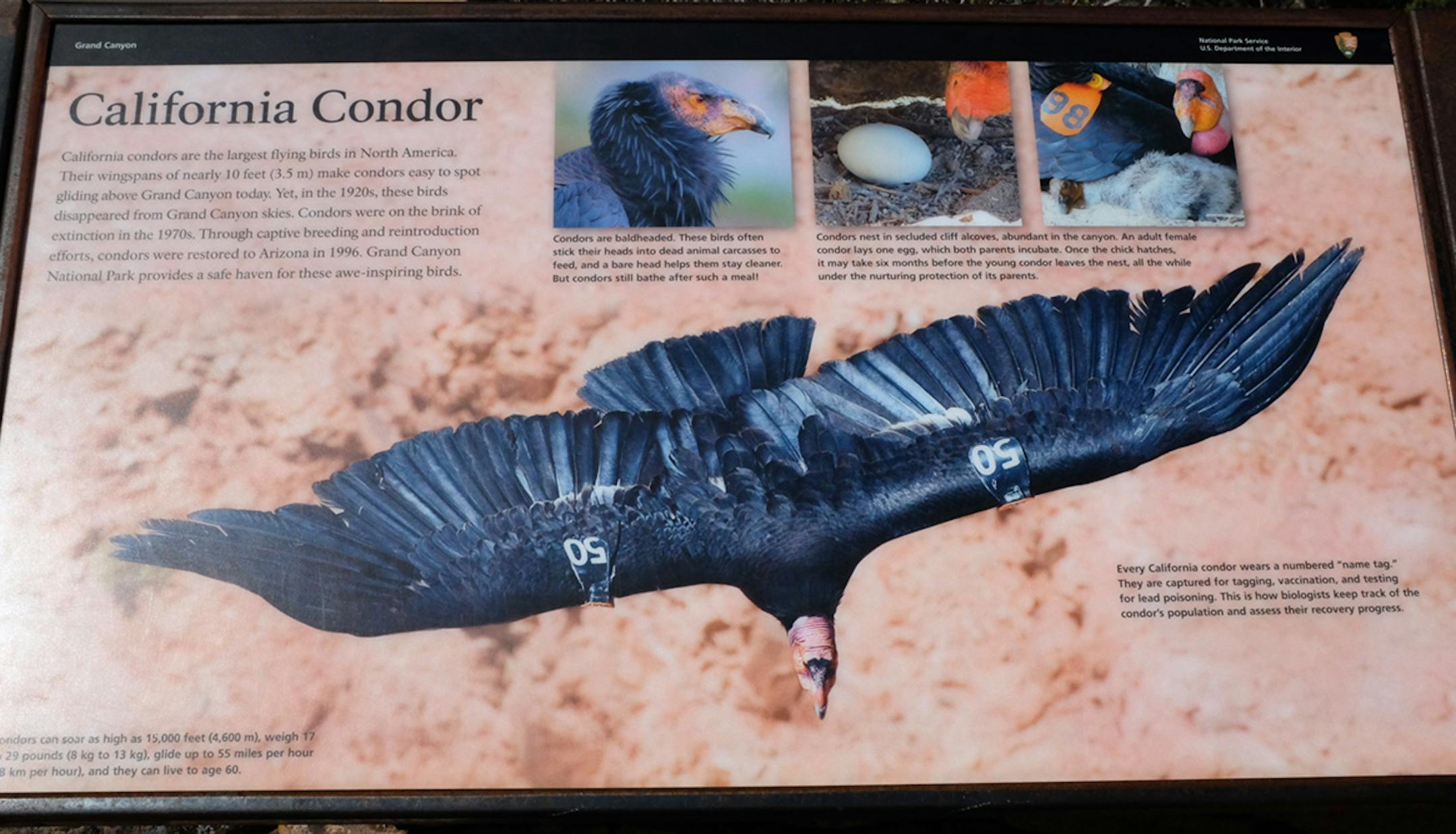
This condor poster, outside Bright Angel Lodge, is there to help visitors identify a California Condor should one accidentally fly by. credit: Jim Williams, Special to the Star Tribune
This condor poster, outside Bright Angel Lodge, is there to help visitors identify a California condor should one ever fly by. (The Minnesota Star Tribune)
about the writer

about the writer

Jim Williams, Contributing writer

More from No Section

See More
FILE -- A rent deposit slot at an apartment complex in Tucker, Ga., on July 21, 2020. As an eviction crisis has seemed increasingly likely this summer, everyone in the housing market has made the same plea to Washington: Send money — lots of it — that would keep renters in their homes and landlords afloat. (Melissa Golden/The New York Times) ORG XMIT: XNYT58
Melissa Golden/The New York Times

It’s too soon to tell how much the immigration crackdown is to blame.