
A prescription for understanding at Somali pharmacy

A Somali-owned and -operated pharmacy in Minneapolis' Phillips neighborhood illustrates how the right formula -- professional experience, entrepreneurial spirit and public and private support -- can become a small business that meets a community need.

For the Minnesota Star Tribune
February 23, 2009 at 4:40AM
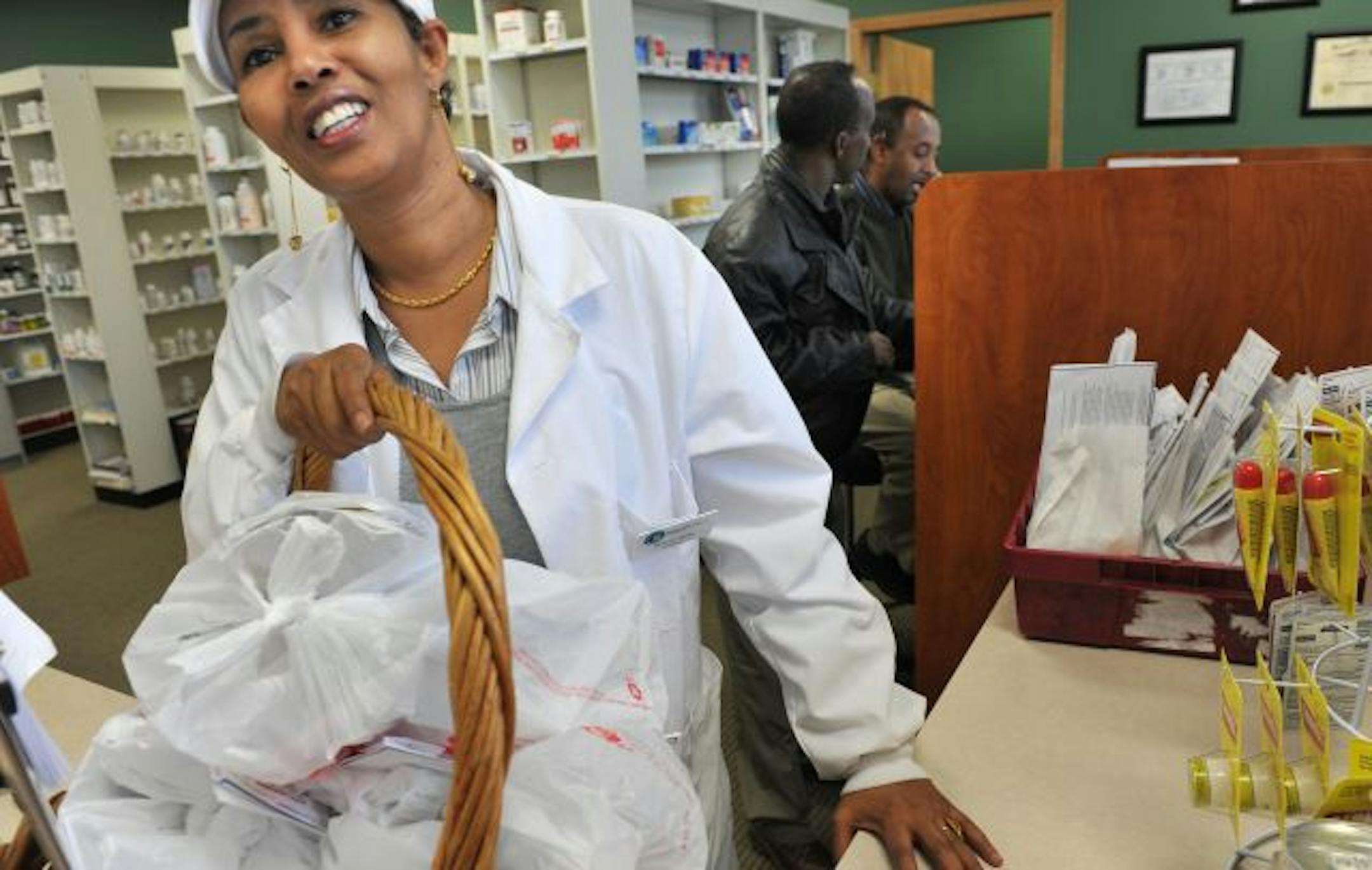
Berlin Farah, one of the partners in Global Health Mart Pharmacy, prepared a group of prescriptions for delivery to customers. The pharmacy is owned and operated by people from Somalia and can provide patients with medication instructions in Somali.
Berlin Farah, one of the partners in Global Health Mart Pharmacy, prepared a group of prescriptions for delivery to customers. The pharmacy is owned and operated by people from Somalia and can provide patients with medication instructions in Somali. (Star Tribune/The Minnesota Star Tribune)

The community need -- a place where Somalis could have prescriptions filled in their own language -- was clear.

A small-business remedy -- Global Health Mart Pharmacy -- took just the right formula of entrepreneurial spirit, professional experience and public, private and nonprofit support to get put together.

Global Pharmacy may be the only Somali-owned and -operated pharmacy in the Twin Cities area, believed to have the country's largest Somali population. If not, it's one of a very few. The pharmacy opened in August at E. 24th Street and Chicago Avenue, across the street from a popular Somali shopping mall.

The founders are Berlin Farah, who gave up the financial security she had enjoyed after 15 years of working at chain pharmacies; Hussein Abdullahi, manager of a nearby Wells Fargo branch, and their longtime friend Saeed Jama, a former Goodwill/Easter Seals caseworker.

As a caseworker, Jama encountered clients who didn't understand the medications they had received because they couldn't communicate with English-speaking pharmacists or read instructions written in English.

On occasion, Jama went with clients to help interpret.

"There's nobody to call and say, 'How can I take this and what is this for?' because they have language barriers," Jama said.

Eventually he began trying to talk Abdullahi and Farah, then living in Atlanta, into moving here to open a pharmacy that would cater to Somali-speaking residents and others in the Phillips neighborhood.
"I was telling Hussein, 'These people need us, and we can make a business out of it,'" Jama said. "That was the idea -- that we could help these people and make some money in the process.

"The money part hasn't come yet," he continued, drawing laughter from himself and his business partners. "The helping part is going well."

Six months after the pharmacy opened, none of the three is drawing a salary. Berlin and Jama work six days a week at the pharmacy, while Abdullahi joins them after work on weekdays and Saturdays.

For now, they are concentrating on repaying financing that helped them get started and expanding inventory, which includes over-the-counter medication as well as prescriptions, homeopathic remedies, and snacks and drinks.

They also have to be mindful of the 45 days or longer they typically have to wait from the time a prescription is filled to when an insurance company pays them for it.

Abdullahi and Jama are eager to open another location, while Farah wants to focus on increasing the number of prescriptions she fills and hiring technicians to help.

Farah said her goal this year is to roughly double the number of prescriptions from 70 to 150 a day. If the pharmacy succeeds in doing so, it could have revenue of $1.8 million this year.

Helping hands

A number of institutions joined to help Farah and her partners get Global Pharmacy started: The Metropolitan Economic Development Association (MEDA), a nonprofit agency that provides training, financing, consulting and other assistance to minority-owned and minority-managed companies; the Metropolitan Consortium of Community Developers (MCCD), an association of nonprofit community development organizations; the Minneapolis Department of Community Planning and Economic Development, and Franklin National Bank.

"We liked the Somali business ownership, the professional business aspect and the woman aspect," MEDA business consultant Scott Ochsner said. "It's a great improvement for the area and we could see the community need. They knew what they wanted to do, where they wanted to do it and had the management team all together. They were very well organized."

"There isn't anything like [Global Pharmacy]," said Rich Esquivel, vice president of commercial lending at Franklin National Bank. "It's in the heart of the community, a perfect location, and it's doing very well."

The project carried some risk, and other banks had turned it down, Esquivel said. But the experience of the three partners and the cooperation among private, public and nonprofit organizations helped make it work.

"This was community lending at its finest," said Kris Maritz, MCCD loan and technical assistance specialist. "This was multiple community partners pulling together to help a group of very qualified business people to put the plan together and arrange the financing."

The effort took some creativity, Maritz said, because Global Pharmacy needed both a term loan, which MEDA and the city participated in, and a substantial line of credit, which the Franklin National Bank provided with guarantees from the city and MCCD to cover the time until insurance companies pay the pharmacy what they owe.

Dr. Mohamud Afgarshe, of HealthPartners Center for International Health in St. Paul, said he was happy Global Pharmacy had opened because working with professional pharmacists often is a new experience for Somalis in this country.

In Somalia, Afgarshe said, people often self-prescribed medications, and employees who typically ran pharmacies and who were not pharmacists may or may not have filled those prescriptions.

U.S. pharmacies offer patients greater protection, Afgarshe said, but they are unlikely to benefit if they cannot understand the pharmacist or written directions accompanying their medication. "Because they [at Global Pharmacy] speak Somali, it's an advantage," Afgarshe said. "It makes it easier for patients to understand the instructions, the side effects, refills and all that."

Todd Nelson is a freelance writer in Woodbury. His e-mail address is todd_nelson@mac.com.

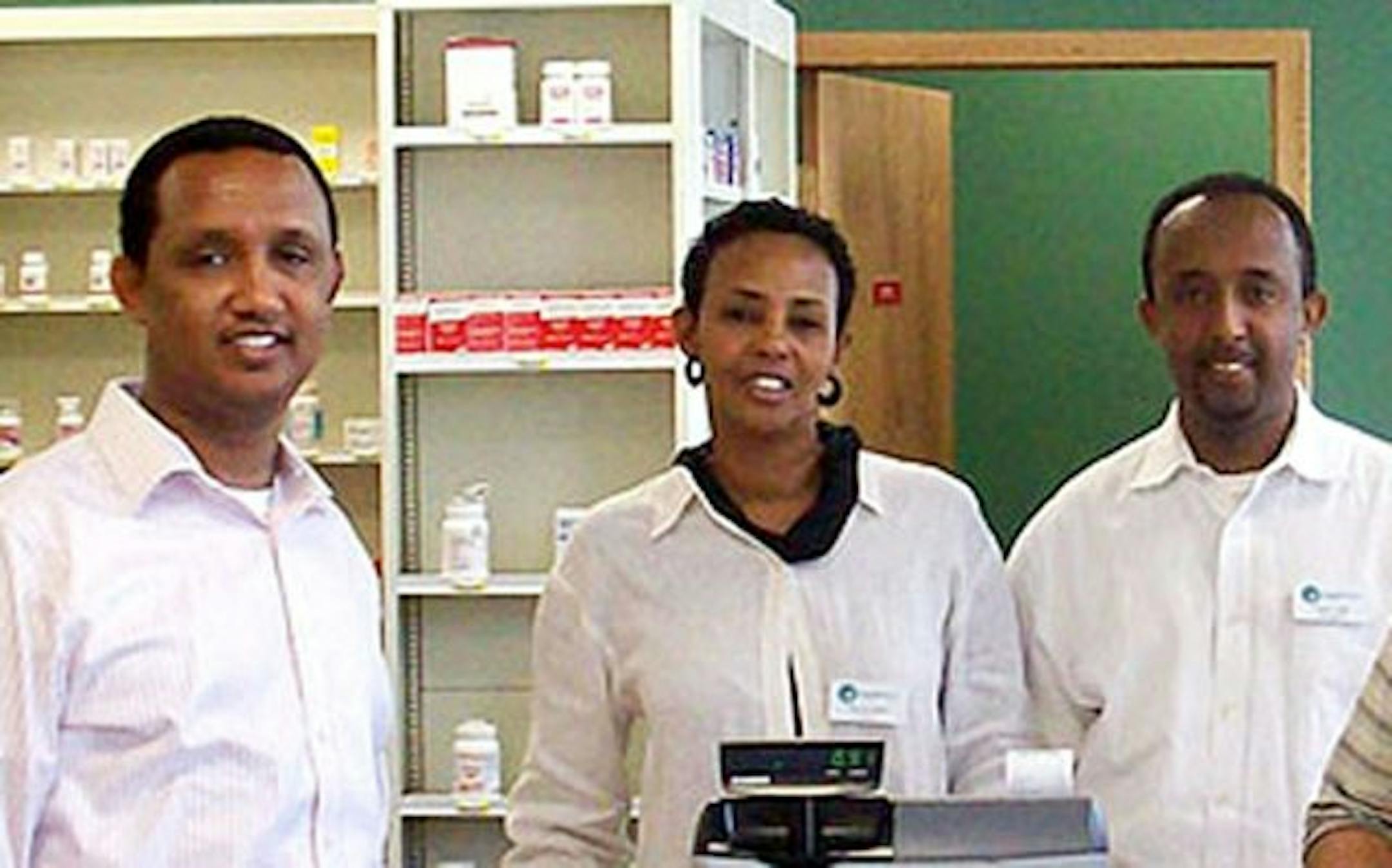
Photo provided by Global Health Mart Pharmacy. -- Global Health Mart Pharmacy partners from left, Hussein Abdullahi, Berlin Farah, Saeed Jama.
Global Health Mart Pharmacy’s partners, from left, are Hussein Abdullahi, Berlin Farah and Saeed Jama. (Star Tribune/The Minnesota Star Tribune)
about the writer

about the writer

TODD NELSON