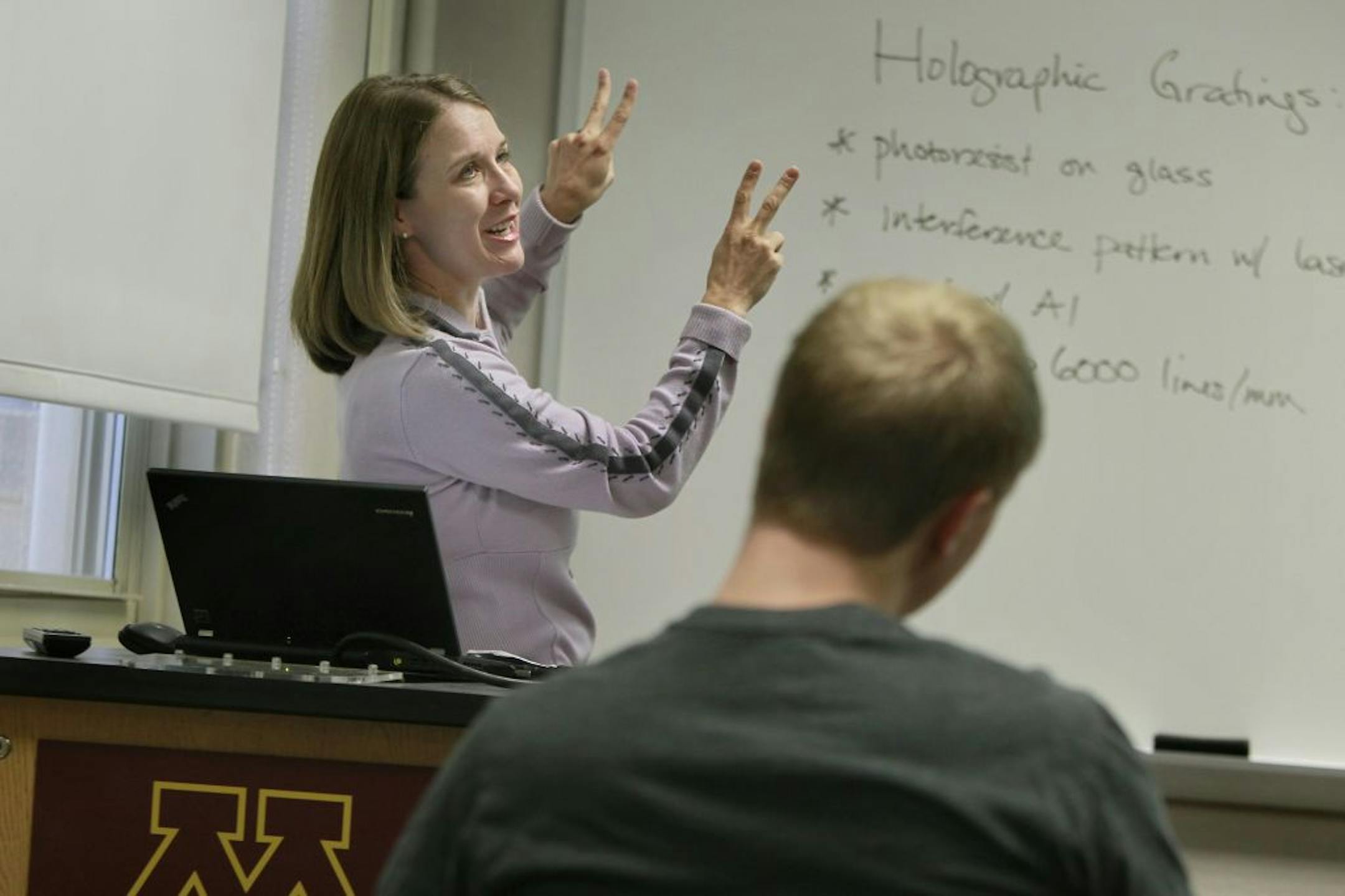
Christy Haynes looks at some of the world's smallest things and sees solutions to big problems.
Under this University of Minnesota chemist's microscope, the whispers of platelets reveal treatments for patients whose blood won't clot. Tiny particles, if heated just right, promise new ways to kill cancerous tumors.
Haynes is also puzzling over what some scholars have called "the dearth of women in math-intensive fields." To tackle that one, she is again starting small -- with herself.
In the laboratory of one of the country's major research universities, on a PBS Kids show and in the pages of Popular Science, she is using her work to inspire young women to don lab goggles.
"I recognize that I don't look like a traditional chemist as most people picture him," Haynes said. "I think it matters a lot when you see somebody who looks like you doing the work you imagine."
This fall, Popular Science anointed the 35-year-old associate professor one of the magazine's "Brilliant 10," a group of "geniuses shaking up science today." The mainstream mention adds to national honors within the scientific community for her wide-ranging work tracking platelets, nanoparticles and allergic reactions.
She views the awards with the practical approach that has defined her research: They serve a larger purpose.
Research without boundaries