

To resolve the issue of North Korea's nuclear and missile development, it is essential to deal with the situation calmly and persistently through a combination of applying pressure such as economic sanctions and holding dialogue, not only emphasizing military options.
The United States and North Korea have repeatedly exchanged hard-line rhetoric, as if to show no hesitation to go to war. The exchange of aggressive rhetoric may unnecessarily intensify tensions and lead to the outbreak of unanticipated situations.
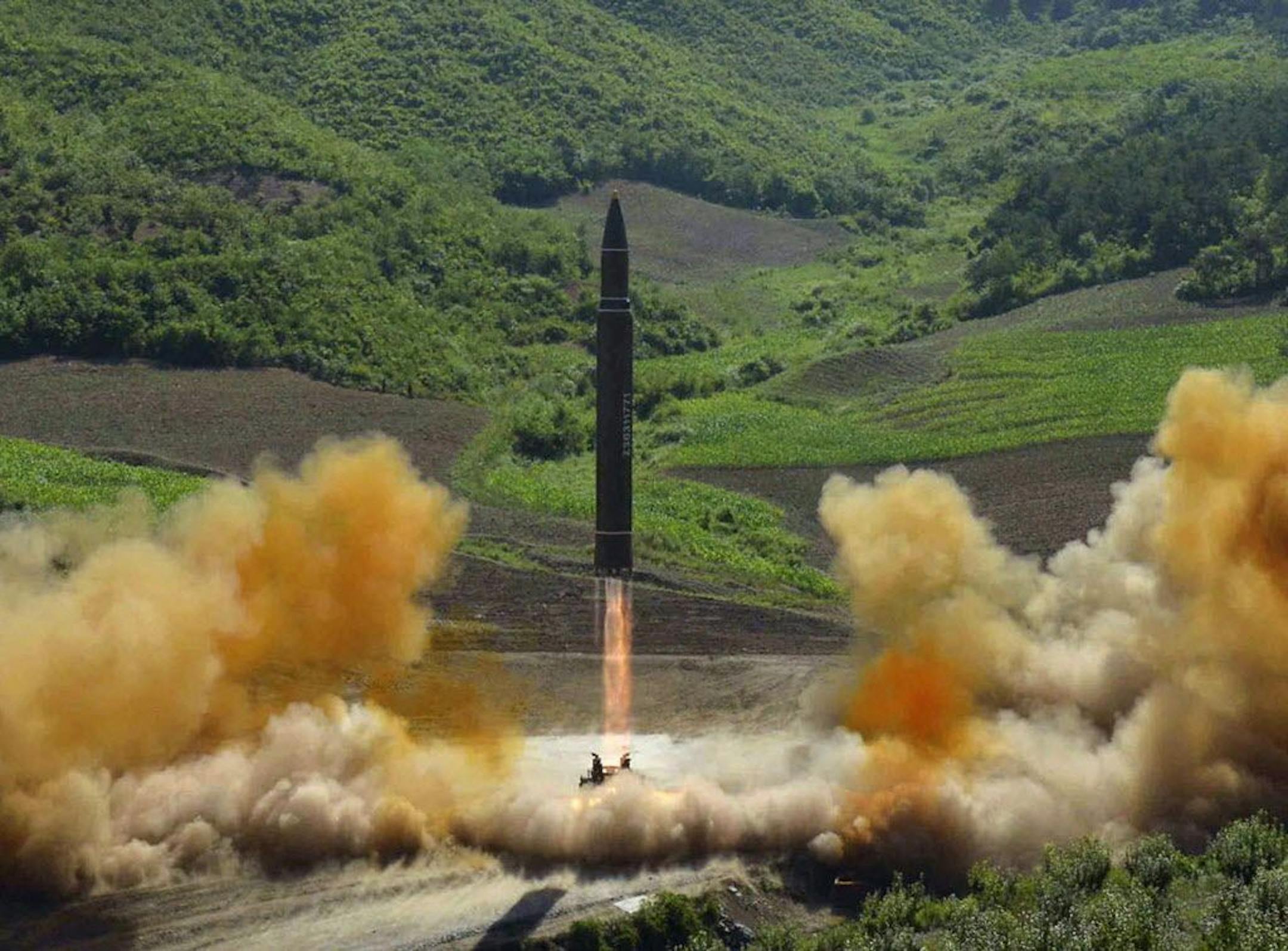
The root cause of the problem lies with North Korea. It test-fired an intercontinental ballistic missile twice in July, making it realistic that North Korea will deploy nuclear missiles that have the U.S. mainland within their range.
According to some assessments, North Korea has succeeded in miniaturizing nuclear warheads. No doubt, the country's nuclear missile development has progressed at a faster pace than anticipated by the U.S. government.
What cannot be overlooked is that Pyongyang has announced a plan, as a grave warning to the United States, to simultaneously fire four Hwasong-12 ballistic missiles to waters around Guam, a Pacific island territory of the United States. It said the plan will be ready by the middle of this month and the personnel will wait for a launch order.
The plan is clearly aimed at keeping in check the U.S.-South Korea joint military exercises scheduled to start in South Korea on Aug. 21. Guam has a U.S. Air Force base where strategic bombers are deployed. If North Korea launches four missiles as planned, it will heighten military tension to a maximum.
Bolster tie-up with allies
The commander of the Strategic Force of the Korean People's Army stated the missiles would fly over Japan, specifically mentioning "Shimane, Hiroshima and Kochi prefectures."


