

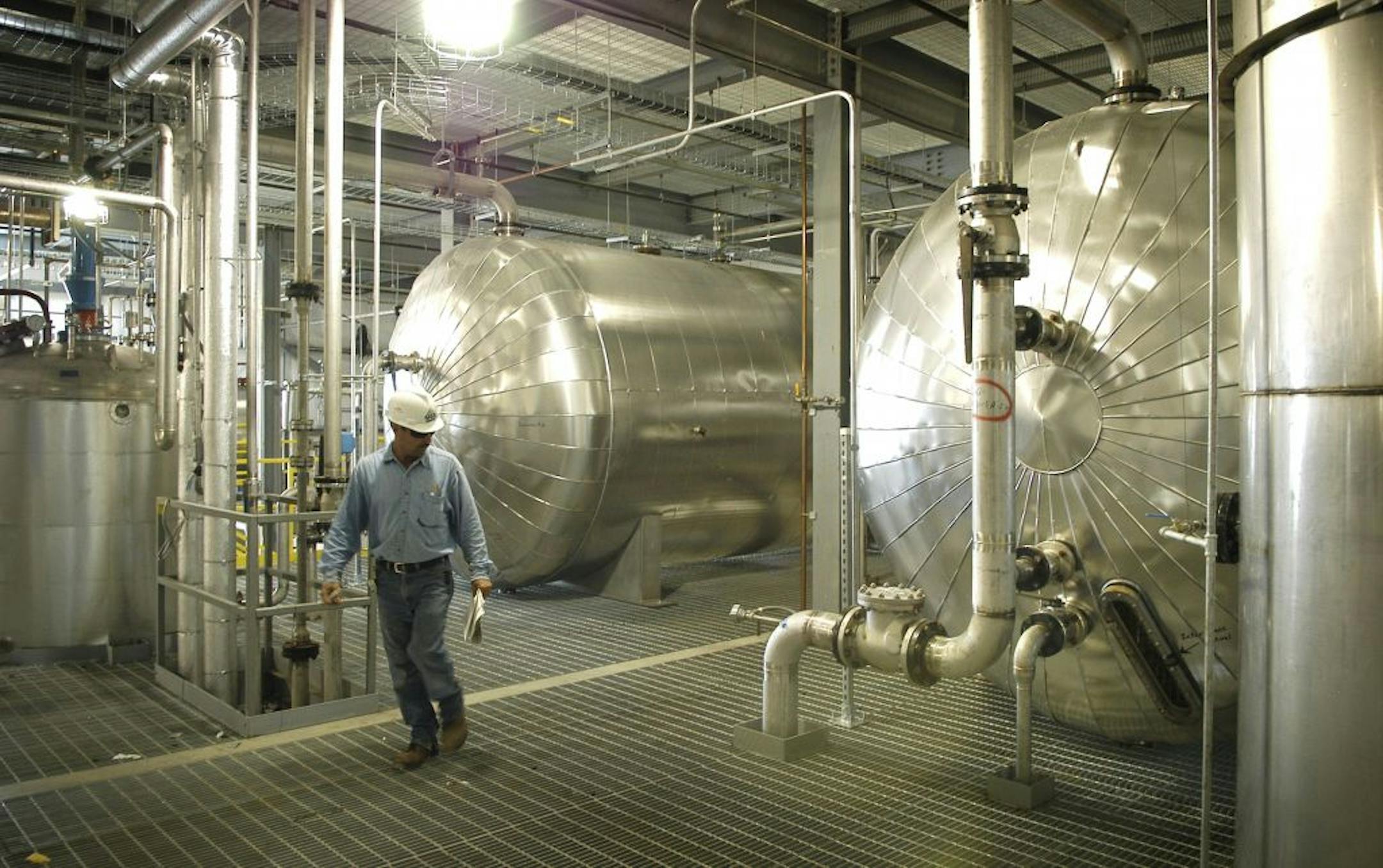
The impending revival of a biodiesel plant near Albert Lea is a sign that the industry is perking up after about three years of grim tidings.
Last week, Ames, Iowa-based Renewable Energy Group announced that it had bought the assets of the SoyMor plant for an undisclosed price and expected to soon reopen it. SoyMor has been closed since 2008, a victim of high prices for soybean oil, its major input.
Since then, the biodiesel industry has been hit by more waves of woe, the biggest coming in 2010 after Congress nixed its annual federal tax credit. But the $1-per-gallon credit is back this year, new federal mandates for biodiesel use are in place and oil prices are relatively high, making biofuels more competitive.
"It's a good sign for the industry," Ben Evans of the National Biodiesel Board said of the SoyMor deal. "What we are seeing all across the country is that plants that are at half speed are ramping up production, and plants that have been shut down are being bought and dusted off."
The biodiesel board expects production of 800 million gallons nationally this year, topping the previous record of 700 million gallons in 2008, and a big improvement over the past two years. In 2009, production fell to 500 million gallons and slid to only 315 million gallons last year.
A key to this year's resurgence is the launch of biodiesel mandates promulgated by the U.S. Environmental Protection Agency. This year, 800 million gallons of biodiesel are required to be used, a number expected to rise to 1.2 billion by 2012.
In the U.S. renewable fuels arena, biodiesel is dwarfed by the corn-reliant ethanol industry, which pumped out 13 billion gallons of product last year. Like ethanol, biodiesel is meant to help wean the nation off fossil fuels, yet has also been controversial for the government subsidies it receives.
Minnesota dove into biodiesel in the mid-2000s, with the biggest initiatives being SoyMor, financed by farmers and business interests in the Albert Lea area, and Minnesota Soybean Processors in the southwestern town of Brewster, an outgrowth of a soybean growers' co-operative.


