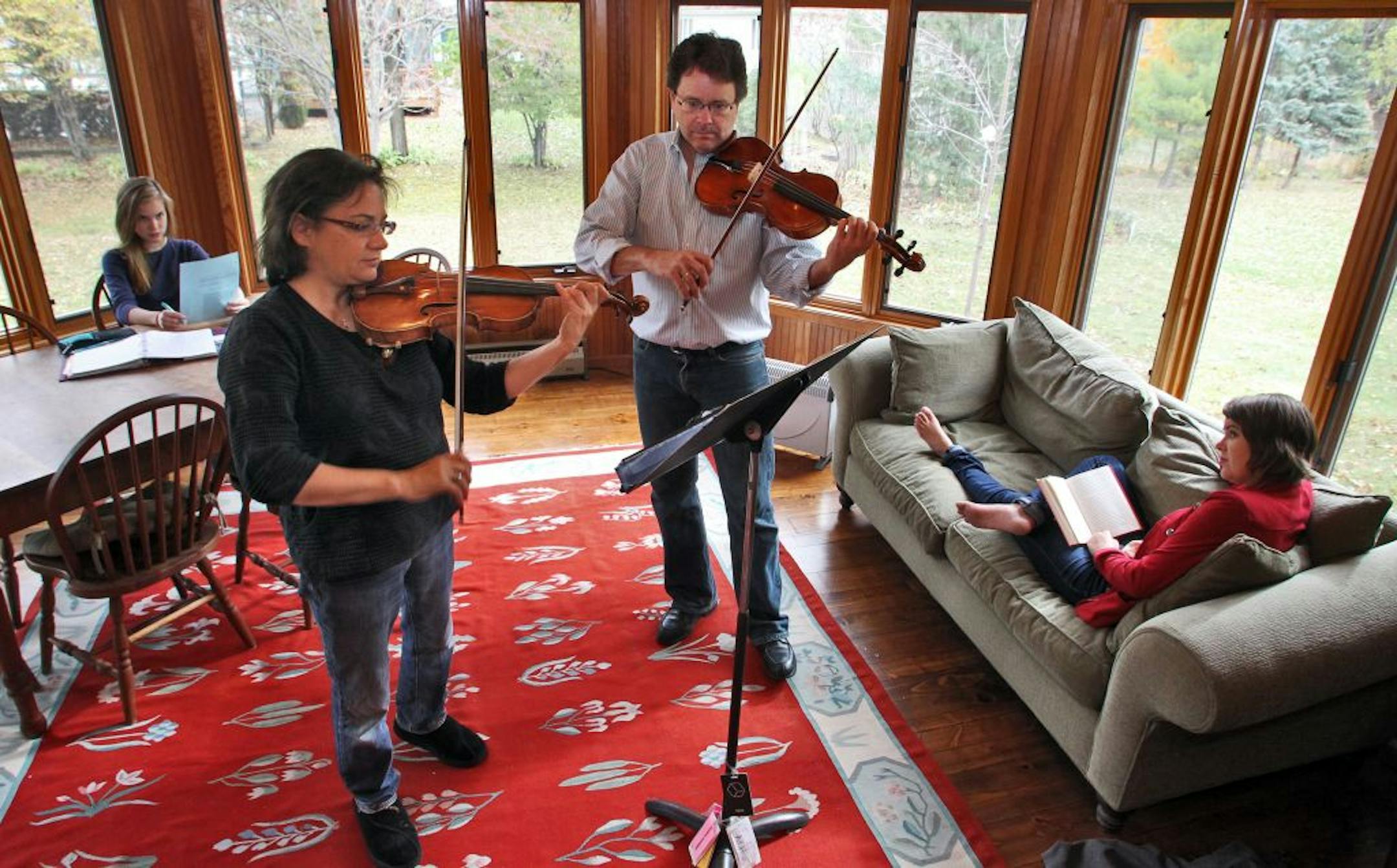
On reality television, the riskiest professions are ironworker, firefighter, lumberjack and the like. These days, you can add "orchestra musician" to the list.
Being a classical player employed near the pinnacle of your profession used to be a pretty stable occupation; the average Minnesota Orchestra player has been there 18 years. But Michael Adams, who plays viola with the orchestra, has been out of work since Oct. 1. His wife, St. Paul Chamber Orchestra violinist Daria Adams, joined him in unemployment three weeks ago.
Both are locked out, neither playing nor earning a paycheck, a microcosm of the fallout from a nationwide wave of orchestras dealing with multimillion-dollar deficits. Managements contend that, because of dwindling revenues and higher costs, the artists must take significant salary cuts if the orchestras are to survive. Musicians counter that the troubles are cyclical, and there are other ways to balance budgets.
Classical musicians are often characterized in popular culture as tuxedoed hothouse flowers who work six hours a week. Some observers of the dispute say they should simply accept the proposed pay cuts -- roughly 30 percent in the case of the two Twin Cities orchestras -- at a time when belt-tightening is going on everywhere else.
But both musicians and management agree on one point: The life of an orchestra member involves more work than glamour.
"Our musicians play with passion, intensity and joy that can make it look easy, but it is far from easy," said SPCO board chair Dobson West. "Their work is both physically and mentally challenging. They work extremely hard."
A typical week for each of the Adamses -- middle-class musicians who are stalwart section players rather than stars -- includes 24 hours onstage, at least 12 hours of practice and perhaps an unpaid fundraising concert.
Now, like any other out-of-work white-collar professional, they are looking for new gigs. Michael has mailed résumés to more than 25 orchestras, and got a subbing job with the Atlanta Symphony. Both have been offered a monthlong tour in January with a West Coast orchestra, but hope the two contract disputes are resolved by then.