

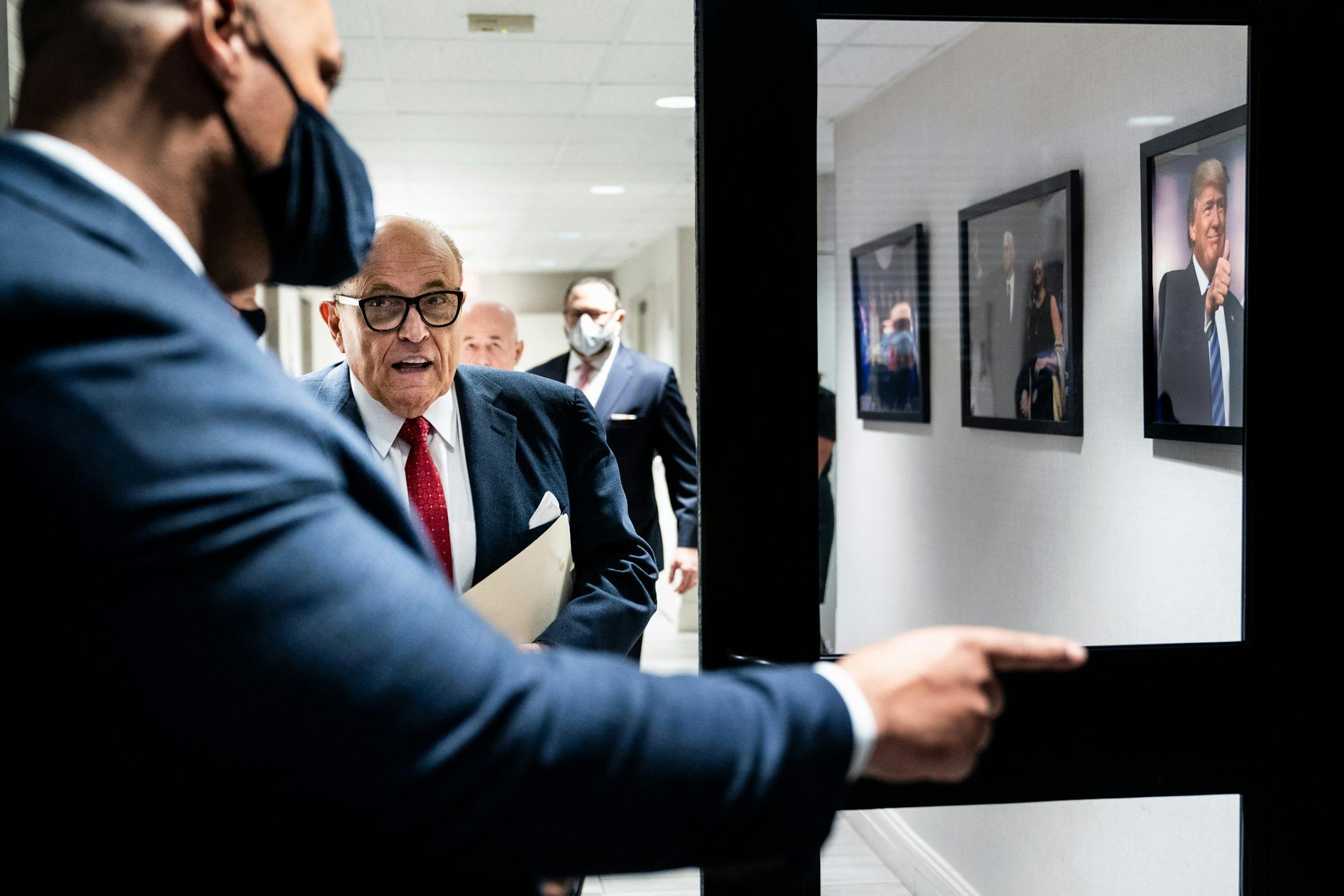
If President Donald Trump wants to avoid federal criminal investigation once he's out of office, here's my free advice: Don't pardon Rudy Giuliani.
The New York Times reports that the two men have discussed whether the president should pardon his personal lawyer. But Trump owes Giuliani money for representing him, and pardoning someone to whom you owe money could easily be construed as a criminal act.
Under federal law, it would be bribery to offer an official government act, like a pardon, in exchange for a debt, like the money Trump owes to Giuliani. An investigation would have to ensue. And as President Bill Clinton learned after pardoning financier Marc Rich, an investigation into a questionable pardon can be serious business.
In response to the report, Giuliani's spokesperson said that as a lawyer, Giuliani could not comment on any discussions he had with his client, the president. Attorney-client privilege is a real thing, yet it would not shield either Giuliani or Trump from criminal investigation if there were reason to think a criminal exchange had occurred. When a lawyer and a client together conspire to commit a criminal act, the attorney-client privilege evaporates. Evidence of their communication for criminal purposes could be subpoenaed and introduced in court.
If no third party could testify and there are no tapes of their conversation, then the only direct evidence of a criminal bargain would be testimony by one of the two men. In this scenario, Trump could choose to remain silent and exercise his right against self-incrimination under the Fifth Amendment.
However, Giuliani could not plead the Fifth — not if he had already been given a blanket pardon for any criminal act he might have committed during the Trump administration.
The right against self-incrimination only applies when a person's testimony might put them in criminal jeopardy. A person with a blanket pardon covering some period of time doesn't face criminal jeopardy for conduct occurring during that period of time. Giuliani could therefore in theory be compelled to testify against Trump, on pain of going to jail for contempt of court if he refused.
The only escape hatch from this trap would be if Giuliani's pardon were deemed to be invalid because it was obtained as part of a criminal act. No one knows for sure whether a criminally obtained pardon is constitutionally valid, because the issue hasn't been litigated. But obviously, neither Trump nor Giuliani would want to go down this path.


