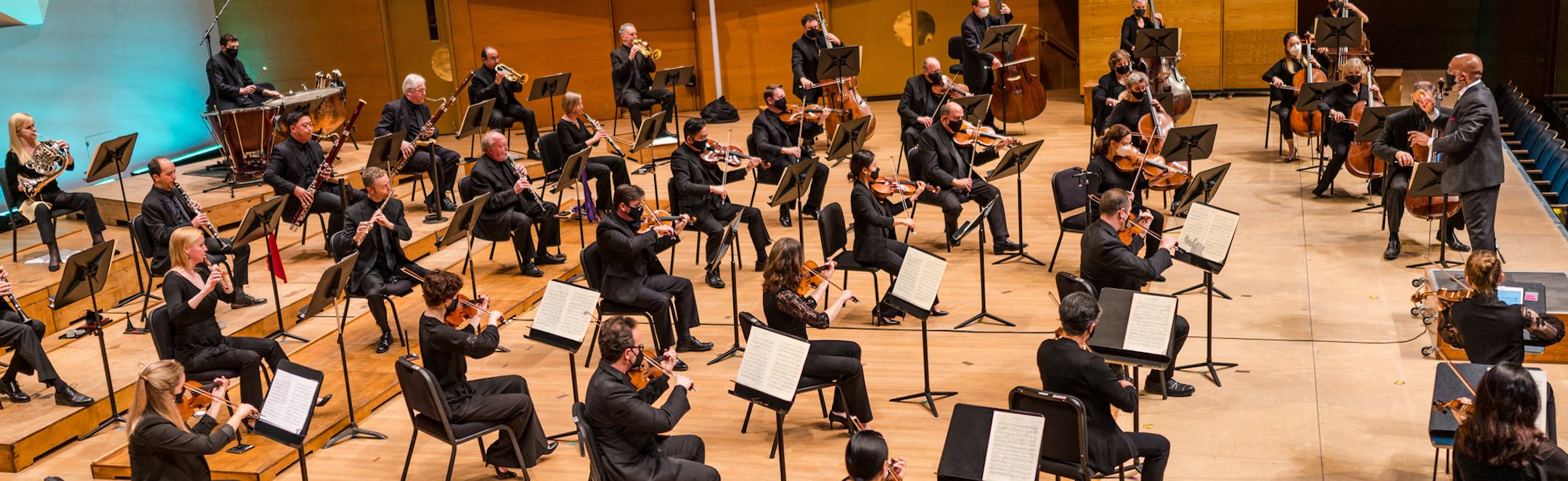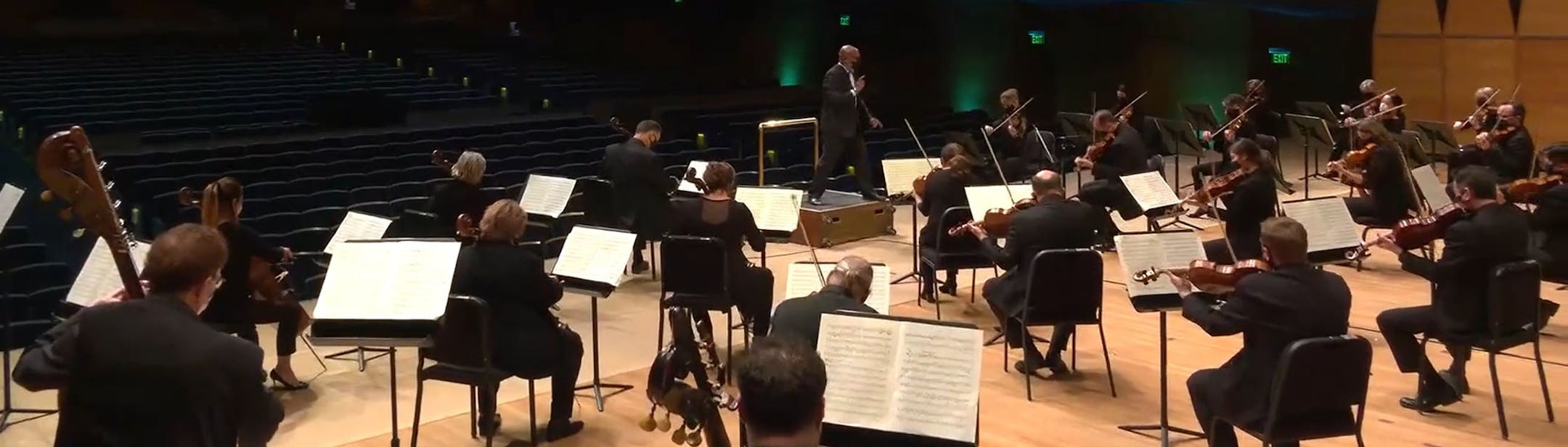
COVID testing, weeklong quarantines, face masks and an 8-foot extension of the platform to enable social distancing between the players. These are the exceptional measures required to make a Minnesota Orchestra concert happen in the coronavirus era.
Friday wasn't a typical evening, of course. There was no audience present — the concert was broadcast live on TPT-MN, Minnesota Public Radio and the orchestra's website (where this program can still be viewed) — and Orchestra Hall's warm acoustic had a slightly cavernous quality as a consequence.
Still, there were things to celebrate, not least the orchestra's first performance of a symphony since March. Social distancing math allowed only 42 players onstage, but that was perfect for Beethoven's First Symphony, led by the orchestra's former associate conductor William Eddins.
Conducting without a baton, using body language that ranged from muscular lunges to elegantly balletic hand gestures, Eddins elicited a performance that thrillingly combined trenchancy with a pronounced feeling for the music's many moments of lyricism and lightness.
Eddins' speeds were somewhat slower than has become usual in Beethoven, which gave string players in particular the room to properly etch the bustling rhythms of the opening movement, and lent a satisfying architectural profile to the music.
Both inner movements had a relaxed, unhurried quality in which wit and warmth emerged naturally. The finale had power aplenty, but delicacy, too, with none of the hell-for-leather histrionics that conductors often use to italicize the young Beethoven's sense of derring-do and adventure.
Eddins' interpretation was subtle and nuanced, and played with intelligence and alacrity by the orchestra. I can't remember the last time I enjoyed a performance of the First Symphony more.
Earlier the hourlong program had started with two chamber music pieces, the first a string quartet by U.K.-based Jamaican composer Eleanor Alberga.