Louie Anderson's upset win for "Baskets" was considered a unusual surprise for a ceremony not known for straying off script. Turns out it was just a harbinger of things to come.
Yes, "Veep" and "Game of Thrones" repeated in the 68th annual Emmy Awards most-watched categories, best comedy and best drama. But the TV academy proved its superiority to the Oscars in terms of embracing new blood, people of color and strong women.
Diversity was well represented, in large part thanks to "The People v. OJ Simpson," the big winner of the evening with nine Emmys, including best limited series. Acting awards went to Sterling Brown and Guthrie veteran Courtney Vance, both black, and to Sarah Paulson, who is openly gay.
Kate McKinnon, who also is gay, became one of the few performers in "Saturday Night Live's" 40-plus years on the air to be recognized for individual performance.
"Transparent" director Jill Soloway and lead actor Jeffrey Tambor both repeated in their categories for Amazon's bold dramedy about a transgender woman's relationship with her family.
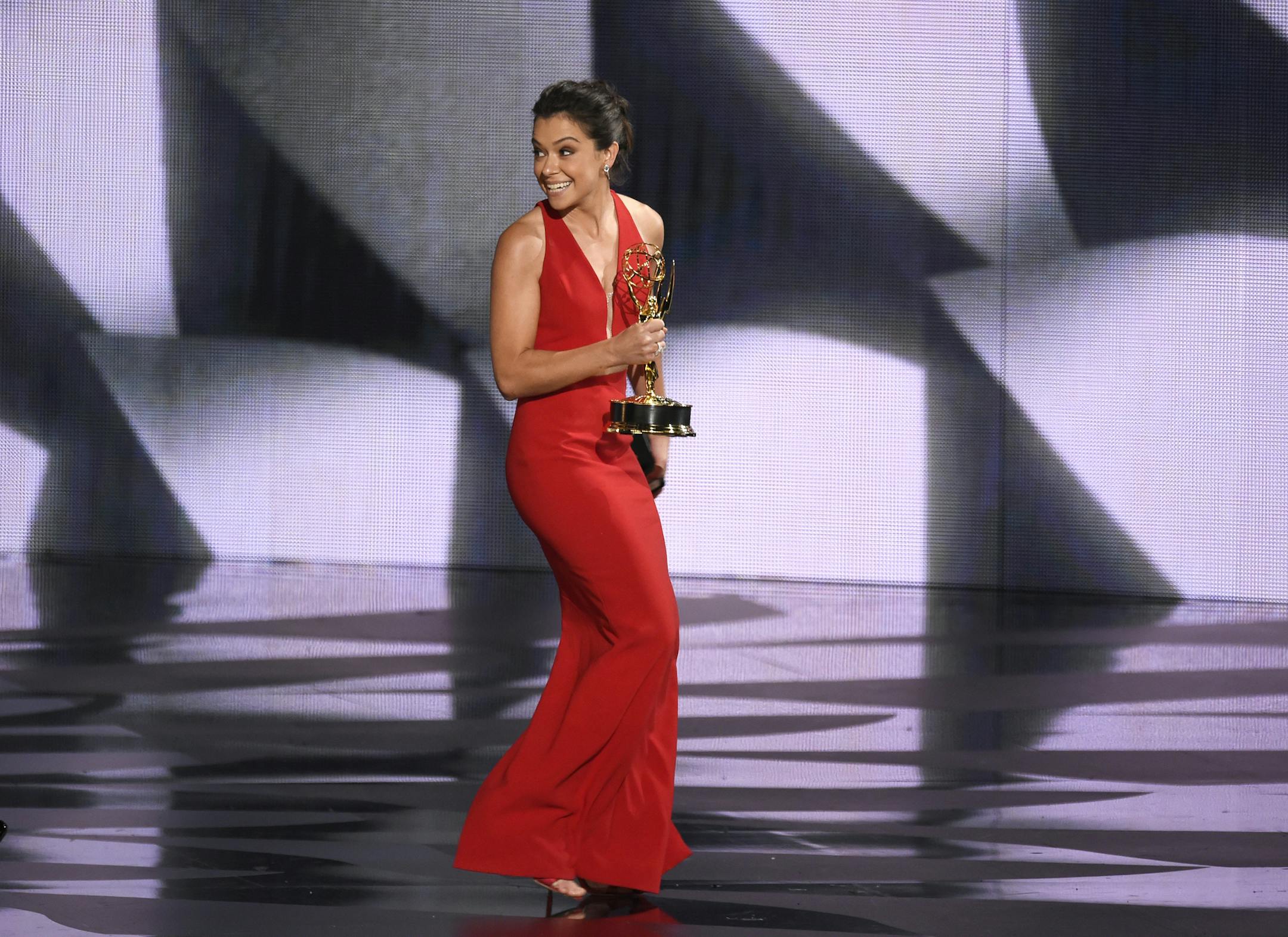
Regina King, who is black, won her second Emmy in a row for ABC's "American Crime," a tonic of sorts for those who might be disappointed that Viola Davis didn't repeat for "How to Get Away With Murder." Instead the award for best actress in a drama went to Tatiana Maslany of "Orphan Black," who was criminally overlooked by the Emmys for years despite juggling more than a dozen characters on the BBC America show.
"I feel so lucky to be on a show that puts women in the center," said Maslany, 30. Also representing youth — at least by Emmy standards — was Remi Malek of "Mr. Robot," who topped veteran Kevin Spacey in the race for best actor in a drama. At 35, Malek is the youngest winner in that category since Bruce Willis won for "Moonlighting" in 1987.
Two young Asian-Americans, Aziz Ansari and Alan Yang, shared the award for best writing in a comedy for Netflix' "Masters of None." But Emmy also showed respect to its elders — just not the ones viewers might have expected.