
A new generation cares for ancestral land

Young American Indians are restoring wildlife, habitat

The New York Times
August 30, 2014 at 9:30PM
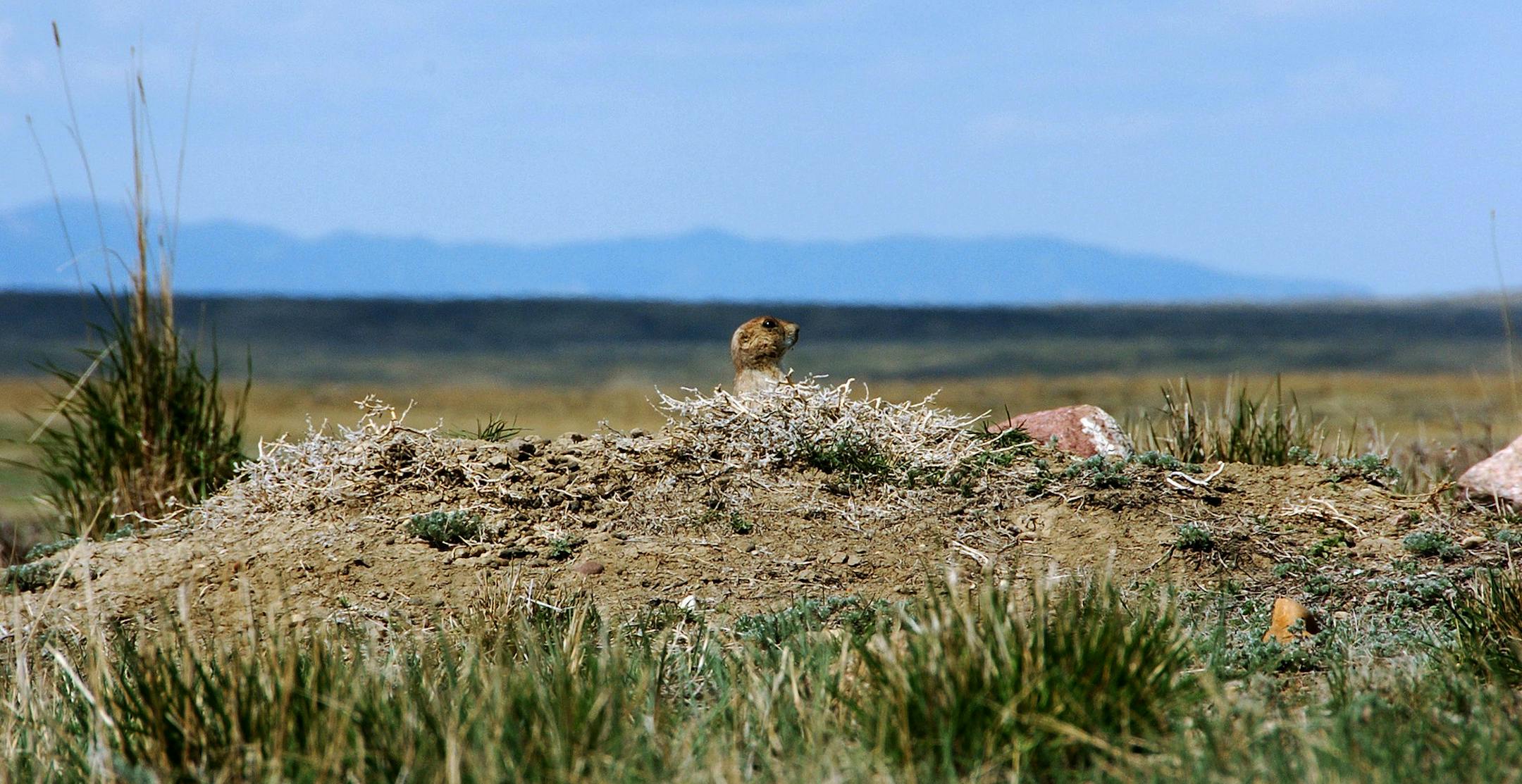
FILE - In this April 25, 2012 file photo, a prairie dog pokes its head from its burrow on the privately-operated American Prairie Reserve south of Malta, Mont. The private conservation reserve on north-central Montanaís open prairie now spans more than 300,000 acres with the addition of a large parcel south of Malta. Reserve manager James Barnett said Thursday, July 31, 2014, the group recently bought a 22,000-acre ranch in Phillips County. He says the deal marks an important step in the re
American Indians are helping to restore native animals to their natural homes on tribal lands across the Northern Great Plains — in the Dakotas, Montana and parts of Nebraska. (The Minnesota Star Tribune)

By NATE SCHWEBER • New York Times

FORT BELKNAP AGENCY, Mont. – In the employee directory of the Fort Belknap Reservation, Bronc Speak Thunder's title is buffalo wrangler.

In 2012, Speak Thunder drove a livestock trailer in a convoy from Yellowstone National Park that returned genetically pure bison to tribal land in northeastern Montana for the first time in 140 years. Speak Thunder, 32, is one of a growing number of younger American Indians who are helping to restore native animals to tribal lands across the Northern Great Plains, in the Dakotas, Montana and parts of Nebraska.

Robert Goodman, an Oglala Lakota Sioux, moved away from his reservation in the early 2000s and earned a degree in wildlife management. When he graduated in 2005, he could not find work in that field, so he took a job in construction in Rapid City, S.D.

Then he learned of work that would bring him home. The parks and recreation department of the Pine Ridge Reservation, where he grew up, needed someone to help restore rare native wildlife — including the swift fox, a small, tan wild dog revered for its cleverness. In 2009, Goodman held a 6-pound transplant by its scruff and showed it by firelight to a circle of tribal elders, members of a reconvened warrior society that had disbanded when the foxes disappeared.

"I have never been that traditional," said Goodman, 33, who released that fox and others into the wild after the ceremony. "But that was spiritual to me."

For a native wildlife reintroduction to work, native habitat is needed, biologists say. On the Northern Great Plains, that habitat is the original grass, never sliced by a farmer's plow.

Unplowed temperate grassland is the least protected large ecosystem on Earth, according to the American Prairie Reserve, a nonprofit organization dedicated to grassland preservation. Tribes on America's Northern Plains, however, have left their grasslands largely intact.
More than 70 percent of tribal land in the Northern Plains is unplowed, compared with around 60 percent of private land, the World Wildlife Fund said. Around 90 million acres of unplowed grasses remain on the Northern Plains. Tribes on 14 reservations here saved about 10 percent of that 90 million — an area bigger than New Jersey and Massachusetts combined.

"Tribes are to be applauded for saving so much habitat," said Dean E. Biggins, a wildlife biologist for the United States Geological Survey.

Over the past four years in Montana, the tribes at Fort Peck and Fort Belknap, along with tycoon and philanthropist Ted Turner, saved dozens of bison that had migrated from Yellowstone. Once the food staple of Indians on the Great Plains, bison were virtually exterminated in the late 19th century; the Yellowstone bison are genetic descendants of the only ones that escaped in the wild.

Cattle industry opposition

This spring, by contrast, Yellowstone officials captured about 300 bison and sent them to slaughterhouses. Al Nash, a park spokesman, said they were culled after state and federal agencies "worked together to address bison management issues." The cattle industry opposes wild bison for fear the animals might compete with domestic cows for grass, damage fences or spread disease.

Emily Boyd-Valandra, 29, a wildlife biologist at the Rosebud Sioux Reservation in South Dakota, is emblematic of new tribal wildlife managers working around the Northern Plains. She went to college and studied ecology. Diploma in hand, Boyd-Valandra took a job with her tribe's Department of Game, Fish and Parks and found a place for "education to bridge the gap between traditional culture and science."

Blending her college lessons with the reverence for native animals she absorbed from her elders, she helped safeguard black-footed ferrets on her reservation from threats like disease and habitat fragmentation. The animal was twice declared extinct after its primary prey, the prairie dog, was wiped out across 97 percent of its historic range; since 2000, ferrets have been reintroduced in 13 American habitats, five of them on tribal land.

"Now that we're getting our own people back here," Boyd-Valandra said, "you get the work and also the passion and the connection." One of her mentors is Shaun Grassel, 42, a biologist for the Lower Brule Indian Reservation in South Dakota. "What's happening gives me a lot of hope," he said.

Though each reservation is sovereign, wildlife restoration has been guided to a degree by federal grants. Since 2002, the Fish and Wildlife Service has given $60 million to 170 tribes for 300 projects that aided gray wolves, bighorn sheep, Lahontan cutthroat trout and bison.

"Tribal land in the U.S. is about equal to all our national wildlife refuges," said D.J. Monette of the wildlife agency. "So tribes really have an equal opportunity to protect critters."


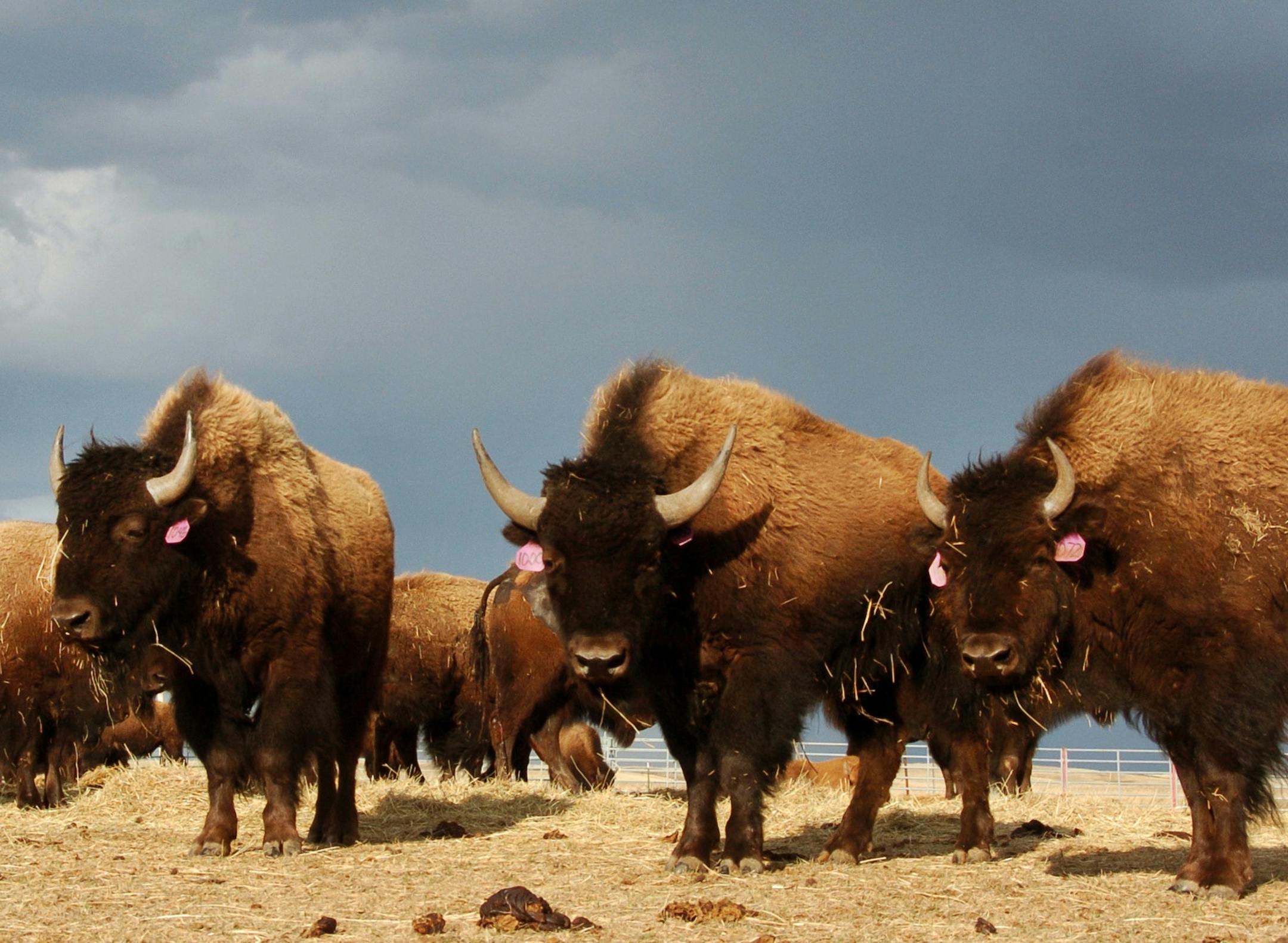
FILE - In an April 24, 2012, file photo, a herd of bison stand in a pen on the Fort Peck Reservation near Poplar, Mont. Bison have not been part of the sweeping landscape just east of the Northern Rockies of Montana and Canada for more than a century, but Blackfoot Confederacy leaders say they are ready to bring the animal back. (AP Photo/Matthew Brown, File)
Bison were virtually exterminated in the late 19th century but now are being protected. These live on the Fort Peck Reservation near Poplar, Mont. (The Minnesota Star Tribune)
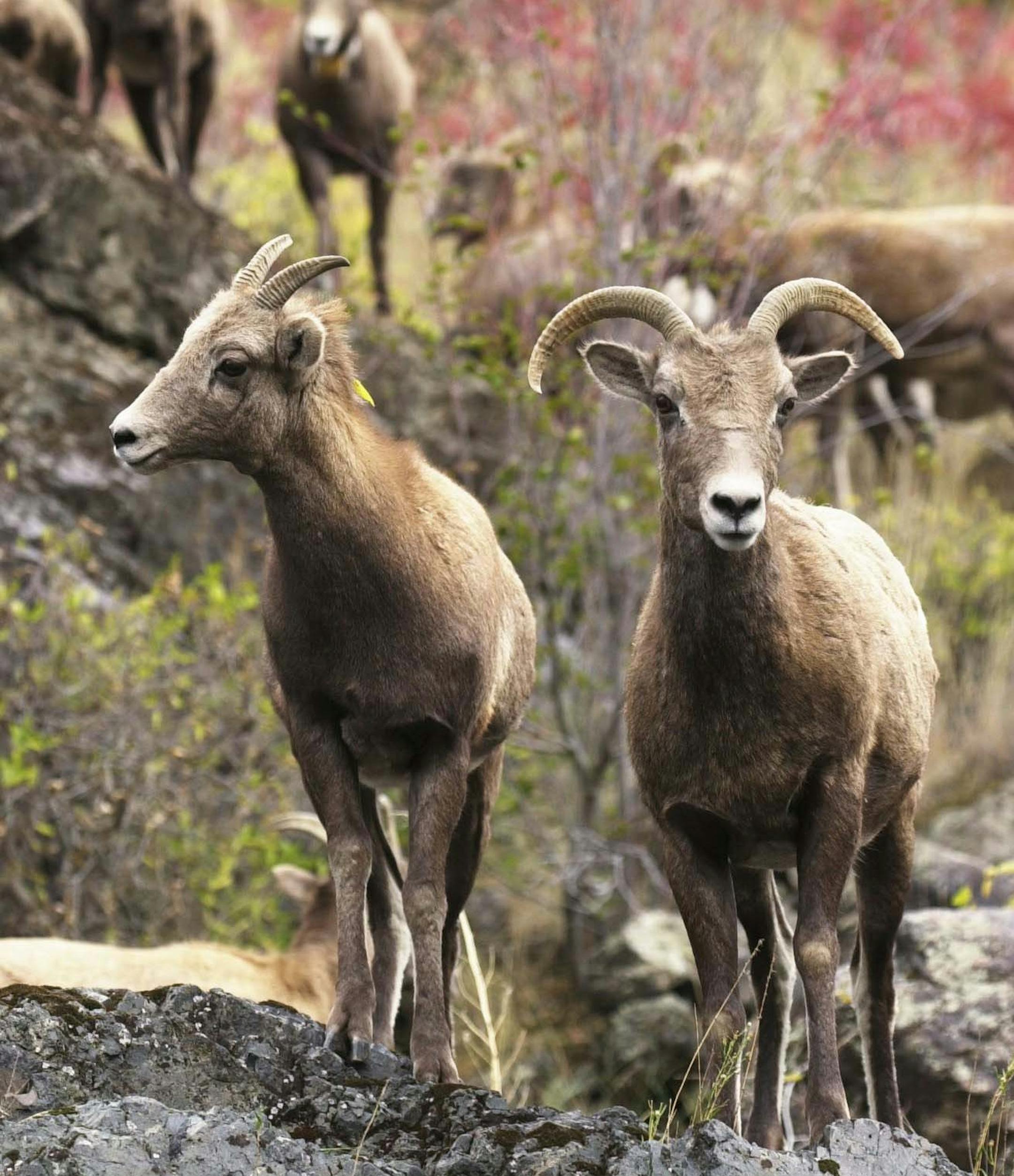
(NY706-May 5) A herd of bighorn sheep are shown Oct. 10, 2002, below Pittsburgh Landing in Hells Canyon, Idaho, on the Snake River. There are an abundance of wildlife surrounding the river and caynon. (AP Photo/The Idaho Statesman, Katherine Jones)
Bighorn sheep are among the native animals that Native American tribes are helping to restore. (The Minnesota Star Tribune)
about the writer

about the writer

NATE SCHWEBER